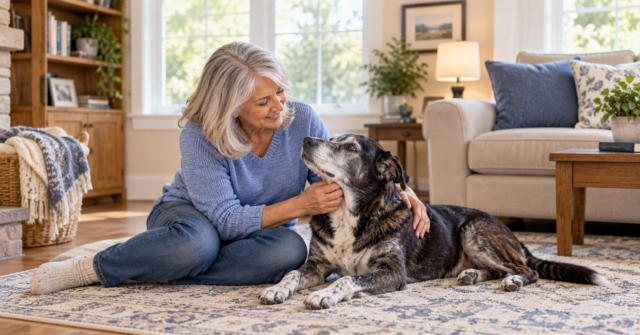
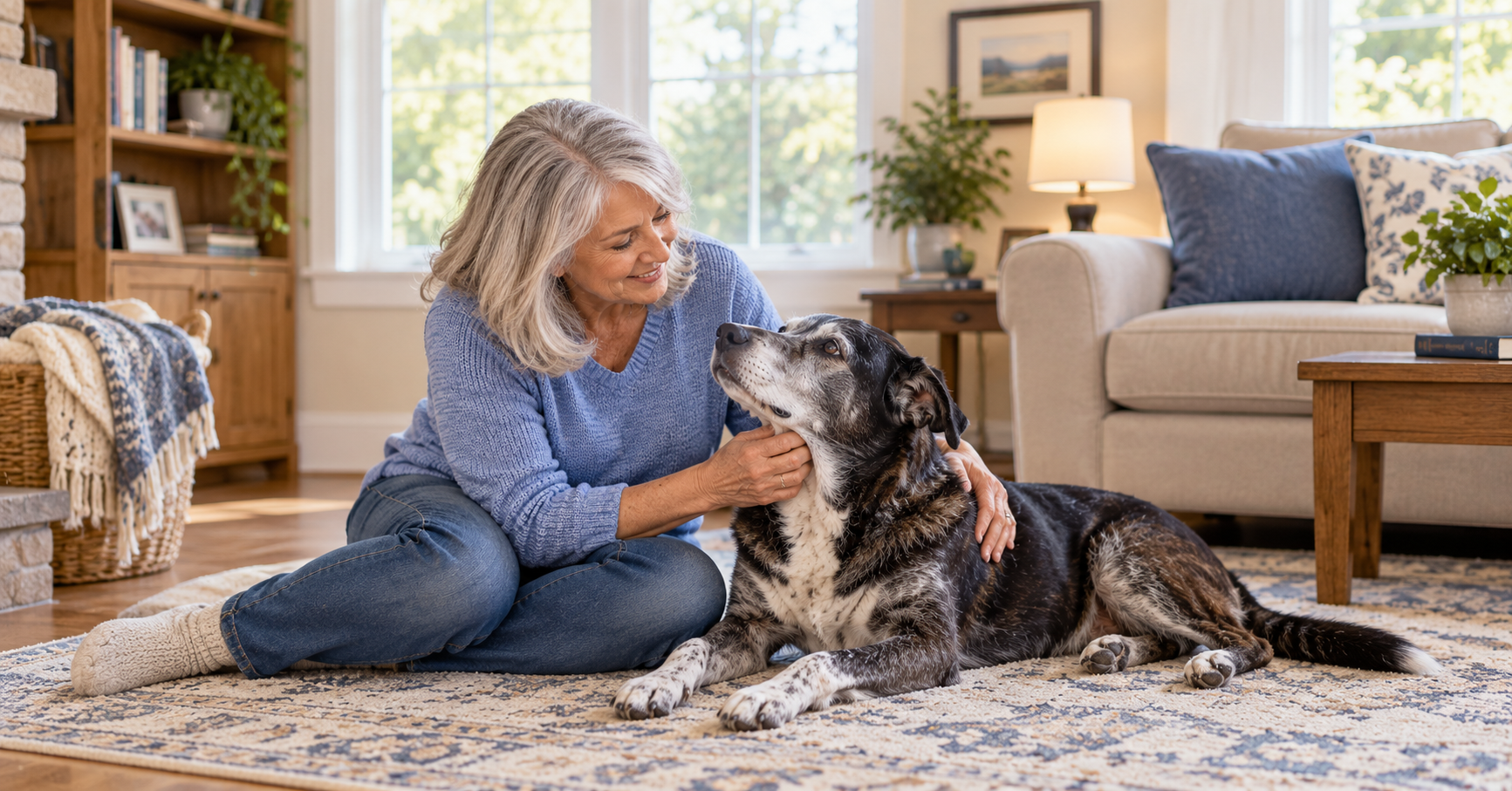
If your senior dog no longer seems quite like herself, you may wonder whether canine cognitive dysfunction could be responsible. Perhaps she wakes you at night, gets lost in a familiar room, or stands staring at a wall. Maybe a dog who was house-trained for years has started having accidents indoors.
Changes like these can occur with cognitive decline, but pain, hearing loss, vision problems, or other illnesses can look similar. A change in your older dog’s behavior deserves attention rather than being dismissed as normal aging. Finding the cause is the first step toward helping her.
If You Are Seeing These Changes in Your Dog
Start by making an appointment with your veterinarian. Write down what you have noticed, when it began, and whether it is becoming more frequent. Short videos can capture behaviors that may never appear during an office visit.
Until the appointment, keep life familiar and predictable. Avoid punishment for accidents, nighttime wandering, or apparent confusion. Your dog may be struggling with something she can no longer control.
What Is Canine Cognitive Dysfunction?
Canine cognitive dysfunction is an age-related neurological condition affecting an older dog’s brain. It can alter memory, learning, awareness, sleep, and social behavior. Changes generally develop gradually, although you may suddenly realize how different your dog has become.
The condition shares some biological features with Alzheimer’s disease in people. Both can involve beta-amyloid accumulation and changes within the brain. However, this is its own veterinary condition, not simply a canine version of Alzheimer’s disease.
Age is the strongest risk factor, but there is no universal birthday when a dog becomes old. Dogs age differently depending on size, genetics, health, and other factors. Your veterinarian can consider your dog’s individual life stage when evaluating behavioral changes.
Could These Changes in Your Senior Dog Be Dementia?
Veterinarians often organize cognitive changes using the acronym DISHAA. It covers disorientation, social interactions, sleep, house soiling, learning and memory, activity, and anxiety. You do not need to memorize those categories to recognize changes in your own dog.
Instead, look for patterns in behavior your dog has known for years. Record what happens, when it occurs, and whether it is becoming more frequent. Changes from your dog’s own normal behavior are more useful than comparisons with another senior dog.
She Seems Lost in Familiar Places
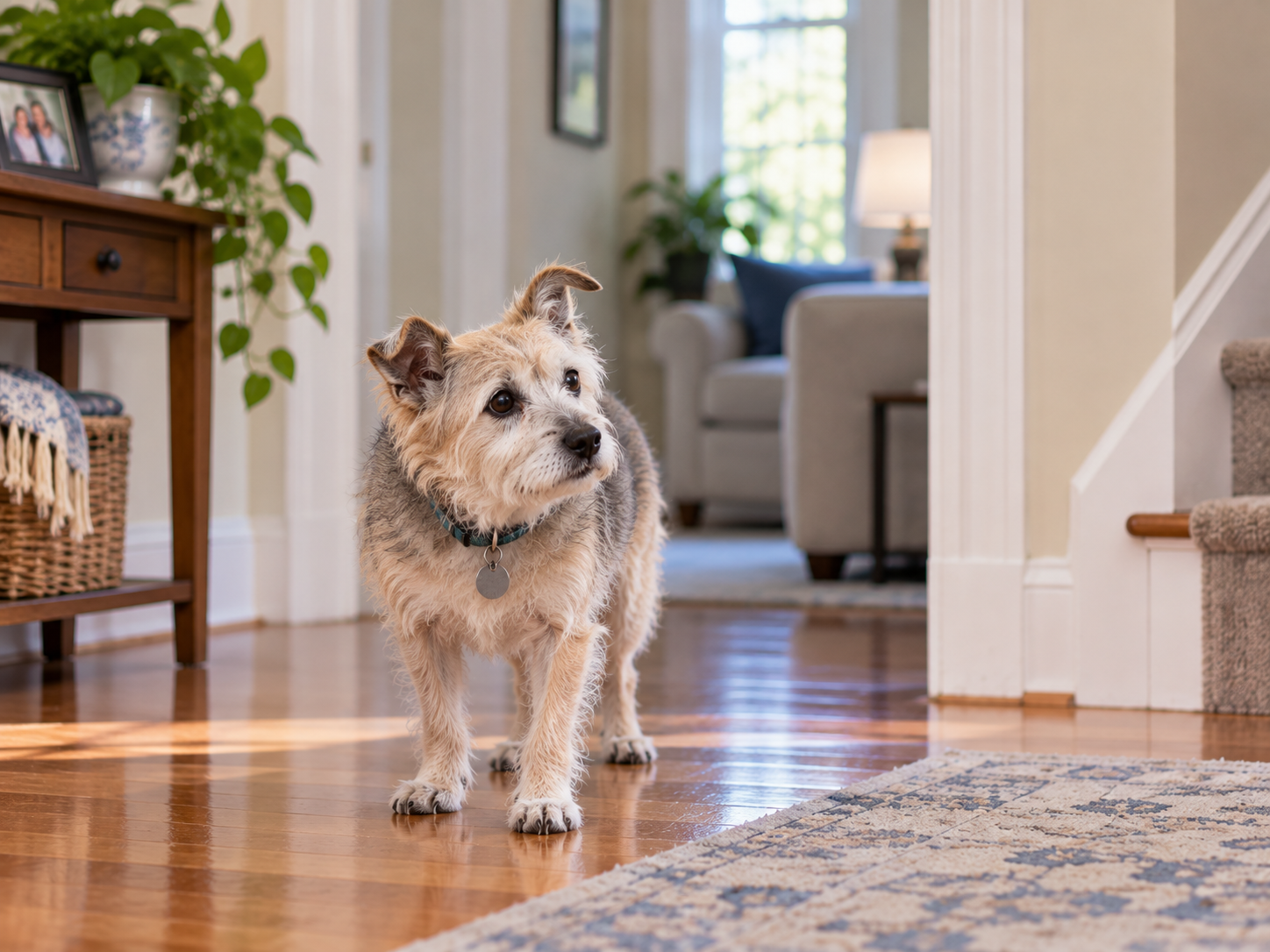
You may find your dog staring at a wall or standing behind furniture without finding her way out. She might approach the wrong side of a door or seem confused in a familiar room. A route she has followed for years may suddenly become difficult.
Give her time when this happens. If she cannot solve the problem, quietly guide her rather than showing frustration. She is not deliberately being difficult.
Does Your Dog Still Know You?
A dog who once greeted you enthusiastically may stop meeting you at the door. Another may become unusually clingy or less interested in affection. Changes like these can make you wonder whether your dog still recognizes you.
One unusual reaction cannot tell you exactly what she remembers. Hearing loss, poor vision, pain, fatigue, and anxiety can also change familiar responses. Look at her behavior over time rather than testing whether she remembers what she once knew.
Your voice, touch, scent, routines, and quiet time together may still provide comfort. Familiar experiences can remain reassuring even when cognition changes. Meet her where she is now.
She Is Awake and Restless at Night
Your dog may sleep for long periods during the day, then become restless after bedtime. She might pace, wander, vocalize, or wake you repeatedly. Sleep changes are often among the problems families notice first.
Tell your veterinarian when the behavior occurs and how long it lasts. Those details can help separate cognitive changes from pain or another cause of disturbed sleep. A short video may also be useful.
A House-Trained Dog Starts Having Accidents
Your dog may stop asking to go outside or have accidents soon after coming indoors. She may even appear unaware that anything happened. Do not punish her for behavior she may no longer control.
House soiling does not automatically mean dementia. Urinary, kidney, digestive, endocrine, mobility, and neurological problems can also cause accidents. An examination helps determine what is actually happening.
Her Activity or Personality Changes
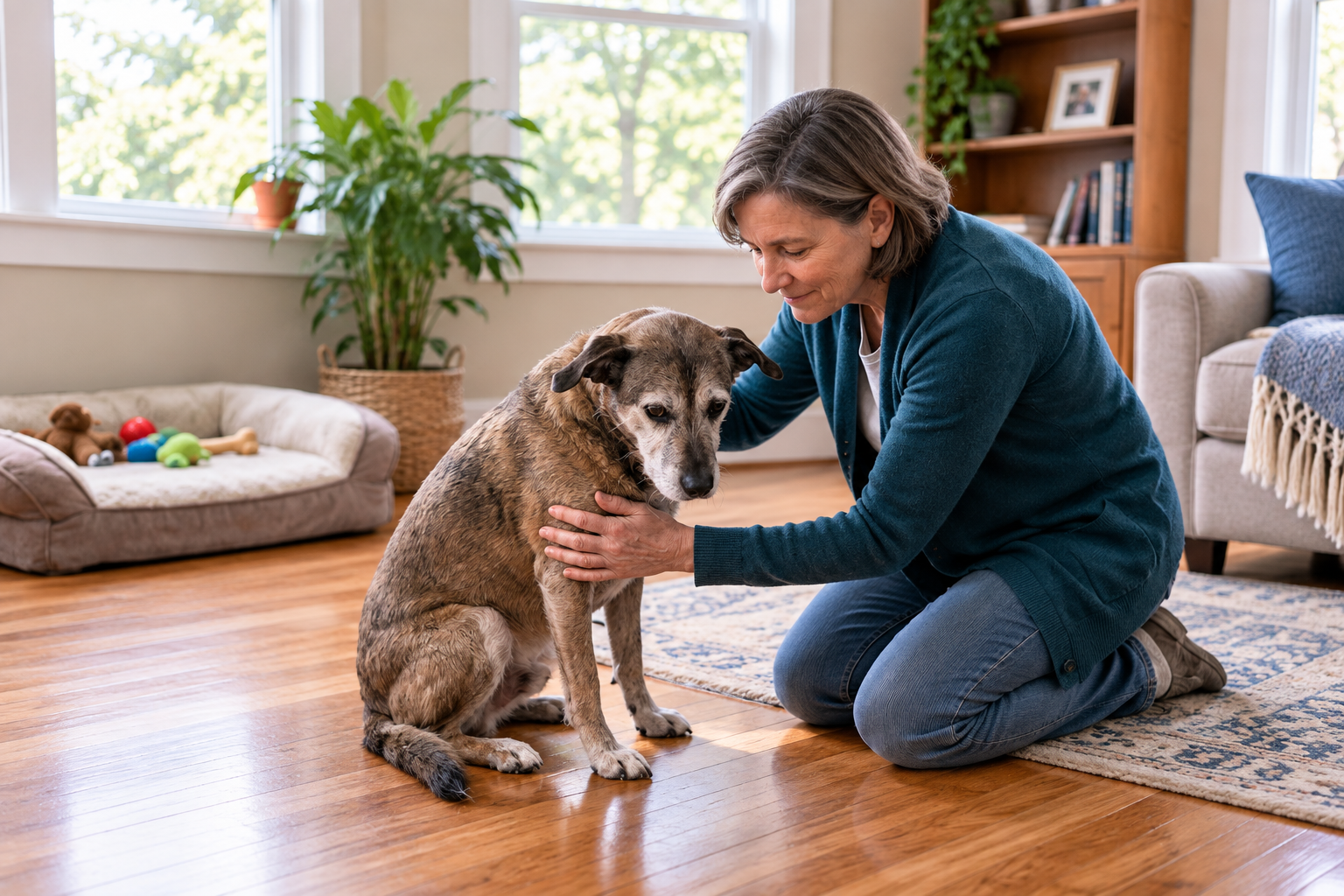
You may notice wandering, repeated pacing, or long periods of staring into space. Favorite toys and familiar games may lose their appeal. Previously learned cues can also become harder for her to follow.
Some older dogs also become more anxious or fearful. They may struggle when left alone or become distressed by changes in routine. New anxiety deserves attention rather than being accepted as an inevitable part of aging.
Do Not Assume Every Change Is Dementia
Several medical problems can produce behavior that resembles cognitive decline. A dog who stops responding to her name may be losing her hearing. Hesitation on stairs may come from arthritis rather than confusion.
Poor vision can make a familiar house harder to navigate. Changes in thirst, urination, appetite, mobility, or sleep may point toward another illness. Sometimes cognitive decline and another health problem occur together.
Sudden or dramatic changes deserve prompt veterinary attention. Our guide to when to visit the vet covers other warning signs worth watching. Bring your veterinarian a list of everything that has changed.
How Will Your Veterinarian Investigate the Changes?
There is no simple blood test that confirms cognitive dysfunction. Your veterinarian will begin with your dog’s history and a physical examination. Blood, urine, orthopedic, or neurological evaluation may reveal another explanation for the behavioral changes.
Current expert guidelines describe two levels of diagnostic certainty. The first uses progressive behavioral signs and an evaluation for alternative causes. The second adds findings from brain MRI and cerebrospinal fluid testing.
That does not mean every senior dog needs advanced testing. Your dog’s health, symptoms, anesthesia risk, and the usefulness of the results all influence that decision. Structured questionnaires can also document cognitive changes and track them over time.
How Is Dog Dementia Treated?
There is no treatment that returns an aging brain to its younger state. However, treatment may improve some signs and make daily life more manageable. Care can include medication, nutrition, enrichment, and changes within your home.
Other health problems need attention too. An arthritic dog will not sleep comfortably simply because her cognitive symptoms are being treated. The best plan addresses your whole dog rather than one diagnosis.
Medication May Help Some Dogs
Selegiline, sold under the brand name Anipryl, is labeled for canine cognitive dysfunction. Some dogs improve with treatment, while others respond less noticeably. Your veterinarian can decide whether it is appropriate for your dog.
Provide a complete list of medications and supplements before treatment begins. Selegiline can interact with other drugs. Never add, stop, or combine medications without veterinary guidance.
Nutrition Can Be Part of the Plan
Your veterinarian may suggest a diet designed to support an aging brain. Some therapeutic diets contain antioxidants, medium-chain triglycerides, and other nutrients studied in older dogs. Nutrition is usually one part of a broader management plan.
Weight, appetite, medical conditions, and your dog’s current food should influence any diet change. Our article about nutrition for senior dogs explores those considerations. Be cautious with supplements marketed specifically for dog dementia because evidence for many remains limited.
How Can You Make Home Easier for a Confused Senior Dog?
You cannot explain cognitive decline to your dog, but you can make her surroundings easier to navigate. Watch for ordinary tasks that now seem difficult. Small practical changes can reduce some of the challenges she faces each day.
Keep Her Routine Familiar
Keep meals, walks, bathroom trips, and bedtime reasonably consistent. Avoid moving furniture without a practical reason. Familiar pathways may be easier for a confused dog to follow.
Offer more bathroom trips if she no longer reliably asks to go outside. She is not deliberately breaking her training. Changing the routine is more useful than correcting an accident afterward.
Make Nighttime Navigation Safer
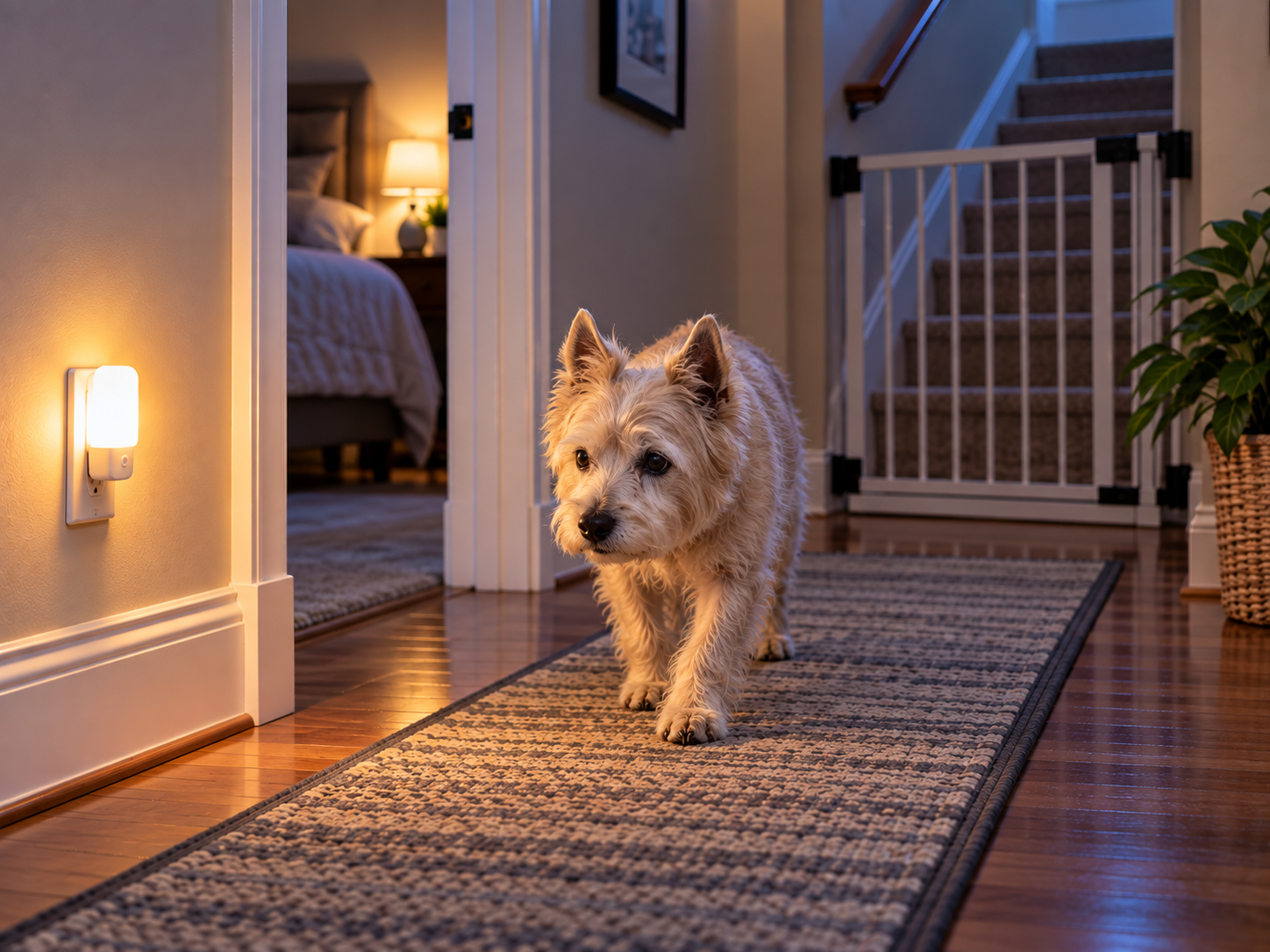
A small nightlight can illuminate a dark hallway or route to water. Nonslip runners may provide better footing for a dog with mobility problems. A gate can keep nighttime wandering away from unsafe stairs.
Keep water, bedding, and frequently used areas easy to reach. Watch how your dog moves through the house during both day and night. Her behavior may show you where another adjustment would help.
Keep Her Gently Engaged
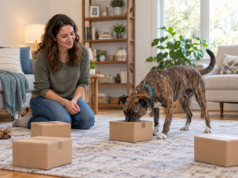
Try easy scent games, familiar cues, food searches, or short periods of gentle play. Choose activities your dog can still enjoy without becoming frustrated. Mental activity does not need to be difficult to be worthwhile.
An easy food puzzle for dogs may suit a senior who enjoys solving simple problems. Start with an easy task and supervise her. Stop if the activity becomes confusing rather than enjoyable.
Our brain games for dogs provide additional ideas. Adapt activities to your dog’s mobility, senses, and current abilities. This is enrichment, not a test she needs to pass.
What Can You Do Before Cognitive Problems Appear?
No strategy has been proven to guarantee that a dog will avoid cognitive dysfunction. Exercise, social interaction, nutrition, veterinary care, and mental enrichment still support overall health. They are worthwhile without promising prevention.
A large Dog Aging Project study found an association between lower activity and higher odds of cognitive dysfunction. That does not prove inactivity causes dementia because disease may also reduce activity. Keep your dog moving in ways that suit her health and physical abilities.
How Do You Know Whether Your Dog Still Has a Good Quality of Life?
As cognitive problems progress, individual bad moments can become easier to remember than entire days. A simple record can give you a clearer picture. Track patterns across days and weeks instead of judging everything by one difficult night.
Notice whether your dog still enjoys meals, affection, comfortable sleep, outdoor sniffing, or favorite family routines. Also record anxiety, accidents, restless nights, pain, and difficulty settling. Marking each day as good, mixed, or difficult may reveal gradual changes.
Bring that record to veterinary appointments. Quality-of-life discussions can guide treatment and home care long before the final days of life. Increasing confusion, anxiety, lost sleep, or declining enjoyment deserves another conversation with your veterinarian.
Your Senior Dog Still Needs You, Even When Things Change
Watching a dog you know so well begin to change can be difficult. Yet confusion does not erase every source of comfort or pleasure in her life. Patient guidance, familiar routines, appropriate veterinary care, and time with you can still shape her days.
Keep noticing the small changes and tell your veterinarian when something concerns you. Canine cognitive dysfunction is one possible explanation, but it is not the only one. Finding the cause gives you the best opportunity to make your dog’s later years comfortable and secure.
Sources
- Canine Cognitive Dysfunction Syndrome Working Group: Guidelines for Diagnosis and Monitoring
- American Animal Hospital Association: Managing Cognitive Dysfunction and Behavioral Anxiety
- Scientific Reports: Evaluation of Cognitive Function in the Dog Aging Project
Amazon Affiliate Disclosure: As an Amazon Associate, Excellent Dogs Club may earn from qualifying purchases. This does not change the price you pay.
Photo Credit: All images © Sloan Digital Publishing and licensed stock sources. Used with permission.