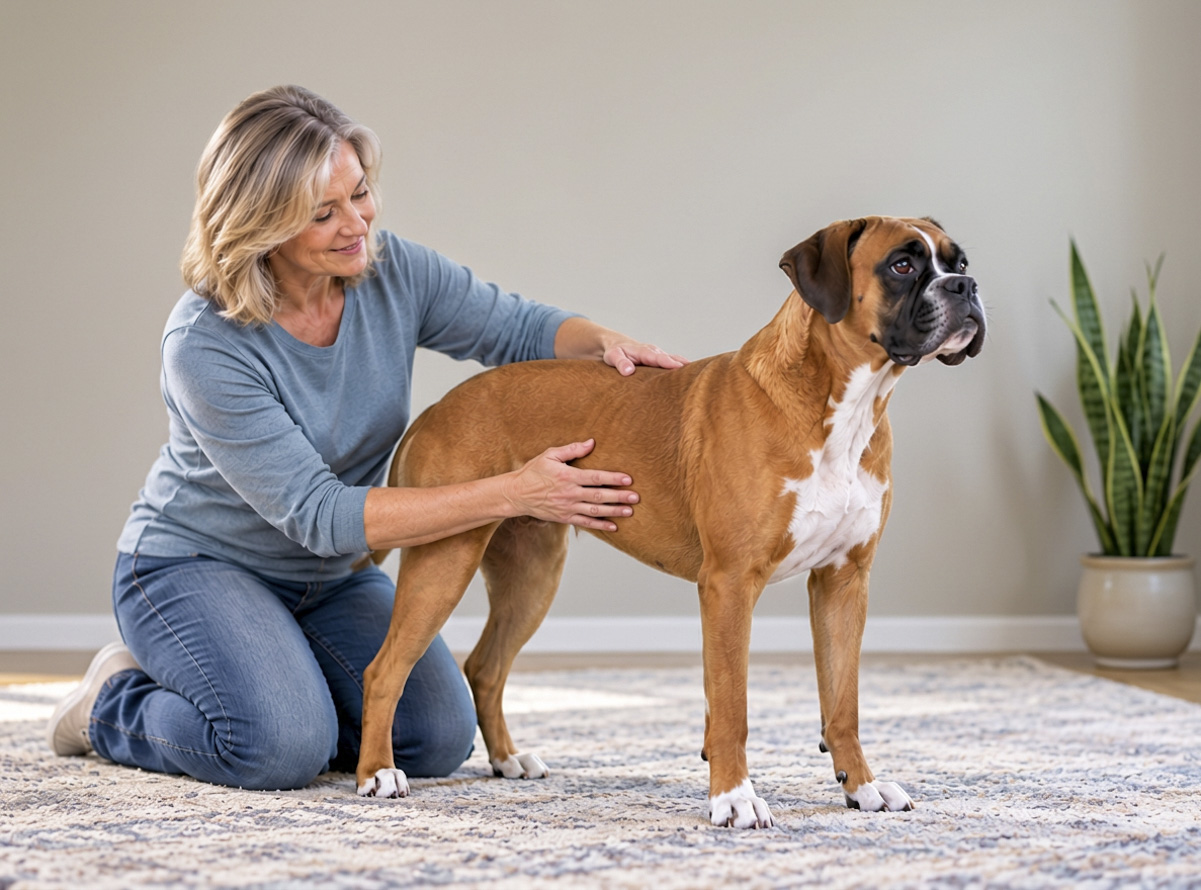
A dog body condition score gives you a better way to judge healthy weight than the scale alone. Two dogs can weigh the same yet carry very different amounts of body fat. Looking at body shape and feeling key areas helps reveal whether a dog is too thin, ideal, or overweight.
Veterinary teams commonly use body condition scoring during routine exams because weight alone cannot tell the whole story. Breed, frame size, muscle, age, and coat can all change how a number on the scale looks. Learning the same basic checks at home can help owners notice gradual changes earlier.
What Is a Dog Body Condition Score?
A body condition score, or BCS, estimates body fat through visual examination and hands-on assessment. Veterinarians look at the ribs, waist, abdomen, spine, pelvis, and areas where fat commonly accumulates. The score does not diagnose disease, but it gives useful information about nutritional status.
Two scoring systems appear most often: a five-point scale and a nine-point scale. On the nine-point system, most dogs fall in the ideal range at 4/9 or 5/9. On a five-point scale, an ideal score is usually 3/5, so always note which scale is being used.
Why the Number on the Scale Is Not Enough
A dog’s body weight can change for reasons other than body fat. Muscle gain, muscle loss, growth, pregnancy, fluid changes, and large meals can all affect the number. Even an unchanged weight can hide a shift from muscle toward fat.
That is why a 60-pound dog cannot be labeled healthy or overweight from weight alone. A lean athletic dog and a less muscular dog may share the same scale weight. Body condition scoring adds information that the number cannot provide by itself.
Start With the Ribs
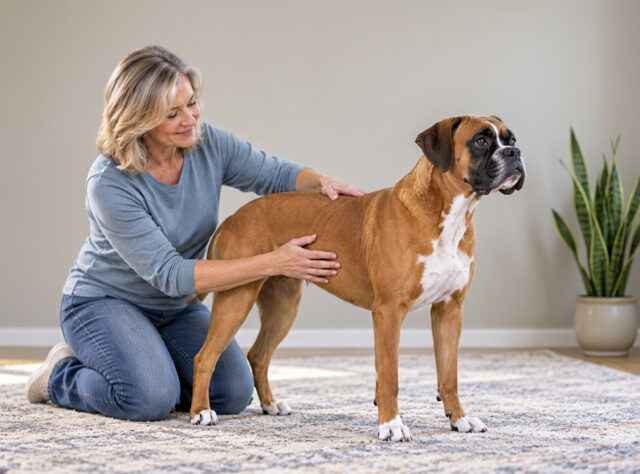
Your hands often tell you more than your eyes, especially beneath a thick coat. Run your fingertips gently over your dog’s ribs just behind the front legs. At an ideal condition, you should feel individual ribs easily beneath a thin layer of fat.
If the ribs are sharply visible and feel prominent with almost no covering, the dog may be under ideal condition. If you must press firmly to find the ribs, excess fat may be covering them. Very thick coats can hide both problems, which makes palpation especially useful.
Look for a Waist From Above
Stand over your dog and look down along the back from the rib cage toward the hips. Most dogs at an ideal body condition have a visible waist behind the ribs. The body should narrow somewhat before widening again toward the pelvis.
A missing waist can suggest excess body fat, but breed shape still deserves consideration. Greyhounds and other sighthounds naturally look much leaner than many stockier breeds. A Labrador Retriever and a Whippet should not be expected to share the same outline.
Check the Abdominal Tuck From the Side
Next, view your dog from the side while standing naturally. The abdomen should usually rise from the end of the rib cage toward the hind legs. Veterinarians often call this upward slope the abdominal tuck.
A pronounced tuck may accompany a low body condition, while little tuck may appear with excess fat. Conformation can change the degree of tuck seen in individual dogs. The rib check and waist view should therefore be considered together rather than separately.
Understanding the Nine-Point Dog Body Condition Score
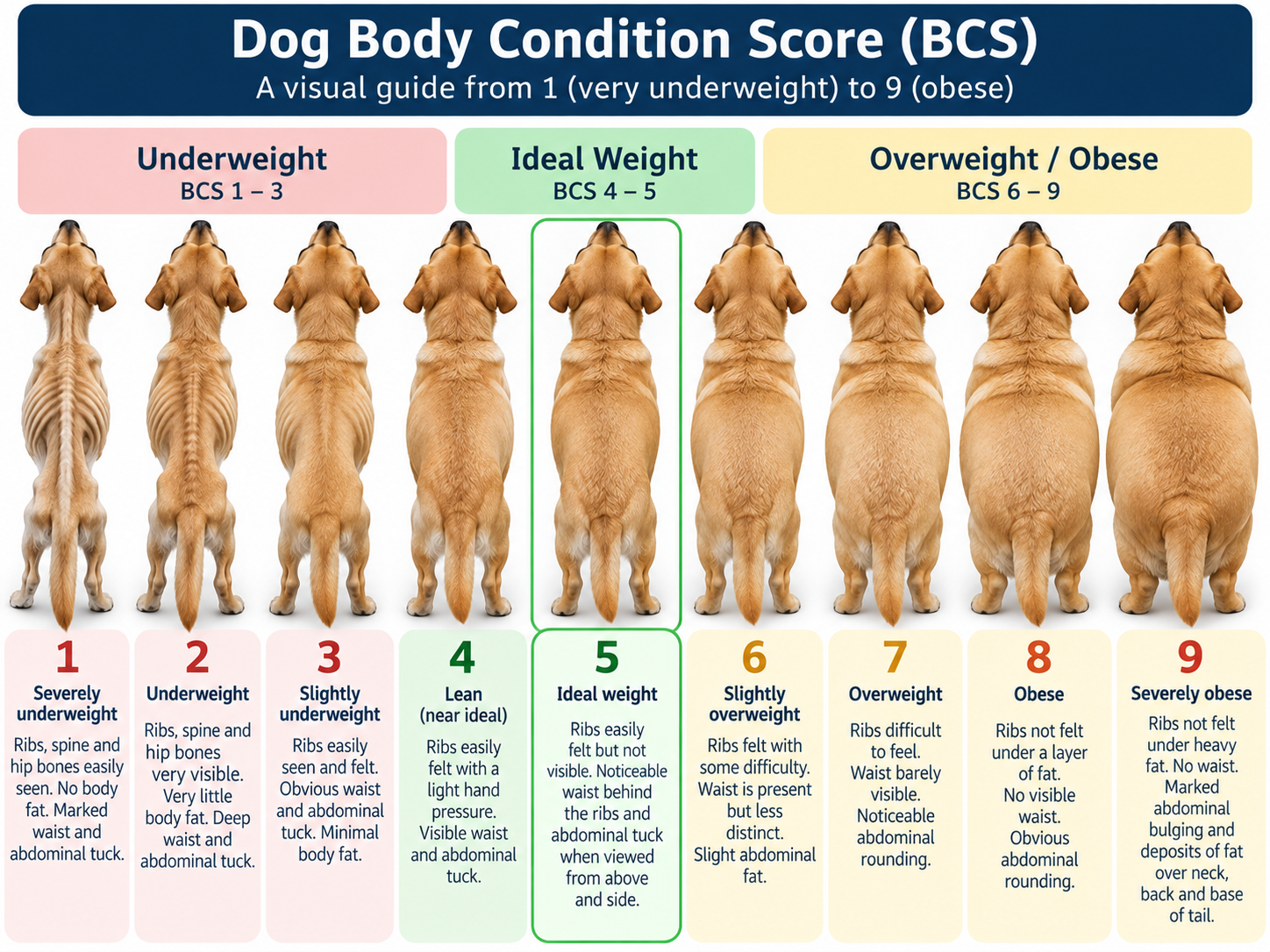
The nine-point system provides more detail than the five-point system and is widely used in veterinary medicine. Scores of 1 through 3 indicate an under-ideal condition, while 4 and 5 are generally ideal. Scores of 6 through 9 indicate increasing levels of excess body fat.
The World Small Animal Veterinary Association body condition chart shows top and side views for comparison. Its descriptions combine what the dog looks like with what the examiner can feel. That combination is important because appearance alone can be misleading.
What a Dog Body Condition Score of 4 or 5 Out of 9 Looks Like
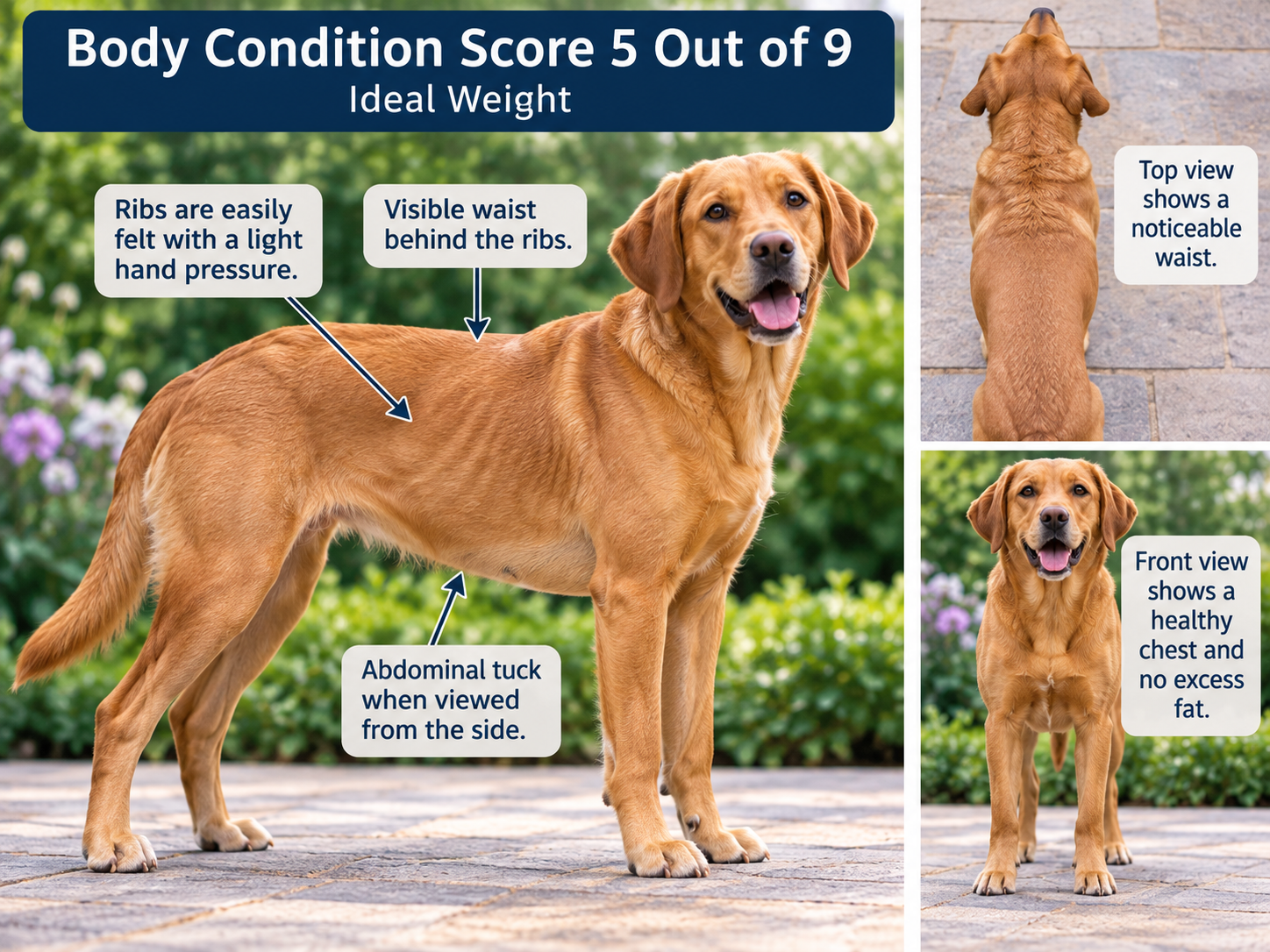
At 4/9, the ribs are easy to feel with minimal fat covering them. The waist is easy to see from above, and the abdominal tuck is evident from the side. Some naturally lean or highly active dogs may fit comfortably at this score.
At 5/9, the ribs remain easy to feel without excess fat covering them. A waist is still visible behind the ribs, and an abdominal tuck remains apparent. Many healthy adult dogs will fall near one of these two scores.
What Scores Above 5 Can Mean
A dog at 6/9 usually has a slight excess of fat over the ribs, although the ribs remain palpable. The waist may still be visible, but it becomes less distinct. As scores rise, the ribs become harder to feel and the waist gradually disappears.
AAHA notes that each whole-number score above 5/9 corresponds roughly to another 10 percent above ideal body weight. That estimate helps explain why a change from 5/9 to 7/9 is more significant than it may sound. Your veterinarian can estimate a realistic target weight using the dog’s actual build and condition.
What Low Scores Can Mean
Dogs at 3/9 or below have less body fat than the usual ideal range. Ribs may become visible, and the spine or pelvic bones may become increasingly prominent. Very low scores can also accompany muscle loss, illness, inadequate calorie intake, or other medical problems.
Do not assume a thin dog simply needs larger meals. Unexplained weight loss deserves veterinary attention, particularly when appetite, thirst, stool, energy, or behavior has also changed. The cause should guide the feeding plan.
Body Condition and Muscle Condition Are Not the Same
Body condition scoring estimates fat, while muscle condition scoring evaluates muscle mass. A dog can carry excess fat and still lose muscle, especially with aging or chronic illness. That combination may be missed when owners focus only on body weight.
Veterinary teams assess muscle over areas such as the spine, shoulder blades, skull, and pelvis. WSAVA recommends considering both body condition and muscle condition because each answers a different question. This distinction becomes especially important in senior dogs and dogs with ongoing health problems.
Breed and Coat Can Fool the Eye
Body condition charts provide useful standards, but they do not erase normal breed differences. Sighthounds often carry less body fat and show more definition than many other breeds. Broad, heavily muscled breeds may look thicker without necessarily carrying excess fat.
Coat can complicate the picture even more. Dense double coats, curls, feathering, and long hair can hide ribs, waist, and abdominal shape. Our article on why dog coat colors change explains how appearance can shift over time for reasons unrelated to weight.
For heavily coated dogs, your hands become just as important as your eyes. Feel through the coat rather than judging the silhouette from a photograph alone. Regular hands-on checks can reveal changes that the coat hides.
Why Owners Often Miss Gradual Weight Gain
Weight usually changes slowly enough that the person seeing the dog every day may not notice. Photographs taken several months apart can reveal changes that seemed invisible in real time. Regular body condition checks provide another way to recognize a trend before it becomes severe.
Our eyes can also adjust to seeing heavier dogs as normal. AAHA reports that many dogs are overweight, which can shift an owner’s idea of a healthy outline. Learning the landmarks of ribs, waist, and abdominal tuck gives you a more objective reference.
How Often Should You Check Body Condition?
A quick home check once a month is reasonable for many healthy adult dogs. Use the same nine-point chart each time and record the score with the dog’s weight when possible. Consistency makes small changes easier to recognize.
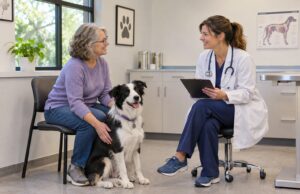
 Puppies, seniors, working dogs, and dogs on weight-management plans may need more frequent monitoring. Veterinary teams can also assess body condition during routine appointments. Ask your veterinarian to show you the landmarks on your own dog so you can compare future checks accurately.
If Your Dog Scores Above the Ideal Range
A higher score should prompt a closer look at total calorie intake rather than an abrupt food cut. Meals, treats, table food, chews, training rewards, and foods used for medication all contribute calories. Measuring portions consistently can uncover more intake than owners realize.
Exercise helps, but diet usually needs attention when excess calories drive weight gain. A veterinarian can consider age, activity, medical conditions, medications, and current food before recommending a calorie target. Dogs with pain, breathing problems, or limited mobility may need a modified exercise plan.
Training rewards can add more calories than owners realize when sessions happen every day. If you use food during impulse-control training or other practice, count those rewards as part of daily intake. Using some of the dog’s measured food for training can reduce unnecessary extras.
If Your Dog Scores Below the Ideal Range
A low score also deserves more than simply increasing the food bowl. Dental disease, intestinal problems, endocrine disease, cancer, chronic inflammation, pain, and other conditions can affect weight or muscle. A veterinary exam can help determine whether the problem involves intake, absorption, metabolism, illness, or several factors together.
Senior dogs deserve particular attention because muscle loss can occur even when body fat appears adequate. A dog may remain near the same scale weight while losing muscle and gaining fat. Tracking body condition and muscle condition together can reveal that change sooner.
Use Trends, Not One Isolated Score
Body condition scoring works best when you repeat it consistently rather than treating one score as a verdict. Record the date, body weight, BCS, and any major changes in diet or activity. A simple history can make the next veterinary conversation more useful.
Contact your veterinarian sooner when weight changes quickly or without an obvious reason. Increased thirst, vomiting, diarrhea, coughing, reduced stamina, pain, appetite changes, or weakness can add important context. These signs should not be dismissed as a simple weight-management problem.
Healthy Weight Is About More Than Appearance
A healthy dog body condition supports mobility, comfort, and everyday activity. Excess body fat can add strain to joints and may complicate several health problems. Being too thin can also signal inadequate nutrition, muscle loss, or underlying disease.
The goal is not to make every dog look the same. It is to help each dog maintain an appropriate amount of body fat while preserving muscle and function. Your veterinarian can help you decide what that looks like for your dog’s breed, age, health, and lifestyle.
Learn Your Dog’s Normal Body Condition
Once you know what an ideal body condition feels like, small changes become easier to recognize. Feel the ribs, look for the waist, check the abdominal tuck, and compare those findings with a consistent scoring chart. Record the result rather than relying on memory alone.
Use the score as a monitoring tool, not a substitute for veterinary care. A healthy weight is only one part of a dog’s overall health, and unexplained changes deserve attention. Regular hands-on checks can help you notice when it is time to ask a veterinarian for a closer look.
Sources
- World Small Animal Veterinary Association: Global Nutrition Guidelines
- WSAVA: Body Condition Score Chart for Dogs
- American Animal Hospital Association: Nutrition and Weight Management Screening Evaluation
- Merck Veterinary Manual: Overview of Nutrition in Small Animals
Veterinary Disclaimer: This article provides general educational information and is not a substitute for veterinary diagnosis or treatment. Ask your veterinarian about unexplained weight changes, muscle loss, or a feeding plan for your individual dog.
Amazon Affiliate Disclosure: As an Amazon Associate, we may earn from qualifying purchases without any additional cost to you.
Photo Credit: All images © Sloan Digital Publishing and licensed stock sources. Used with permission.