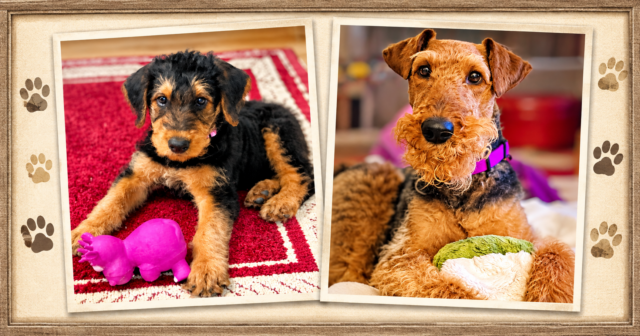
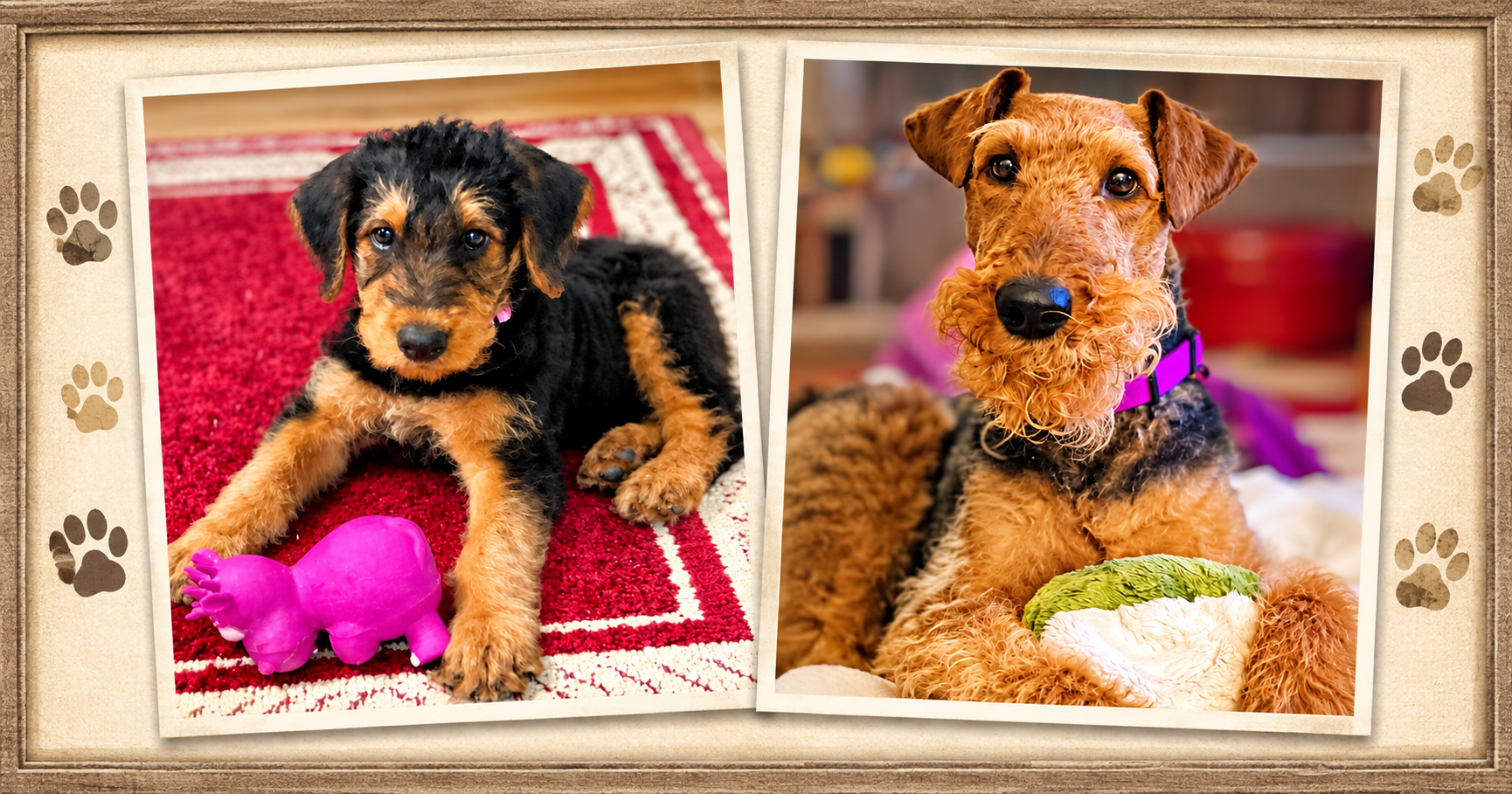
Dog coat color changes can be remarkable, and Gracie is a wonderful example. When she was eight weeks old, much of her fuzzy Airedale Terrier puppy coat was black. Tan already showed around her face and legs, offering clues about the adult dog she would become. Nearly six years later, those lighter areas had become a prominent part of her beautiful Airedale coloring.
The first photograph was taken in June 2020, and the second was taken in April 2026. Seen separately, neither photograph seems particularly surprising for an Airedale. Put them together, however, and someone unfamiliar with the breed might question whether they show the same dog.
They do, and Gracie’s transformation raises an interesting question. How can a dog’s color change so dramatically between puppyhood and adulthood? Genetics and coat development provide much of the answer.
A Puppy May Not Be Wearing Its Final Colors
Dog coat color changes do not all happen for the same reason. Genes establish the basic instructions for canine pigmentation, but the finished appearance may develop gradually. Some inherited traits affect how color appears as a dog’s coat matures. Replacing soft puppy hair with the adult coat can make those changes even more noticeable.
Not every dog that becomes lighter is experiencing the same process. Some breeds inherit progressive lightening, sometimes called clearing, which begins while they are young. Older dogs may develop white hairs simply because they are aging.
Sunlight, grooming, and seasonal shedding can also alter the way a coat looks. These differences explain why two dogs can become lighter for entirely different reasons. Knowing the dog’s breed and age can provide important clues.
Gracie Was Growing Into Her Airedale Colors
The Airedale breed standard describes tan on the head, ears, legs, chest, and lower portions of the body. Black or dark grizzle covers the upper portions and sides. Gracie’s mature coloring displays that familiar pattern beautifully.
Her puppy photograph demonstrates why age matters when judging coat color. Black was visually dominant at eight weeks, but tan already appeared around her muzzle, eyebrows, and legs. Those lighter areas became considerably more prominent as her mature coat developed.
Gracie did not simply turn tan, nor was this ordinary age-related graying. Her changing coat gradually revealed the familiar adult Airedale appearance. Comparing the two photographs makes years of gradual development suddenly obvious.
Some Breeds Change Even More Dramatically
Gracie’s transformation is striking, but the Kerry Blue Terrier takes color change considerably further. Kerry puppies are born apparently black, while mature dogs develop some shade of blue-gray or gray-blue. Transitional coats may include dark blue, brownish shades, or mixtures of colors.
Breeders commonly call this process clearing, and individual dogs do not all change at the same rate. The transformation is important enough to appear in the official Kerry Blue Terrier breed standard. A Kerry remaining solid black at 18 months or older is disqualified from the show ring.
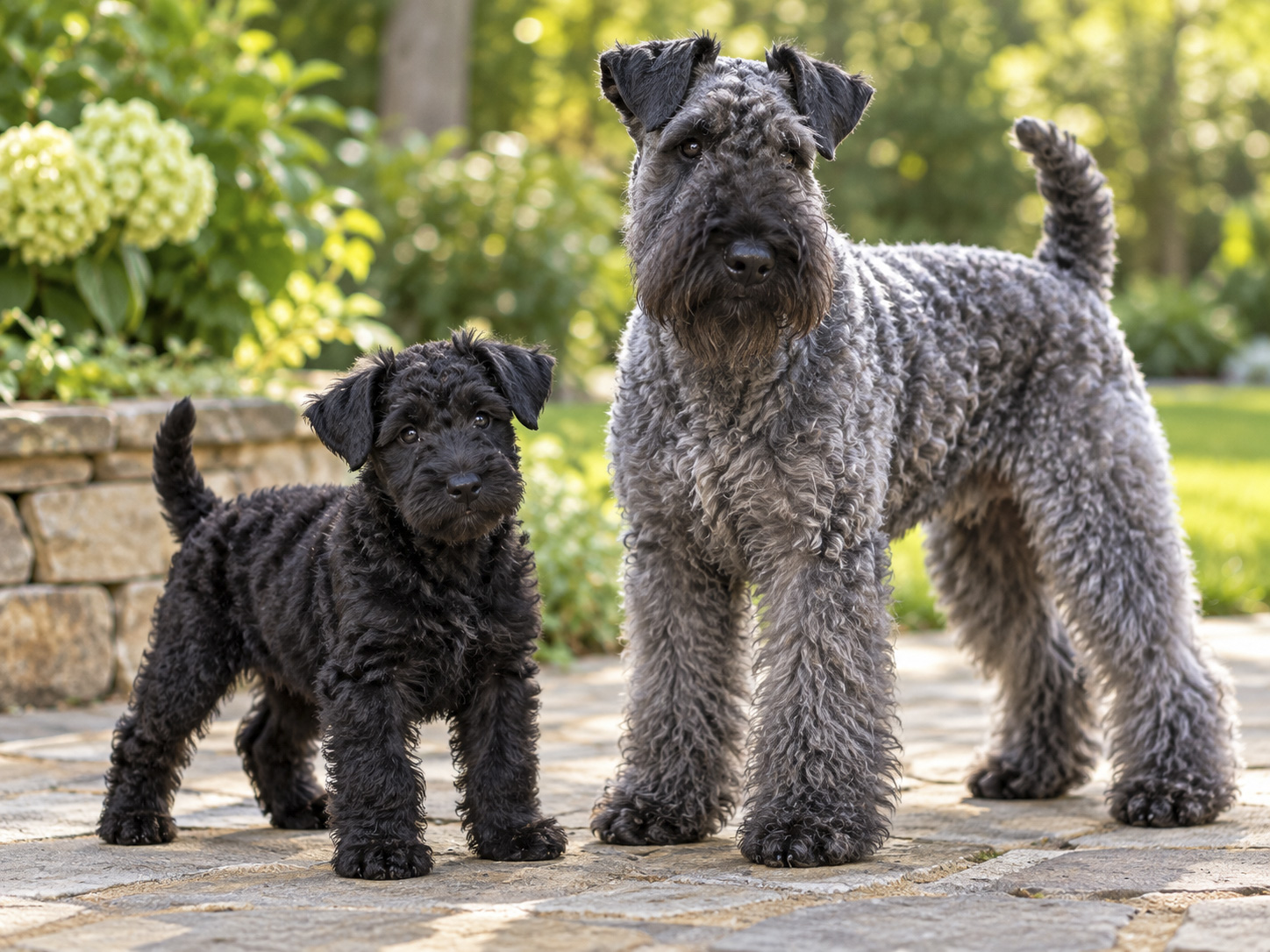
An owner can therefore bring home what appears to be a little black puppy. Over time, that puppy can become an unmistakably blue-gray adult. Few breeds demonstrate more clearly that puppy color is not always permanent.
The Lamb-Like Bedlington Has Another Surprise
Bedlington Terriers can look almost like lambs with a little Poodle mixed in. Their arched backs, distinctive topknots, and softly curled coats contribute to that unusual appearance. The soft exterior can be deceptive because Bedlingtons are courageous, energetic terriers.
Their coloring provides another surprise. Puppies may begin life much darker than the adults they eventually become. Blue puppies can appear nearly black, while liver or sandy puppies may begin dark brown.
As the coat matures, the Bedlington Terrier’s graying gene produces the lighter adult appearance associated with the breed. Coat texture makes the transformation even more noticeable. A pale, curly adult Bedlington can look remarkably different from the dark puppy it once was.
Yorkies Change Both Color and Coat
Yorkshire Terrier puppies begin life black and tan. Mature Yorkies are famous for steel-blue coloring across the body and rich golden tan around the head. That transition develops gradually rather than appearing overnight.
The coat itself is changing at the same time. Soft puppy fluff develops into the fine, silky hair associated with the adult Yorkshire Terrier. Changes in color and texture can therefore transform the dog’s overall appearance.
This combination demonstrates why coat changes can be difficult to describe with color alone. Hair texture, length, pigment, and grooming all affect what our eyes perceive. Several changes occurring together can produce a dramatic before-and-after difference.
A Silver Poodle Can Begin Life Looking Black
Poodles provide another good example of misleading puppy color. A silver Poodle can be born dark enough to appear black. Silver becomes increasingly apparent as the coat develops.
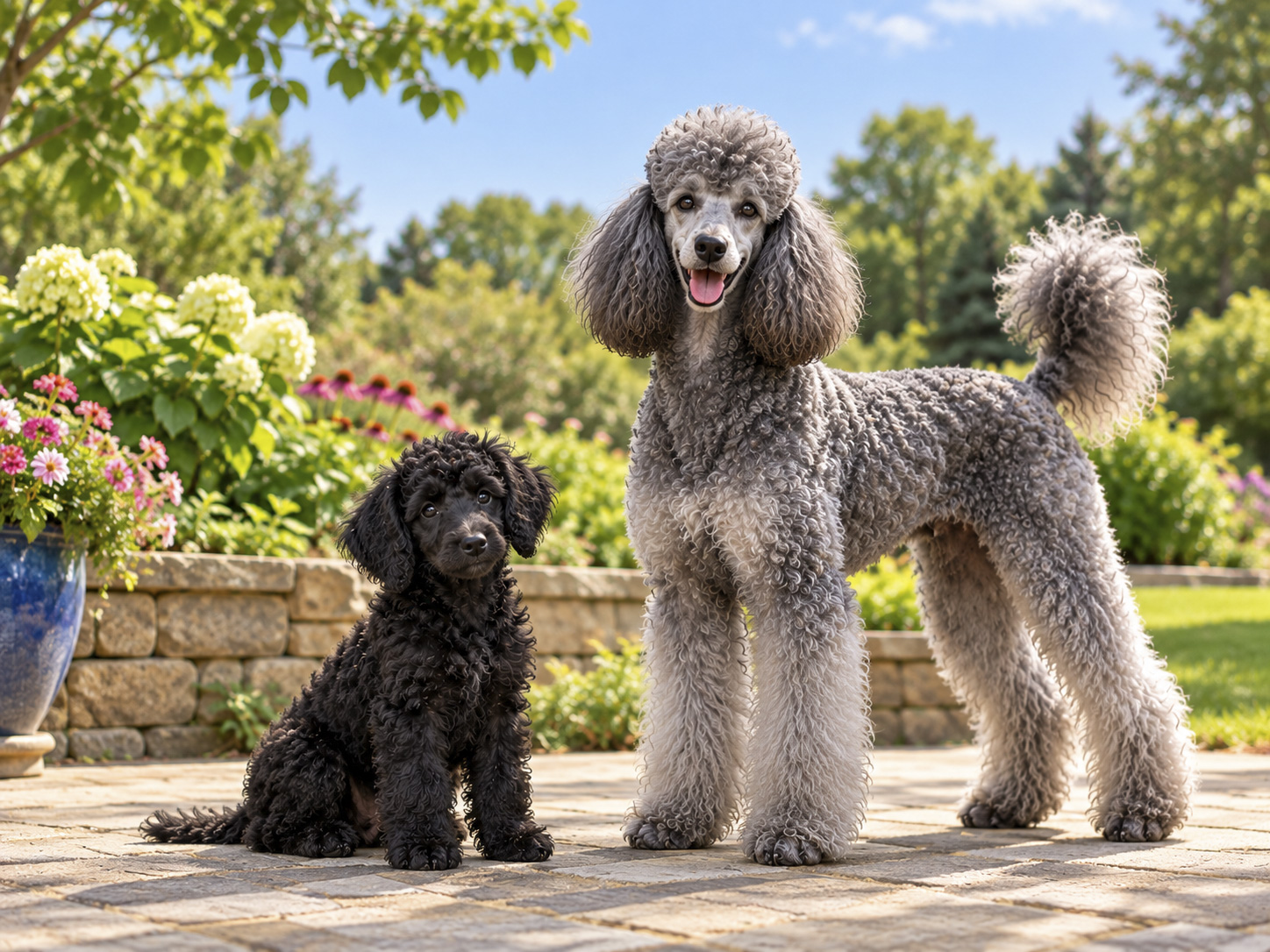
The change may not appear uniformly across the entire dog. Transitional shading can leave some portions looking darker than others. Coat length and grooming can make those differences more or less noticeable.
An experienced breeder may recognize clues that a puppy buyer would overlook. Knowledge of the parents and previous generations can also help predict mature coloring. Even so, individual dogs can still provide surprises.
Can You Predict Your Puppy’s Adult Color?
Breed is one of the best starting points for predicting coat development. If color change commonly occurs within that breed, photographs of parents and older relatives may provide useful clues. Experienced breeders may also recognize early signs of the likely adult coat.
Prediction becomes harder with mixed-breed dogs because inherited traits from several ancestors may interact. Genes can influence pigment, coat length, curl, texture, and facial furnishings. Some characteristics become much easier to recognize after the adult coat begins replacing puppy fuzz.
DNA testing can provide information about ancestry and some inherited coat traits. It cannot produce a guaranteed photograph of how a particular puppy will eventually look. Sometimes watching those characteristics emerge becomes part of the pleasure of raising the dog.
Puppies sometimes grow into dogs that look quite different from what we imagined. Appearance is only one example of how the dog you expected can differ from the dog you actually get. Personality, size, coat, and behavior can bring surprises of their own.
When a Coat Change Deserves Attention
Normal dog coat color changes usually occur gradually in an otherwise healthy animal. Sudden changes involving the skin or coat deserve closer attention. Hair loss, itching, inflammation, sores, or unusual changes in coat quality may signal something other than normal development.
Sun exposure can make some dark coats appear faded. Clipping may reveal portions of hair that differ in shade, while seasonal shedding can temporarily alter appearance. These cosmetic effects differ from an inherited progression toward mature coloring.
If an unexplained change occurs alongside other symptoms, ask your veterinarian about it. Age, breed, timing, skin condition, and overall health all provide useful context. A changing coat is usually fascinating, but sometimes it can provide information about the dog’s health.
A Horse of a Different Color
Gracie’s photographs immediately reminded me of the expression “a horse of a different color.” I had seen the literal version over the years with our Appaloosas. Watching their ultimate coat colors develop demonstrated how poorly an animal’s appearance at birth can sometimes predict its later coloring.
One registered Appaloosa mare (call name, Majestic) was solid black as a foal. Over the years, her color progressively changed until she appeared white. Her daughter (call name, Cherokee) began life black with a white blaze and only a few white spots across her rump and hips.
Cherokee’s transformation followed another path. Her base color changed toward bay while the white spotting became larger and more prominent. Eventually, her coat also began fading toward white.
A related stallion in our small herd (call name, Little Joe) was a different story altogether. He was born a bay with a large white blanket across his rump and hips containing bay spots. His blaze, white socks, tiny white ear tips, and overall coloring remained remarkably stable throughout his life.
Appaloosa and canine color genetics are not the same. However, both demonstrate how inherited color can produce remarkably different results over time. Even related animals may follow very different paths as they mature.
Growing Into Color Is Not the Same as Growing Old
Most dog owners eventually witness another type of color change. Dark hairs around the muzzle may begin turning white, followed by changes around the eyebrows and face. This familiar senior graying differs from developmental changes in young dogs.
Timing provides an important clue. Genetically influenced breed transformations often begin during puppyhood or young adulthood. Age-related graying generally becomes more noticeable later in life.
A dog can experience both processes during one lifetime. The puppy coat first develops into the genetically influenced adult appearance. Years later, aging may alter that mature coat again.
Take the Puppy Pictures
Living with a dog every day can make gradual changes almost invisible. Today’s coat looks much like yesterday’s, so tiny differences easily escape our notice. Years of those small changes can eventually produce a remarkably different-looking dog.
That is one reason puppy photographs become so valuable for documenting dog coat color changes. Pictures taken at several ages preserve changes in color, markings, texture, proportions, ears, and expression. Details that seemed permanent may eventually disappear.
If you enjoy keeping those memories together, a dog photo album or keepsake book can create a wonderful record of how your puppy changes through the years.
Gracie’s photographs provide exactly that kind of record. One shows an eight-week-old Airedale puppy in June 2020. The other shows the same Gracie at six years old in April 2026.
Her transformation happened gradually, but the photographs place those years side by side. They remind us that genetics may still have surprises waiting after a puppy comes home. Sometimes that puppy really does grow into a dog of a different color.
Gracie Photo Credit: Gracie photos courtesy of her owner. Used with permission.
Amazon Affiliate Disclosure: As an Amazon Associate, we may earn from qualifying purchases without any additional cost to you.
Photo Credit: Special Thanks to Penny Teninty and Denny Grizzle for the photos of Gracie, then and now. All other images © Sloan Digital Publishing and licensed stock sources. Used with permission.