


Dogs live beside people in nearly every part of the world, but breed preferences are far from universal. The popular breeds in one country may look very different from those favored somewhere else. Housing, history, working traditions, and family lifestyles all influence which dogs people choose. Registration records also show how quickly those preferences can change.
Comparing countries takes care because no worldwide dog census ranks every breed by household ownership. Kennel clubs usually report registrations, pedigrees, or puppy records instead. Those figures can exclude mixed breeds and purebred dogs without papers. Even so, they offer useful snapshots of changing preferences.
Why Dog Breed Popularity Changes From Country to Country
A breed often becomes common because its original work matched local needs. Herding dogs developed where livestock work mattered, while retrievers became valued hunting partners. Small companion breeds often fit crowded urban homes more easily. Modern media, fashion, and changing household sizes can then reshape those older patterns.
Climate also plays a part, although it never determines popularity by itself. Thick-coated working breeds may have historical ties to colder regions. Shorter-coated dogs can be easier to manage in warm climates, depending on the breed. Owners still need to consider exercise, grooming, temperament, and health rather than geography alone.
Population trends can change surprisingly fast. A breed that dominated registrations for decades may lose its top position within a few years. That happened in the United States when the French Bulldog overtook the Labrador Retriever. Current figures make international comparisons more useful than simple lists of national dog symbols.
United States: French Bulldogs Lead the AKC Rankings
For 31 years, Labrador Retrievers held the top position in American Kennel Club registration rankings. That long run ended when the French Bulldog moved into first place in 2022. The Frenchie remained number one in the AKC’s 2025 rankings. Labrador Retrievers ranked second, followed by Golden Retrievers and German Shepherd Dogs.
The shift does not mean Americans suddenly stopped loving Labradors. French Bulldogs fit many smaller homes and need less room than large sporting breeds. Their compact size has helped them become especially visible in cities. Prospective owners should still research breed-specific health concerns before choosing one.
Labradors remain deeply established in American family and working-dog culture. Their trainability and retrieving instincts support hunting, service work, detection, and companionship. Golden Retrievers and German Shepherd Dogs also remain near the top. American preferences therefore combine newer urban trends with long-standing enthusiasm for versatile working breeds.
United Kingdom: Labradors and Spaniels Remain Strong
British Kennel Club puppy registrations show a different pattern. In early 2025, the Labrador Retriever held first place, followed by the Cocker Spaniel. Golden Retrievers and French Bulldogs also appeared near the top. Several Dachshund varieties and traditional British gundogs remained strongly represented.
That pattern fits Britain’s long relationship with sporting dogs. Labradors, spaniels, and retrievers were developed or refined for field work and remain familiar companions. The Cocker Spaniel’s size also suits many households wanting an active dog without choosing a large breed. Its popularity shows how working heritage can survive long after most owners stop hunting.
The older version of this article described the Bulldog as Britain’s dominant breed. Current registration data does not support that claim. Bulldogs remain culturally recognizable and historically associated with Britain. Cultural symbolism, however, is not the same as current registration leadership.
Japan: Toy Poodles, Chihuahuas, and Dachshunds Top Registrations
Japan Kennel Club records challenge another familiar assumption. The Shiba Inu may be strongly associated with Japan, but it did not lead 2025 registrations. Poodles ranked first, with Toy Poodles accounting for most registrations. Chihuahuas ranked second, and Dachshunds ranked third.
Pomeranians and Miniature Schnauzers also ranked ahead of the Shiba Inu. The Shiba placed 16th in the Japan Kennel Club’s calendar-year 2025 list. That does not make the breed unimportant in Japan. It simply shows the difference between cultural identity and current registration volume.
Small dogs can fit well into dense urban environments, although size never eliminates exercise or training needs. Japan’s rankings therefore echo a pattern seen in many developed cities. Compact companion breeds often gain ground where living space is limited. Owners still need to match temperament and energy level to daily life.
France: Australian Shepherds Hold a Narrow Lead
France offers a striking example of a foreign-named breed becoming a national favorite. The Centrale Canine recorded 15,664 Australian Shepherd registrations in the French LOF during 2024. Golden Retrievers followed with 14,402 registrations. Staffordshire Bull Terriers held third place with 9,108.
The results show that French preferences are not dominated by the French Bulldog. The Australian Shepherd held first place for a seventh consecutive year. Intelligence, athleticism, and a striking coat may help explain its broad appeal. However, this active herding breed also needs purposeful exercise and training.
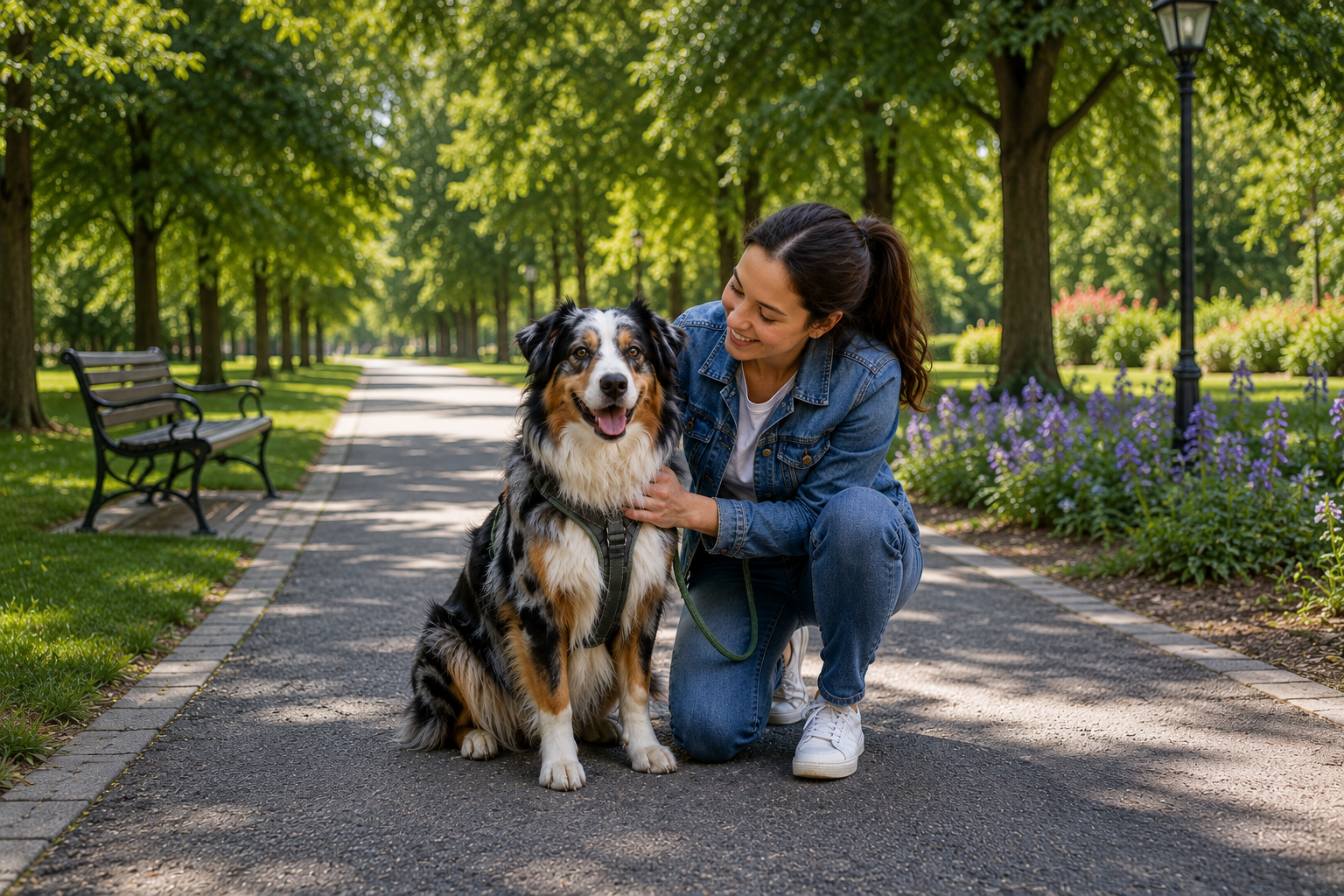
The breed’s name can mislead readers about its origin. The Australian Shepherd developed largely in the western United States, despite its name. Its success in France is a good example of global breed movement. Modern popularity often has little connection with the country named in a breed’s title.
Germany: Shepherds and Dachshunds Keep Deep Roots
Germany remains closely associated with several influential working breeds. The VDH reports that Dachshunds have ranked second in its puppy statistics for more than a decade. Only German Shepherd Dogs have remained ahead of them. The two breeds grew from very different working traditions.
German Shepherd Dogs developed as versatile herding and working dogs. Dachshunds were bred for determined hunting work below ground and in difficult cover. Both later became widely loved companions without losing their distinctive working instincts. That history still shapes expectations about training, activity, and behavior.
German popularity also reaches beyond native breeds. Modern families choose dogs for present-day lifestyle fit, not simply national heritage. That is why country rankings should not be treated as heritage charts. They are better read as snapshots of changing preferences.
Australia: Labradors Remain Strong in Registrations
The Australian Shepherd is widely recognized by name, but it is not an Australian-developed breed. Dogs Australia recorded 3,672 Labrador Retriever registrations in 2025. Labradors remain prominent among the country’s registered gundogs. Australia also has important homegrown working breeds with very different jobs.
The Australian Cattle Dog and Australian Kelpie were shaped for demanding livestock work in Australian conditions. Their stamina, intelligence, and independence can be valuable on farms. Those same traits can challenge owners expecting an easy, low-energy household pet. Working heritage still matters even when a dog never sees livestock.
Families drawn to herding breeds should understand inherited behavior before bringing one home. Border Collies, Heelers, Shepherds, and Kelpies may chase, circle, stalk, or nip during play. Our guide to herding-dog nipping explains those instincts and practical ways to manage them. Understanding the job behind the behavior often makes training much clearer.
Popular Breeds Do Not Always Mean the Best Match
Rankings can be entertaining, but they should never choose a dog for you. A highly ranked breed can still be wrong for a household’s schedule, children, activity level, or experience. Coat care, noise, prey drive, training needs, and health risks also deserve attention. Popularity says little about whether daily life with that breed will be enjoyable.

Families should look beyond photographs and national trends before bringing a dog home. Research the breed’s original purpose, common health concerns, exercise requirements, and typical temperament range. Meet well-bred adult dogs when possible, not only puppies. Individual temperament still matters within every breed.
For readers who want help comparing breeds, The Complete Dog Breed Book: Choose the Perfect Dog for You by DK is a useful reference. It helps families compare breeds by characteristics, care needs, and lifestyle fit rather than choosing a dog simply because the breed is popular.
Children also need thoughtful introductions to dogs, regardless of breed. A child’s comfort level can shape how safely and happily the relationship develops. Our article on helping children overcome fear of dogs offers a practical example. Calm, supervised experiences are more useful than forcing quick interaction.
Breed-specific rescue groups can provide valuable perspective. Their volunteers often know which behaviors surprise first-time owners. Ethical breeders can explain health testing and realistic temperament expectations. Shelters can help adopters evaluate individual dogs whose ancestry may be uncertain.
What Worldwide Dog Rankings Really Tell Us
The most useful lesson is not that one country loves one particular dog. Preferences evolve with housing, culture, fashion, working traditions, and available breeding populations. The same Labrador can be a field dog, service dog, family companion, or show dog. A small companion breed can become popular thousands of miles from its place of origin.
Registration lists also have limits. They measure dogs recorded by particular organizations, not every dog living in a country. Mixed breeds, unregistered purebreds, and dogs registered elsewhere may be absent. Cross-country comparisons should therefore be treated as informed snapshots, not complete population counts.
Even with those limits, these popular breeds reveal fascinating differences. American registrations currently favor French Bulldogs, while British records remain strong for Labradors and spaniels. Japan’s list is led by small companion breeds, while France has embraced the Australian Shepherd. Germany and Australia continue to show strong ties to working and sporting dogs.
Dogs have traveled with people for centuries, and their roles have changed along the way. Today’s popular breeds reflect both history and modern life. Learning those stories can deepen our appreciation without turning popularity into a recommendation. The best dog is still the one whose needs genuinely fit the home choosing it.
Sources
- American Kennel Club: The Most Popular Dog Breeds of 2025
- The Kennel Club: Q1 2025 Puppy Registration Rankings
- Japan Kennel Club: 2025 Breed Registration Statistics
- Centrale Canine: 2024 French Breed Registration Rankings
- VDH: Dachshund and German Shepherd Puppy Statistics
- Dogs Australia: National Animal Registration Analysis 2018–2025
- American Kennel Club: Australian Shepherd History
Editor’s Note: This article was substantially updated in August 2026 with current breed-registration data, clearer country comparisons, and corrections to outdated popularity claims.
Amazon Affiliate Disclosure: As an Amazon Associate, Excellent Dogs Club may earn from qualifying purchases. This does not change the price you pay.
Photo Credit: All images © Sloan Digital Publishing and licensed stock sources. Used with permission.