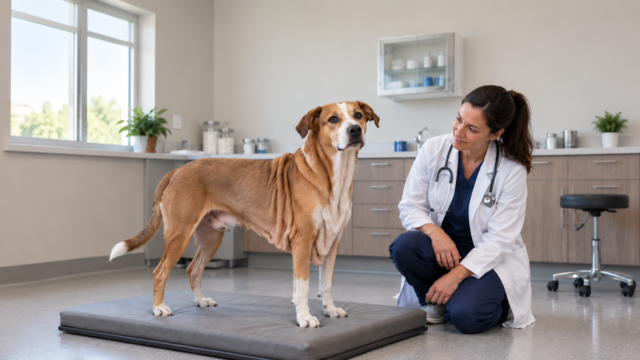
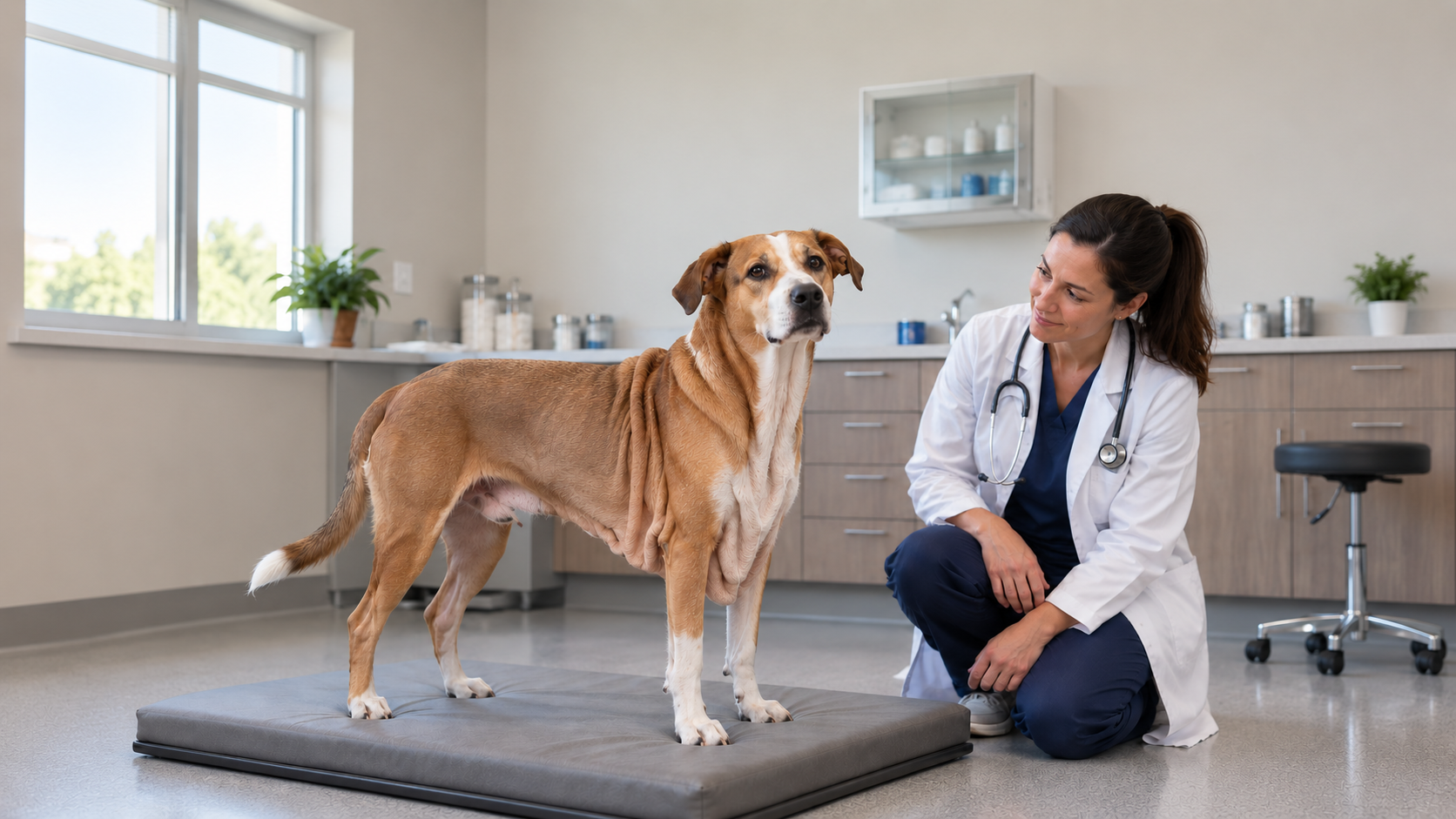
 Ehlers-Danlos syndrome in dogs is a rare inherited disorder that weakens collagen and other connective tissues. Veterinarians often call the condition cutaneous asthenia, meaning weak or fragile skin. Affected dogs may have unusually stretchy skin, repeated tears, thin scars, or loose joints.
The resemblance to human Ehlers-Danlos syndrome is genuine, but the comparison has limits. Canine cases do not fit neatly into all 13 human EDS types. They also vary greatly, from mostly skin-related disease to uncommon, serious complications elsewhere in the body.
Can Dogs Really Have Ehlers-Danlos Syndrome?
Yes. Veterinary researchers have documented inherited connective-tissue disorders resembling several human forms of Ehlers-Danlos syndrome. The Merck Veterinary Manual identifies the best-known canine presentation as cutaneous asthenia.
Collagen gives skin strength while allowing some flexibility. It also supports ligaments, blood vessels, eyes, and many internal structures. When collagen is formed or organized incorrectly, tissues may stretch too far or tear too easily.
Researchers have identified disease-causing variants in several affected dogs. These include variants involving COL5A1, COL5A2, ADAMTS2, and TNXB. This genetic variety helps explain why canine cases do not all look alike.
What Does Cutaneous Asthenia Look Like in Dogs?
Dogs are born with inherited cutaneous asthenia, although the problem may not be obvious immediately. Owners often first notice it after a puppy develops an unexpected wound. A minor bump, scratch, adhesive bandage, or routine handling may tear the skin.
Possible signs include:
- Skin that stretches much farther than expected
- Loose or hanging folds of skin
- Repeated cuts after very minor injuries
- Wounds with surprisingly little bleeding
- Thin, wide, or irregular scars
- Easy bruising or collections of blood beneath the skin
- Soft swellings over pressure points, especially the elbows
- Loose joints or recurring joint injuries
- Umbilical, inguinal, or other hernias
Some dogs show only unusually flexible skin. Others develop repeated tears and extensive scarring. Joint, eye, spinal, vascular, and internal complications have also been reported, although they appear less common.
Meet Caramel, a Dog Living With EDS
Caramel’s owner first noticed that his skin was becoming unusually loose and droopy. According to The Dodo’s account of his story, veterinarians diagnosed him with Ehlers-Danlos syndrome after several visits.
Caramel’s videos show how dramatically connective-tissue changes can affect a dog’s appearance. His experience represents one dog and should not be used to diagnose another.
Video Credit: @caramel_theflabbydog via TikTok. Embedded from the original public post.
Does Stretchy Skin Always Mean Ehlers-Danlos Syndrome?
No. Normal skin flexibility varies with breed, age, body condition, and location. A loose-skinned breed should not be assumed to have a collagen disorder.
Skin can also become thin and fragile because of acquired health problems. Cushing’s syndrome and prolonged glucocorticoid treatment can reduce collagen production. These problems are more likely to appear later and often cause other symptoms.
Hair loss, increased thirst, frequent urination, muscle weakness, or a potbellied appearance may suggest a hormonal problem. Tell the veterinarian about every medication and supplement your dog receives. Never stop prescribed steroids suddenly without veterinary guidance.
Are Certain Dog Breeds More Likely to Be Affected?
Cases have been reported in many purebred and mixed-breed dogs. Published reports include Dachshunds, Beagles, Boxers, German Shepherd Dogs, Greyhounds, Saint Bernards, and several other breeds.
That list does not establish true breed predisposition. The condition is extremely rare, and much of the evidence comes from individual dogs or families. Any dog with compatible signs deserves evaluation, regardless of breed.
How Do Veterinarians Diagnose Cutaneous Asthenia?
Diagnosis begins with the dog’s age, history, wounds, scars, and physical examination. Photographs of earlier injuries can help if the skin has already healed. Details about affected relatives may also support an inherited cause.
A veterinarian may calculate a skin extensibility index using standardized body measurements. An index above 14.5 percent has traditionally supported the diagnosis in dogs. Owners should not pull or test fragile skin themselves, because unnecessary handling could cause injury.
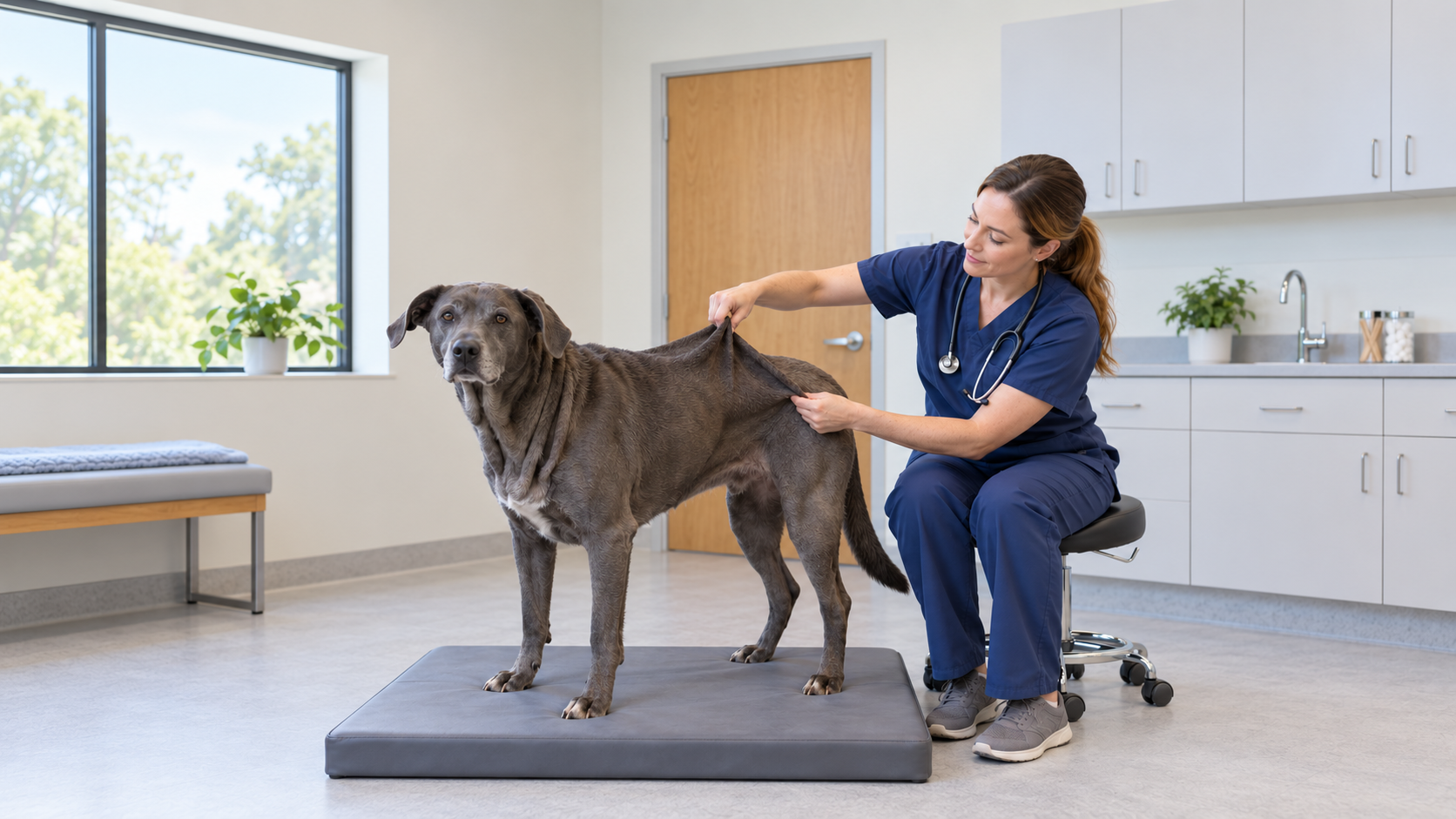
A skin biopsy can reveal sparse, shortened, fragmented, or disorganized collagen fibers. However, routine tissue examination may not identify every case. The University of Minnesota veterinary dermatology handbook describes specialized tests that may clarify the collagen defect.
Genetic confirmation is especially valuable when breeding relatives may be affected. Still, a negative result cannot exclude every connective-tissue disorder. Researchers have not identified all possible canine variants.
Can Ehlers-Danlos Syndrome in Dogs Be Treated?
There is currently no cure that corrects the underlying connective-tissue defect. Treatment therefore focuses on wound care, injury prevention, and any complications affecting the individual dog.
Skin tears may require careful cleaning, antibiotics when infection is present, and an appropriate closure technique. Fragile tissue may not hold ordinary sutures well. The veterinarian may modify the closure to distribute tension more safely.
Do not assume that limited bleeding means a wound is minor. A large tear can expose deeper tissue while producing surprisingly little blood. Prompt veterinary care can reduce contamination, pain, and further damage.
How Can an Affected Dog Be Protected at Home?
The safest environment reduces rubbing, sharp edges, falls, and rough contact. The dog’s individual injuries should guide any changes.
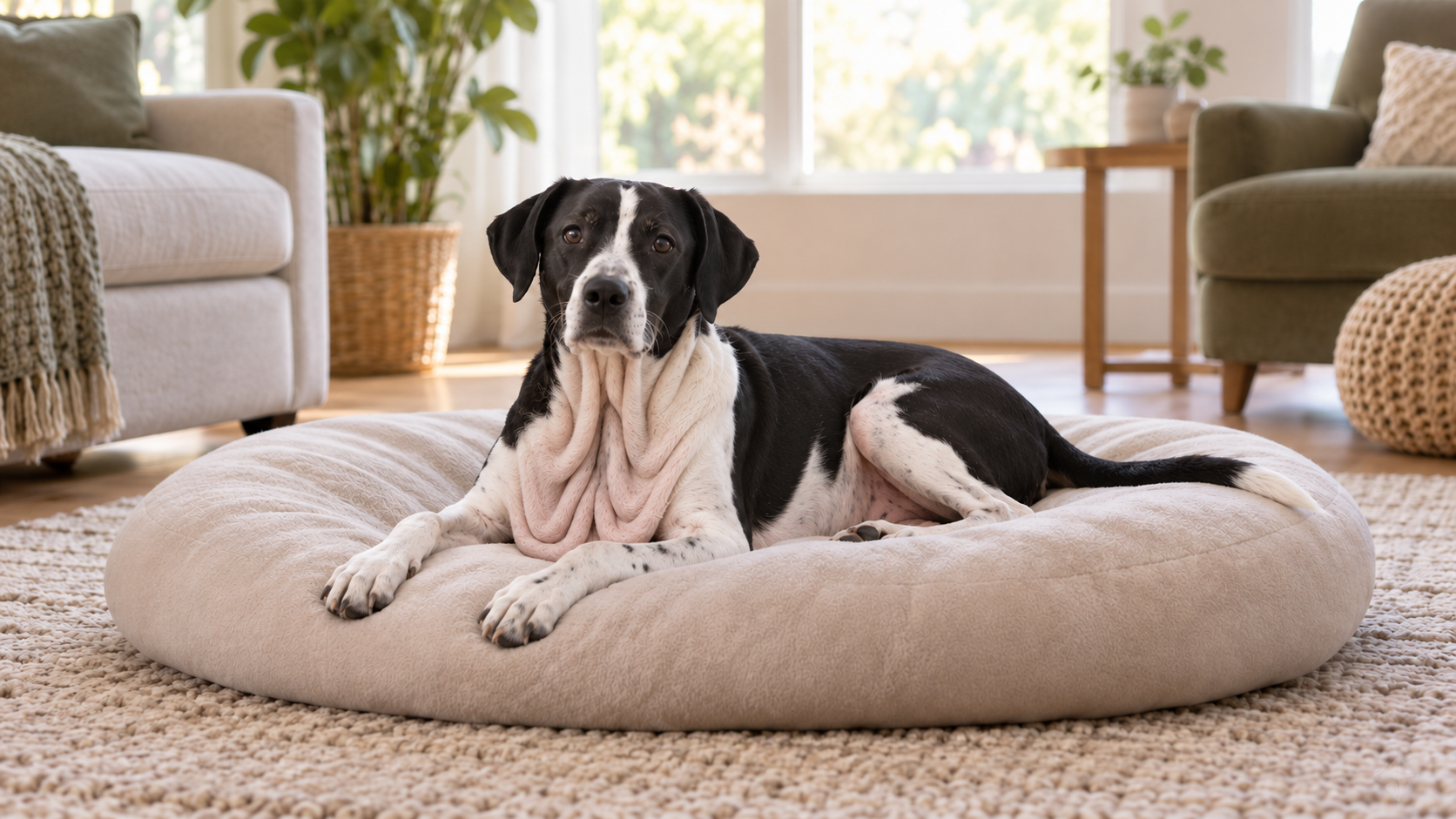
- Provide a soft dog bed without exposed zippers or rough seams.
- Cover sharp furniture corners and remove snagging objects.
- Keep nails smooth to reduce damage from scratching.
- Prevent rough play with other animals.
- Use ramps or barriers when falls could occur.
- Ask the veterinarian about padded, well-fitted walking equipment.
- Check the skin gently after activity.
- Keep veterinary wound-care instructions readily available.
Grooming requires particular care. Brushes, clippers, adhesive tape, and tight bandages can injure fragile skin. Tell every groomer and veterinary staff member about the disorder before anyone handles the dog.
Dogs with joint looseness may need controlled activity and individualized rehabilitation. Our guide to recognizing joint problems in working dogs explains several changes owners may notice. An affected dog still needs recommendations tailored to its connective-tissue disease.
Will Collagen or Vitamin C Supplements Help?
A collagen supplement cannot repair a disease-causing genetic variant. Digested collagen supplies amino acids, but it does not replace defective collagen within the dog’s tissues. Our examination of collagen supplements for dogs explains why marketing claims often exceed the evidence.
The Merck Veterinary Manual notes anecdotal improvement with vitamin C in some dogs. Anecdotal evidence cannot establish whether the supplement caused the improvement. Owners should discuss products and doses with their veterinarian before adding them.
What Is the Outlook for an Affected Dog?
Prognosis depends on severity and which tissues are affected. Some dogs can live comfortably when injuries are limited and their environment is carefully managed. Repeated wounds, unstable joints, or internal complications make care more difficult.
Most canine cutaneous asthenia is not considered fatal by itself. However, rare reports describe dangerous vascular and spinal complications. One canine case report linked the disorder to serious instability in the upper neck.
New weakness, collapse, breathing difficulty, marked pain, or abdominal swelling requires urgent veterinary attention. These signs do not prove Ehlers-Danlos syndrome, but they should never be ignored.
Why Affected Dogs Should Not Be Bred
Cutaneous asthenia is hereditary, although the exact inheritance pattern can differ among genetic forms. Some documented forms are dominant, while others are recessive. A new mutation can also arise in a dog without a known family history.
Affected dogs should not be bred. Their parents, siblings, and offspring may also warrant genetic consultation before breeding decisions. Responsible breeding protects future puppies from a preventable and sometimes devastating disorder.
This principle extends beyond any single diagnosis. Our discussion of structural risk and responsible breeding examines why health must remain central to selection decisions.
The Bottom Line
Dogs can develop inherited connective-tissue disorders resembling human Ehlers-Danlos syndrome. The common veterinary term is cutaneous asthenia, and fragile, unusually extensible skin is its defining feature.
A dog with repeated unexplained tears, thin scars, bruising, or very stretchy skin needs veterinary evaluation. Early recognition cannot cure the disorder, but it can prevent injuries and guide safer lifelong care.
Veterinary Disclaimer: This article provides general educational information and does not replace professional veterinary advice, diagnosis, or treatment. Contact your veterinarian with questions about your dog’s health or before changing its care.
Affiliate Disclosure: As an Amazon Associate, we may earn from qualifying purchases. This does not increase the price you pay.
Photo Credit: All images © Sloan Digital Publishing and licensed stock sources. Used with permission.