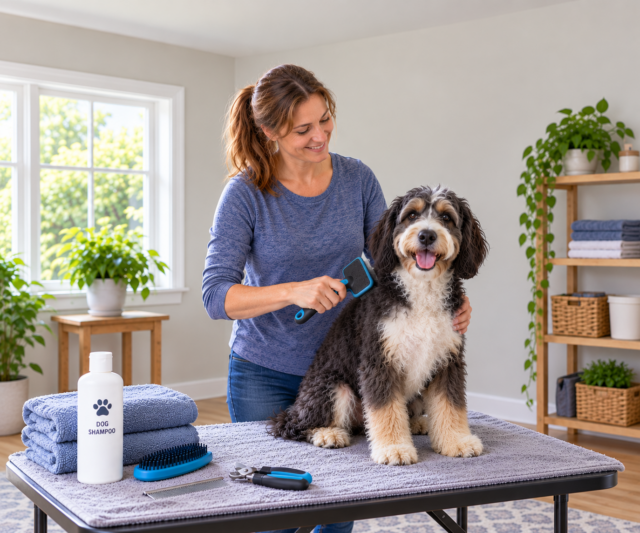
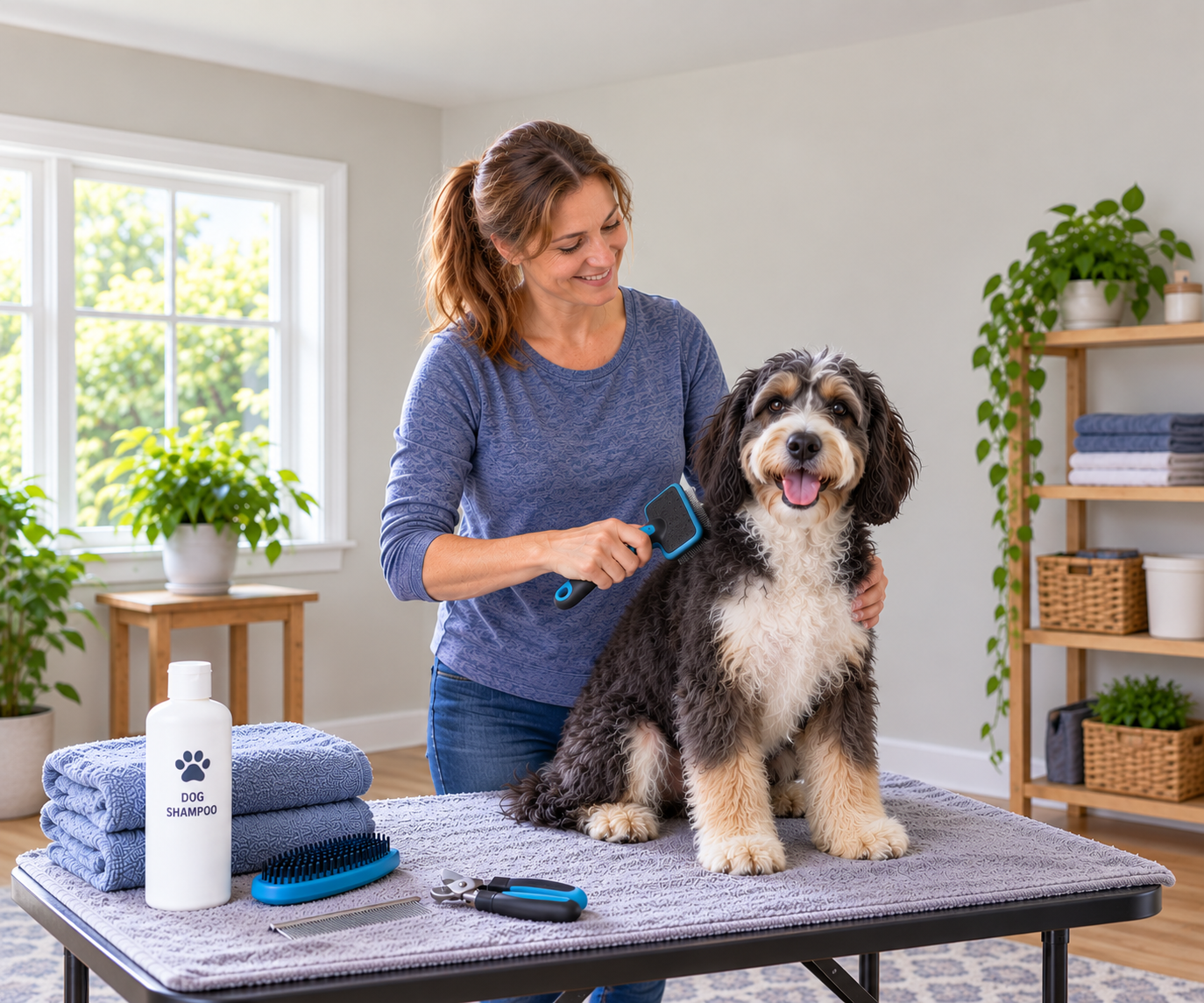
Home dog grooming can save money, but cost is not the only reason owners decide to do it themselves. Some enjoy caring for their dog’s coat, while other dogs become frightened or stressed at grooming appointments. For many owners, grooming at home simply becomes a comfortable part of caring for their dog.
Once you decide to groom your dog yourself, the next question is how much you should actually do at home. Many owners can safely handle brushing, bathing, basic ear care, and routine nail maintenance. Other grooming jobs require more skill, specialized equipment, or professional help.
A good grooming routine also gives you regular chances to notice changes in your dog’s skin, coat, paws, ears, and nails. The safest approach depends on your dog’s coat, health, lifestyle, and tolerance for handling. You do not need to reproduce a professional grooming salon in your bathroom.
Start With Your Dog’s Coat, Not a Generic Schedule
A Boxer and a Standard Poodle should not follow the same grooming plan. Neither should a West Highland White Terrier and a Saint Bernard. Coat length alone does not tell you what tools or techniques a dog needs. A home dog grooming routine should therefore start with coat type.
Smooth coats usually need less intensive brushing than long, curly, or continuously growing coats. Double-coated dogs need attention to loose undercoat, especially during seasonal shedding. Wire coats may require specialized techniques when owners want to preserve their characteristic texture.
The American Kennel Club recommends choosing grooming tools according to coat type and purpose. That sounds simple, but it prevents many common mistakes. The wrong tool can be ineffective, uncomfortable, or unnecessarily harsh.
Brushing Is More Than Removing Loose Hair
Regular brushing removes loose hair, dirt, debris, and some developing tangles. It also gives you a close look at areas hidden beneath the coat. That makes brushing both cosmetic care and a useful health check.
Run your hands over the dog before you begin. Feel for bumps, sore areas, scabs, burrs, or anything that causes an unusual reaction. Then brush gently in manageable sections instead of repeatedly scraping the coat’s surface.
A slicker brush can be useful for many coats, but it is not universal. Rubber curry tools often suit smooth coats, while undercoat rakes serve a different purpose. Long coats may also require a pin brush and comb.
A quality grooming brush is a reasonable home investment when it matches the dog’s coat. Choose the tool for the dog rather than buying the most aggressive option available. Ask a breeder, groomer, or veterinarian when the correct choice is unclear.
Do Not Turn a Small Mat Into a Bigger Problem
Mats can pull painfully on the skin and trap moisture or debris underneath. They often form behind ears, beneath legs, around collars, and where body parts rub together. Small tangles are much easier to address before they tighten.
Do not attack a tight mat with scissors close to the skin. Dog skin can be pulled upward into the mat without being obvious. A seemingly careful snip can therefore cause a serious cut.
Severe matting is a good reason to call a professional groomer. Removing it safely may require clippers, specialized handling, or a shorter haircut than the owner expected. Comfort should take priority over saving coat length.
Bathing Depends on the Dog
There is no useful bathing calendar that fits every dog. Coat type, activity, skin condition, weather, and lifestyle all affect bathing needs. A dog that swims or rolls in mud needs different care from an indoor companion.
Use lukewarm water and a shampoo formulated for dogs. Human shampoos are not designed around canine skin and coat needs. Rinse thoroughly because leftover product can irritate the skin.
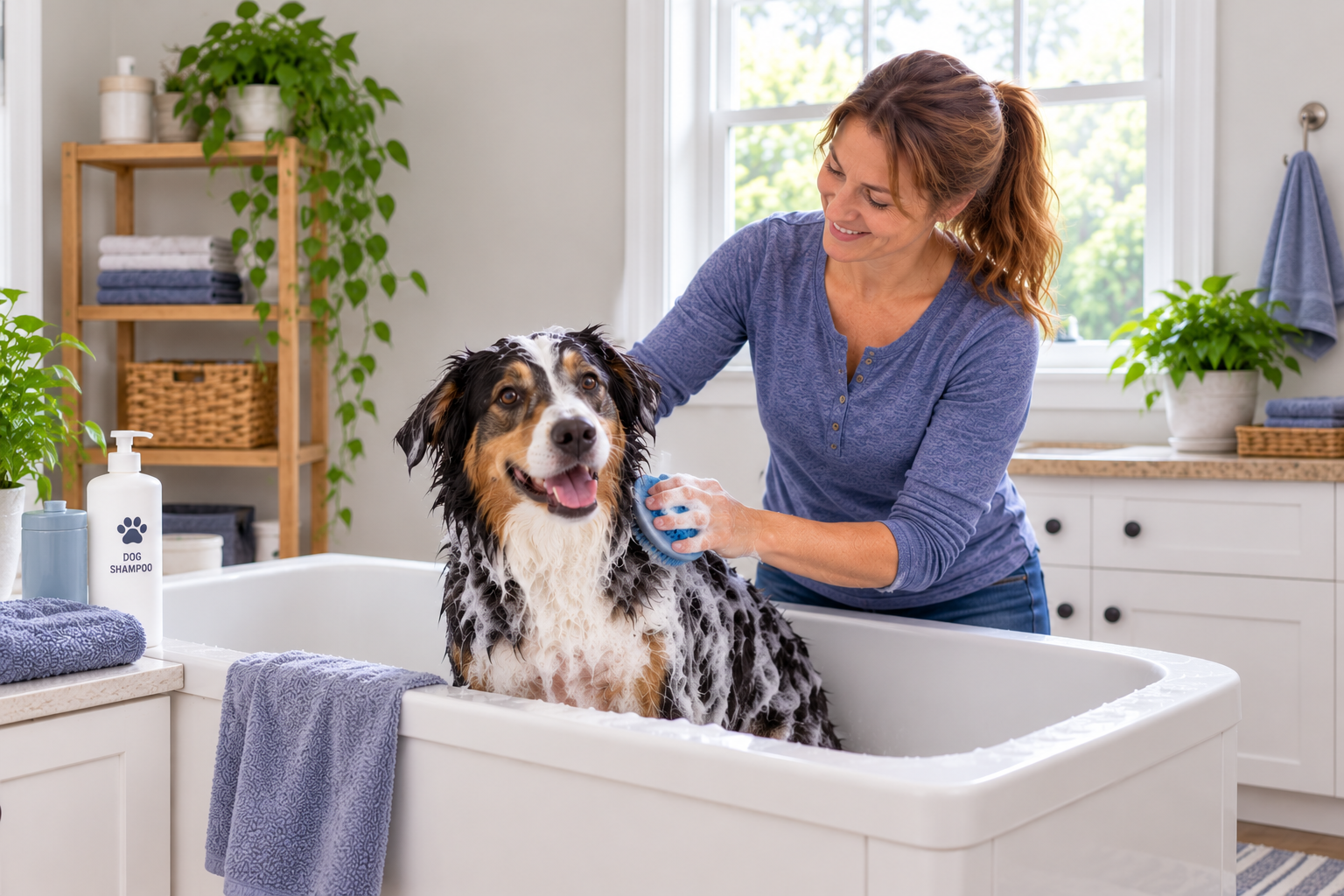
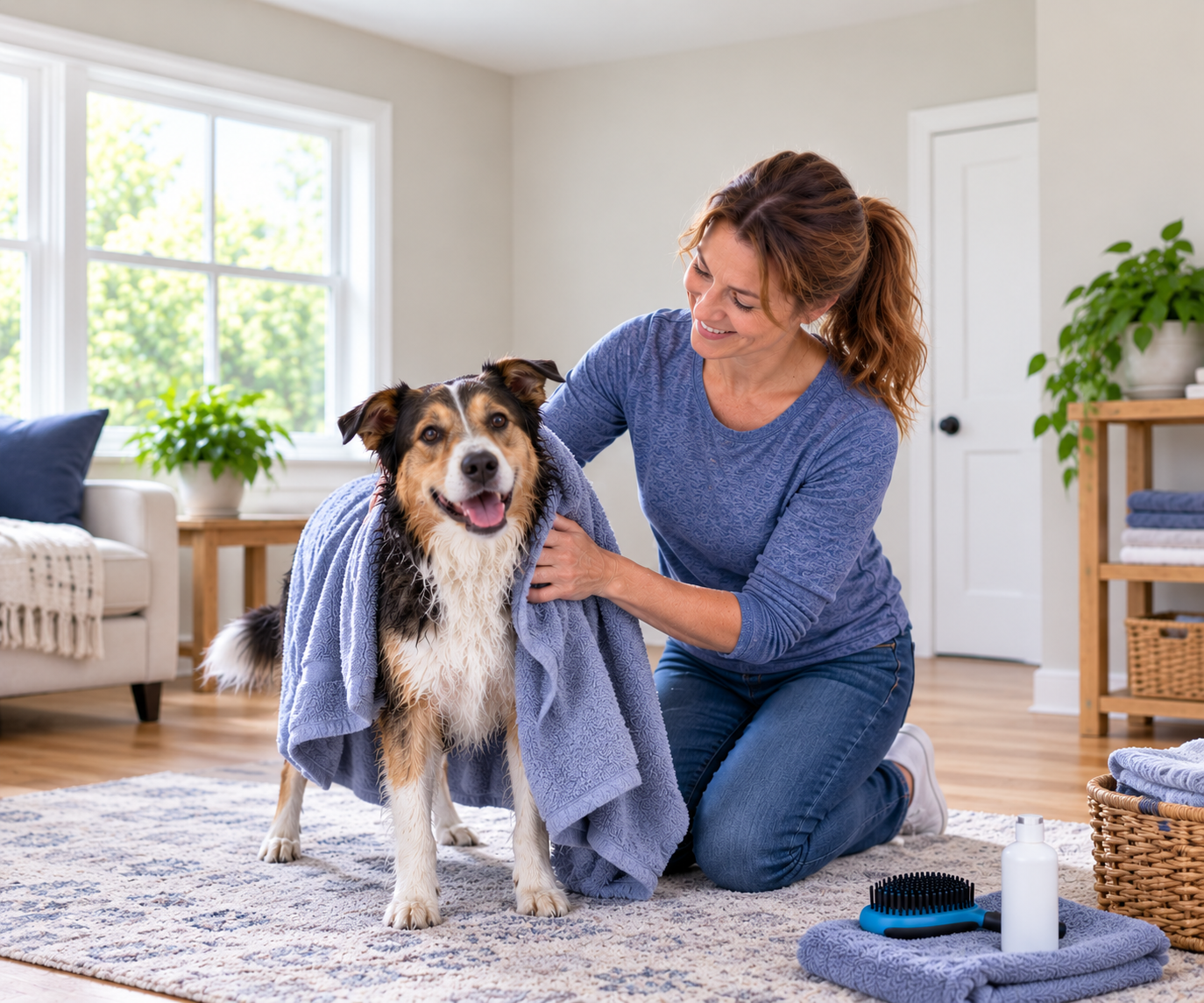
Drying deserves attention too. Towel drying may be enough for some short-coated dogs. Dense and long coats can retain considerable moisture near the skin.
Never use high heat simply to finish faster. A frightened dog can also struggle around dryers and slippery surfaces. Slow down, provide secure footing, and stop when the situation becomes unsafe.
Nail Care Is Simple Until It Is Not
Nails that become too long can interfere with comfortable movement. They are also more likely to snag, split, or break. Regular attention makes each trimming session smaller and often easier.
Inside each nail is sensitive living tissue commonly called the quick. Cutting into it causes pain and bleeding. The quick is easier to see through light nails than dark ones.
Owners comfortable with clippers can remove small amounts at a time. A grinder is another option for dogs that tolerate its sound and vibration. Neither tool is automatically safer when the person using it is uncertain.
Keep styptic powder nearby before starting a nail trim. More importantly, know when to stop. A groomer or veterinary professional can handle nails when either dog or owner becomes too stressed.
Ear Cleaning Should Stay Conservative
Healthy ears do not need aggressive cleaning. Some dogs need more ear care because of anatomy, swimming, allergies, or medical history. Your veterinarian can help determine an appropriate routine.
Never probe deeply into the ear canal with cotton swabs or other objects. Use a veterinary-recommended ear cleaner when cleaning is actually needed. Follow its directions rather than improvising with household products.
Redness, swelling, strong odor, pain, or unusual discharge changes the situation. Those signs may indicate a problem that grooming cannot fix. Veterinary evaluation is more appropriate than repeated cleaning.
What About Haircuts and Clippers?
Some owners can safely learn basic clipping for dogs that need regular haircuts. However, clipping is not simply brushing with a powered tool. Coat type, blade choice, skin folds, temperature, and dog movement all affect safety.
Do not assume every heavy coat should be shaved during warm weather. Double coats perform functions that differ from continuously growing coats. Removing coat without understanding its structure can create unnecessary problems.
Professional grooming becomes especially valuable for breed-specific trims, severe mats, or difficult coat preparation. It is also sensible when the dog cannot stand comfortably for home grooming. Paying for skill can be cheaper than treating an accidental injury.
Make Grooming Easier Before You Need It
Dogs learn grooming routines more easily when handling begins gradually. Touch paws, ears, legs, and the body during calm moments. Reward cooperation without forcing the dog through escalating distress.
Dogs can also have remarkably different opinions about grooming. Two of our Saint Bernards were complete opposites at bath time. Sassy loved baths so much that we kept the bathroom door latched, or she might jump into the tub while someone else was bathing. (She actually did this.)
Stripper felt quite differently. Getting her into the tub required considerable coaxing, which was no small undertaking with a Saint Bernard weighing about 160 pounds. Experiences like these are good reminders that successful home grooming depends as much on the individual dog as the grooming task.
Keep early sessions short. Brushing half a dog peacefully can be more productive than finishing the whole dog during a wrestling match. You can continue later when everyone is calm.
Young dogs that suddenly become uncomfortable with handling may need an especially gradual approach. Our guide to puppy fear periods explains why temporary caution can appear during development. Avoid turning grooming into a confrontation during those sensitive stages.
Use a nonslip surface for bathing and table work. Keep tools within reach before bringing the dog into position. Never leave a dog unattended on an elevated grooming surface or in a filled tub.
Grooming Is Also a Hands-On Health Check
Familiarity helps you recognize change. Regular grooming can reveal a new lump, irritated skin, broken nail, parasite, sore paw, or unusual sensitivity. Finding something does not mean you should diagnose it yourself.
Stop grooming an area that is painful, inflamed, bleeding, or unexpectedly abnormal. Our guide to knowing when to visit the veterinarian can help with broader warning signs. A veterinarian should evaluate changes that suggest illness, infection, injury, or significant discomfort.
Older dogs may need shorter sessions and more physical support. Arthritic dogs can struggle with prolonged standing or awkward positioning. Grooming should adapt to the dog rather than forcing the dog into a standard routine.
Build a Home Grooming Kit That Fits Your Dog
A useful grooming kit does not need to resemble a salon. Start with a coat-appropriate brush or comb, dog shampoo, towels, and basic nail supplies. Add specialized tools only when your dog’s needs justify them.
A gentle dog shampoo is one product most households will eventually use. Choose formulas intended for dogs and consider veterinary guidance for sensitive or diseased skin. Medicated shampoos should follow the condition and schedule your veterinarian recommends.
This is also where spending selectively makes sense. One suitable brush is more useful than a drawer full of mismatched grooming gadgets. Good equipment should make safe routine care easier, not encourage unnecessary procedures.
Know What You Should Leave to a Professional
Home dog grooming works best when owners understand its limits. Routine brushing, bathing, inspection, and some nail care are realistic for many households. Complex clipping, severe mat removal, and difficult handling can require professional skill.
Do not express anal sacs simply because a grooming checklist says they exist. The AKC advises owners not to attempt this without veterinary instruction. Problems involving the ears, skin, paws, or coat may also require veterinary care.
Professional groomers have tools and training that most owners do not need at home. The AKC’s professional grooming standards illustrate how much coat knowledge and technical skill grooming can involve. Using a professional is sometimes the safest choice.
A professional groomer is not evidence that an owner failed at home care. Groomers have equipment, training, and experience that most households do not need to duplicate. Home maintenance can make those professional visits easier and more productive.
A Better Routine Is Better Than a Perfect Haircut
Home dog grooming should improve your dog’s comfort, not create another battle. Learn what the coat requires, use appropriate tools, and work in short manageable sessions. Pay attention to the dog beneath the hair.
The best routine may combine home maintenance with occasional professional grooming. Another dog may need professional coat care every few weeks. Both approaches can be responsible when they fit the individual dog.
You do not need salon-level skills to make grooming useful. You need safe techniques, appropriate equipment, patience, and the judgment to stop. Those habits can keep routine grooming both practical and worthwhile.
Sources
- American Kennel Club — How to Groom Your Dog at Home
- American Kennel Club — National Core Professional Dog Grooming Educational Standards
Amazon Affiliate Disclosure: As an Amazon Associate, Excellent Dogs Club may earn from qualifying purchases. This does not change the price you pay.
Photo Credit: All images © Sloan Digital Publishing and licensed stock sources. Used with permission.