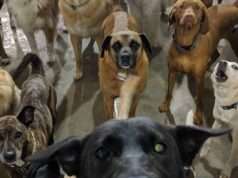
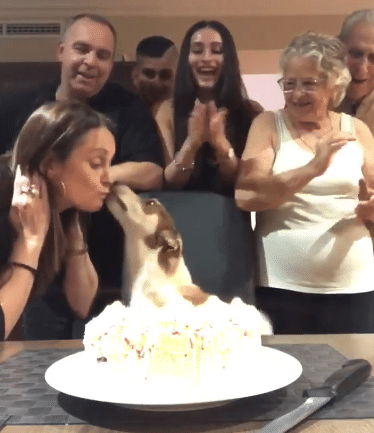
Although having people make this comment to those who consider their fur babies members of the family, it is even worse when their baby has died. Their fur baby is NOT just a dog! They are not over reacting.

Our dogs are a big part of our family and our daily routines. When they cross that Rainbow Bridge, it is one of the most excruciating moments of our lives. This is especially true when they must be euthanized.
I think you would appreciate the information in this article as well. https://happymutt.org/how-to-assess-whether-your-dog-is-ready-for-the-rainbow-bridge/
Some people admit that they have grieved more over the death of their dog than the death of a friend or relative. They often feel guilty about this. Most dog owners understand this while those who never loved a dog may not.
Perhaps, if more people were aware of the intense bond between dogs and their humans, this deeply felt grief would be accepted by more people. What do you think makes the bond between two different species so strong?
How Our Pets Became More Than Just A Dog
Dogs have lived with humans for over 10,000 years. As they became domesticated and integrated into our lives, they grew closer. Eventually, they were bred to exhibit traits to please humans even more.
Over the generations, dogs grew closer to humans. MRIs of a number of dog brains revealed that they responded equally to their owners praising them as they did to food. Some dogs responded greater to human praise than to food.
As for humans, you will not be surprised to hear that they responded positively to loyalty and unequalled love and affection. They smile just looking at a dog!
Dog owners are happier and receive higher scores for well-being than to people with no pets at all. They also score higher than do cat owners.
A study looking at the practice of “misnaming” revealed strong attachments between dogs and humans. I certainly have called our children by a sibling’s name more than once.
Much like with members of a family, calling your dog by another family member’s name is called misnaming. This rarely, if ever, happens with cats.
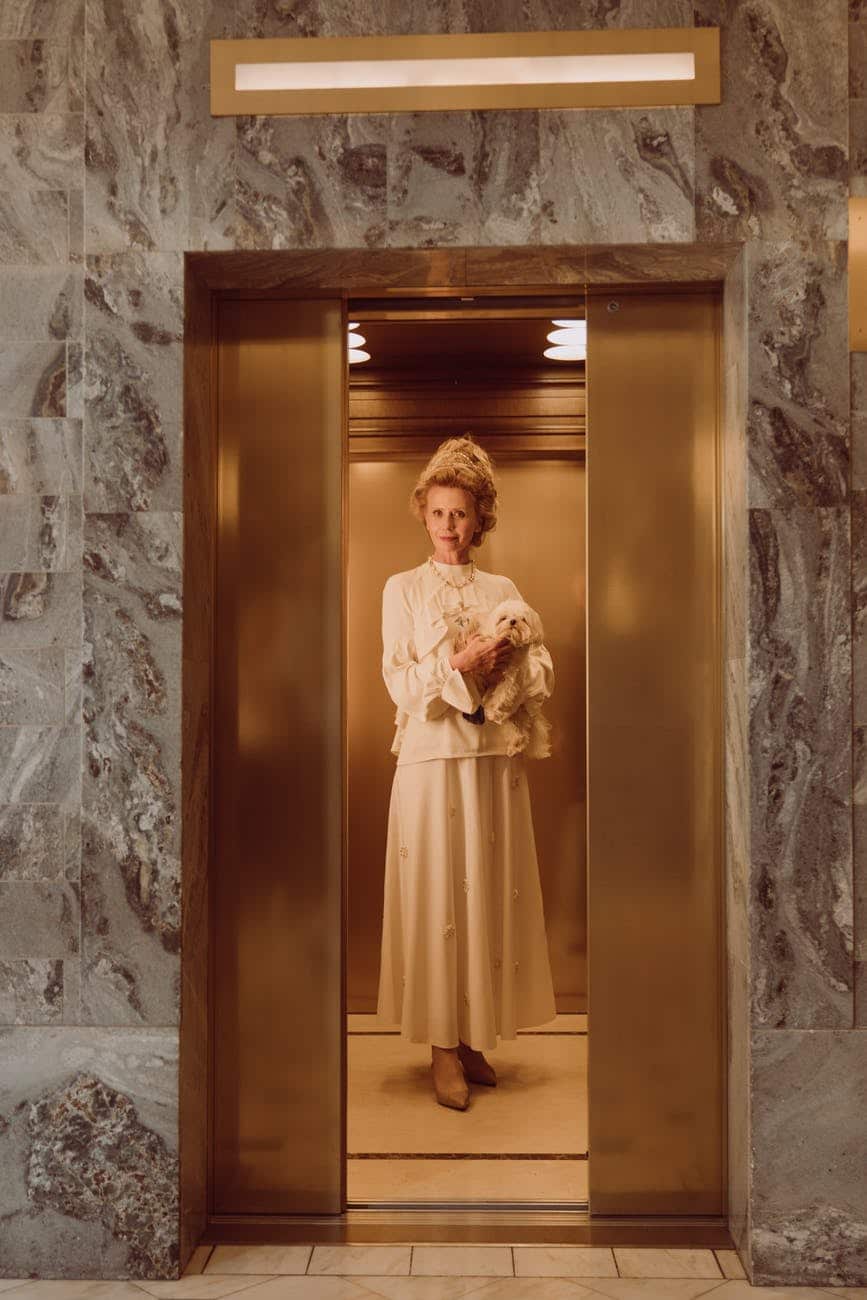
When Their Companions Die
Owners of dogs appear to miss their pets more than do owners of other kinds of pets. When interviewed, psychologist Julie Axleod reminded us that owners find the death of a fur baby so painful because they have lost much more than a pet.
Dogs are often the primary companion to their human. The person is losing the unconditional love, comfort and securtity they received from the dog. Sometimes, their fur baby has taken on a role more like a child than a pet.
There are times that the death of a dog distrupts the daily routine of his owner even more than that of a friend or relative might have. Vacation plans and daily schedules are often scheduled around the needs of their fur babies.
Altered routines and major changes in lifestyle are causes of stress to anyone. A published survey on the topic revealed that some people who lost their dogs mistakenly believe that sights and sounds not clearly caused by something else to be pants, whimpers or movements of the deceased dog.
If this happens, it is usually very soon after the death of the dog. This is more common among people with an extremely high degree of attachment to their dog.
Losing a beloved canine member of the family is an awful thing to go through. People become so used to their dogs loving and nonjudgemental attitudes that they more commonly get another dog. Some of them do so sooner than others.
Would you, or have you already, adopted another dog after losing a beloved canine companion? How long did you wait to do so? Do you have any recommendations or suggestions to share with us and our readers?
Even people who cannot fully comprehend the benefits of having a canine companion enjoy their unconditional love and devotion. https://excellentdogsclub.com/dog-plays-with-grandpa-with-alzheimers-and-their-relationship-will-touch-us-all/
Photos Courtesy of Pexel