Managing herding dogs around holiday guests can be harder than many families expect. Your dog may handle ordinary visitors well but struggle when the house becomes busy. More people also means more movement, noise, open doors, and unpredictable activity.
Those changes can be especially challenging for a herding dog. Movement may trigger chasing, circling, barking, blocking, or heel-nipping behavior. Herding dogs and holiday guests can be a difficult combination when movement and excitement build quickly.
The goal is not to demand perfect behavior during a chaotic gathering. Your job is to make good behavior easier. A little planning can protect your dog, your guests, and your peace of mind.
Why Holiday Guests Can Be Hard for Herding Dogs
Herding breeds were developed to notice movement and respond to it. A child racing across the room may be much more interesting than a seated adult. Several people walking in different directions can create even more stimulation.
Your dog may begin following guests from room to room. He may circle, stare, bark, or cut across someone’s path. Some dogs become restless because they cannot decide what they should be doing.
Holiday gatherings also disrupt familiar routines. Meals may happen at different times, furniture may move, and doors may open repeatedly. Even a socially confident dog can become overstimulated when his normal environment suddenly changes.
Watch for Herding Behavior Before It Escalates
Do not wait for obvious chasing or nipping before you intervene. Watch for early signs that your dog is becoming too focused. Staring, crouching, pacing, circling, and repeatedly following movement can all indicate rising arousal.
You may also notice that your dog stops responding to familiar cues. He may become unable to settle down even after being asked. That loss of responsiveness often tells you his excitement level is becoming harder for him to manage.
Early intervention is easier than stopping a dog after he reaches full excitement. Redirect him before the behavior becomes intense. Sometimes a short break is more useful than repeated corrections.
Herding Dogs and Holiday Guests: Plan Before the Doorbell Rings
The best time to manage a holiday gathering is before the first guest arrives. Give your dog appropriate exercise earlier in the day. Include some mental work rather than relying only on physical activity.
A short training session can help your dog focus before the house becomes busy. Practice familiar cues such as sit, down, wait, and place. Reward calm responses rather than trying to wear your dog out completely.
A physically tired dog can still be mentally overstimulated. Your goal is a dog whose needs have been met and who is ready to settle. You do not need to exhaust him before company arrives.
Control the Front Door
The front door may be one of the most difficult parts of the gathering. People arrive carrying bags, food, coats, and gifts. The door may remain open longer than usual while several people enter at once.
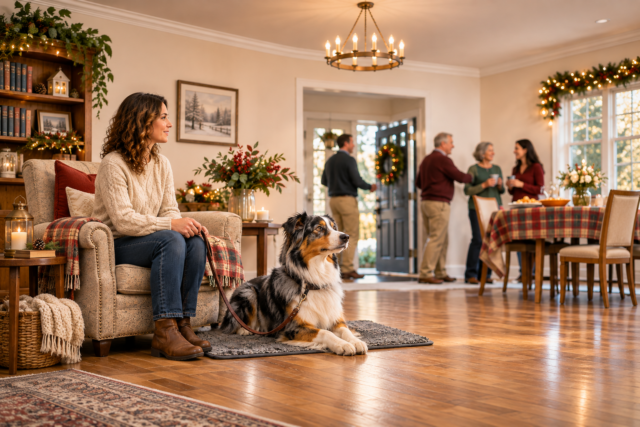
Do not depend on verbal control alone if your dog becomes highly excited. Use a leash, gate, closed room, or other secure barrier. Preventing a mistake is better than repeatedly testing your dog’s self-control.
You can also keep your dog in another room during the busiest arrivals. Let guests enter and settle down before bringing him out. This removes much of the initial excitement from the greeting.
Do Not Let Guests Accidentally Encourage Herding
Guests may not recognize early herding behavior. Someone may laugh when your dog begins following someone closely or circling the room. A child may even turn the behavior into a chasing game.
Explain the rules before problems develop. Ask guests not to run from your dog or encourage chasing. Children should never be expected to manage the dog’s behavior themselves.
If your dog starts focusing too intensely on someone’s movement, interrupt calmly. Redirect him to you or move him away from the activity. Repeated opportunities to practice unwanted behavior can make it harder to change.
Be Especially Careful Around Children
Children can be powerful triggers for a movement-sensitive dog. They run, squeal, change direction suddenly, and often move in groups. That combination can activate herding behavior very quickly.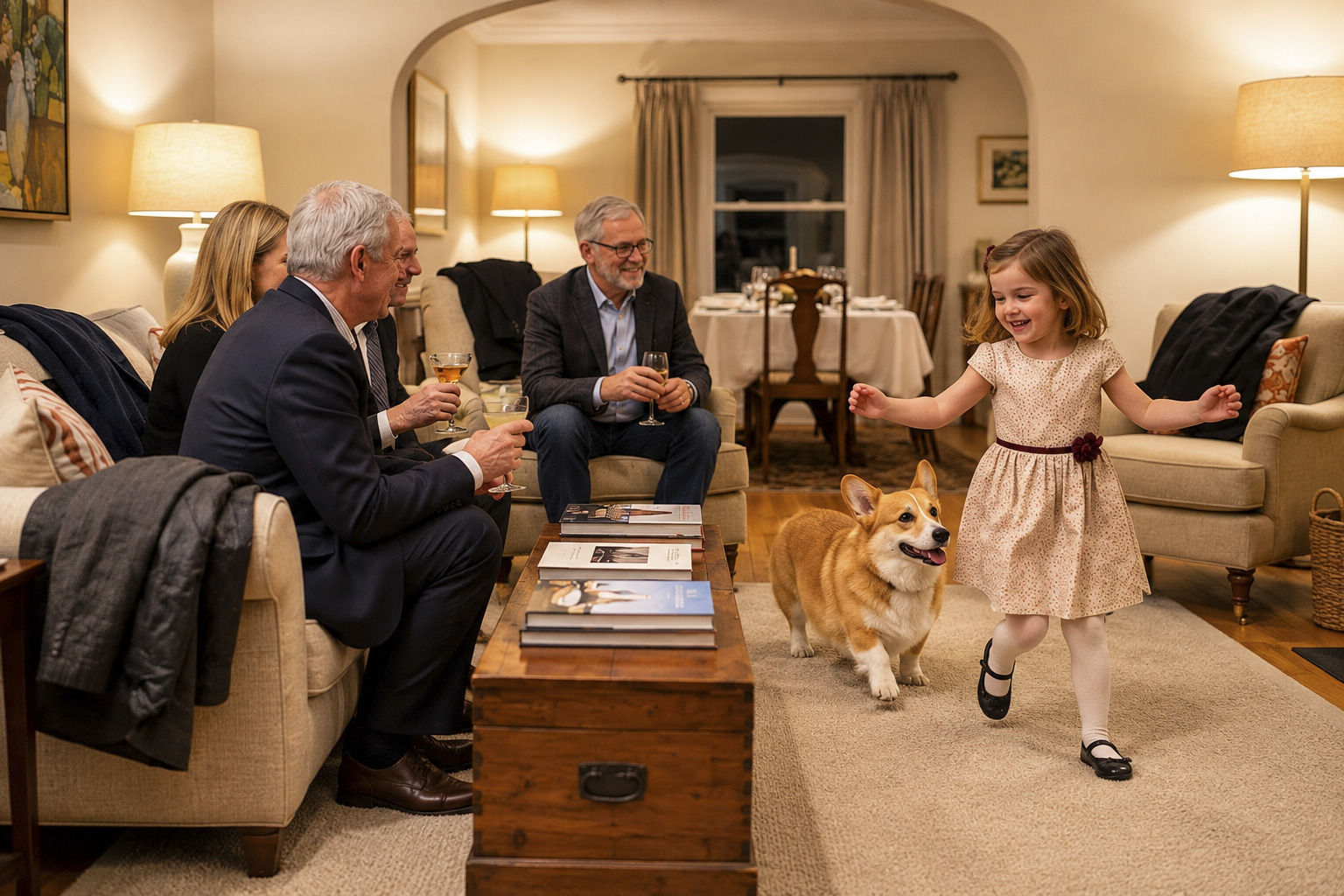
Supervision needs to be active rather than casual. An adult should be watching both the dog and the children. Do not assume someone else in a crowded room is paying attention.
If your dog becomes intensely focused on children, separate them. Your dog does not need to participate in every part of the celebration. Preventing a problem is safer than hoping excitement will settle on its own.
Give Your Dog a Job That Does Not Involve Managing People
Many herding dogs do better when they know what you want them to do. Give your dog a clear alternative before he creates his own assignment. A reliable place or settle cue can be especially useful.
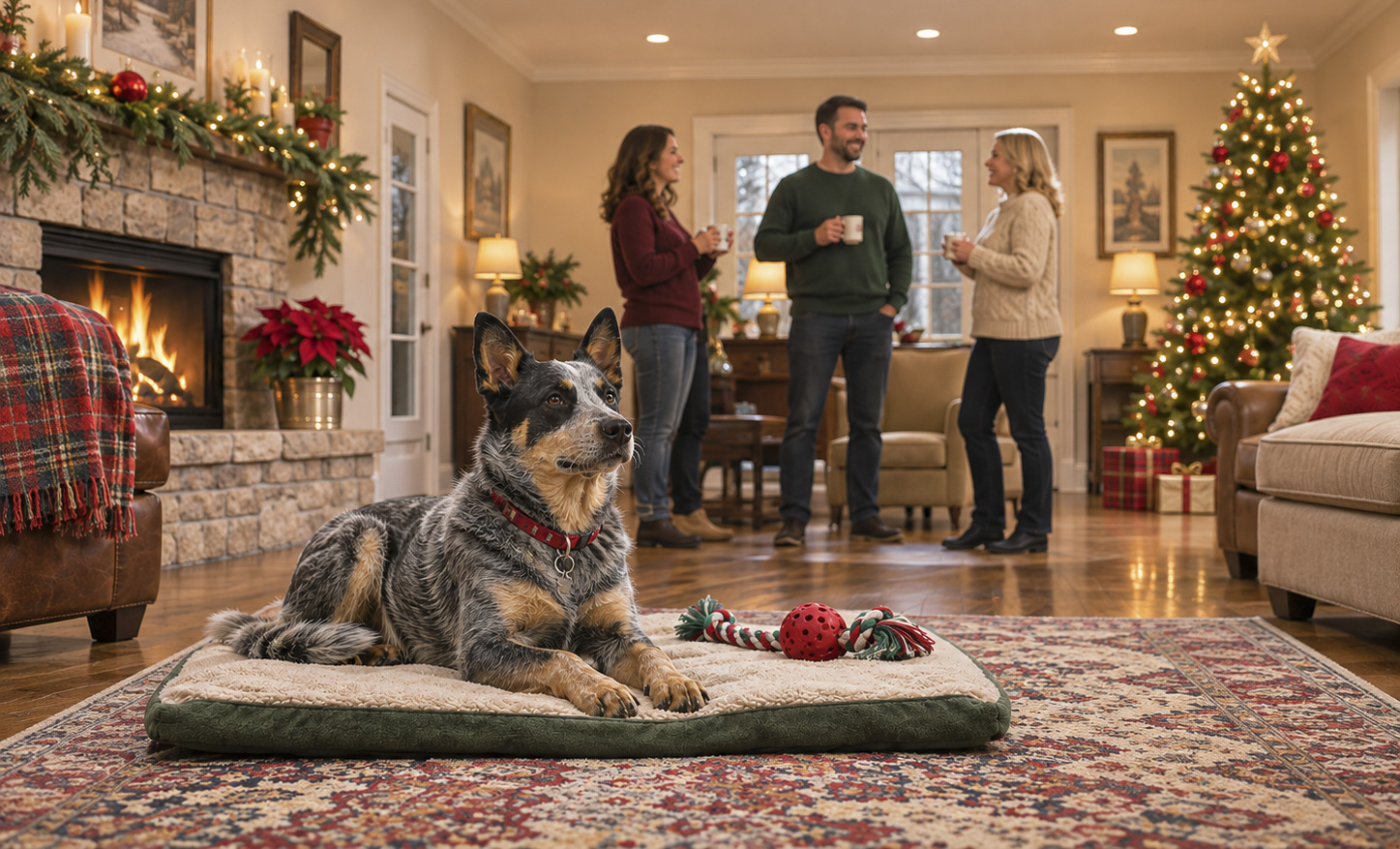
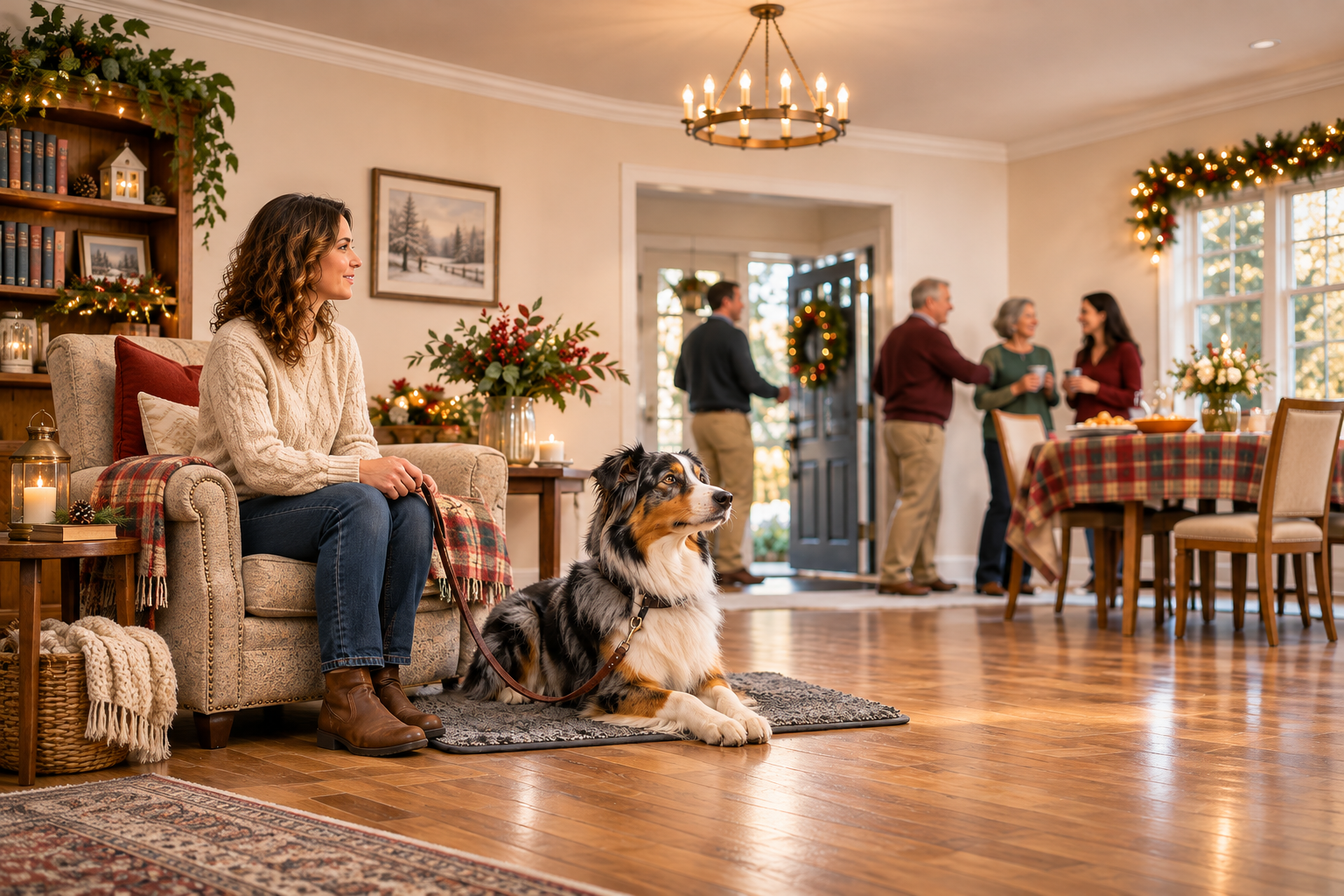
Reward your dog for staying on a bed or mat while people move nearby. Begin practicing before the holiday gathering. Do not expect a new behavior to become reliable during the busiest event of the year.
Simple scent games or food puzzles may also help during quieter periods. Mental activity can provide an outlet without increasing frantic movement. Choose activities that help your dog settle afterward.
Use Planned Breaks Before Your Dog Needs One
One common mistake is waiting until the dog is already overwhelmed. Instead, schedule quiet breaks throughout the gathering. Give him time away from guests even when he appears to be coping well.
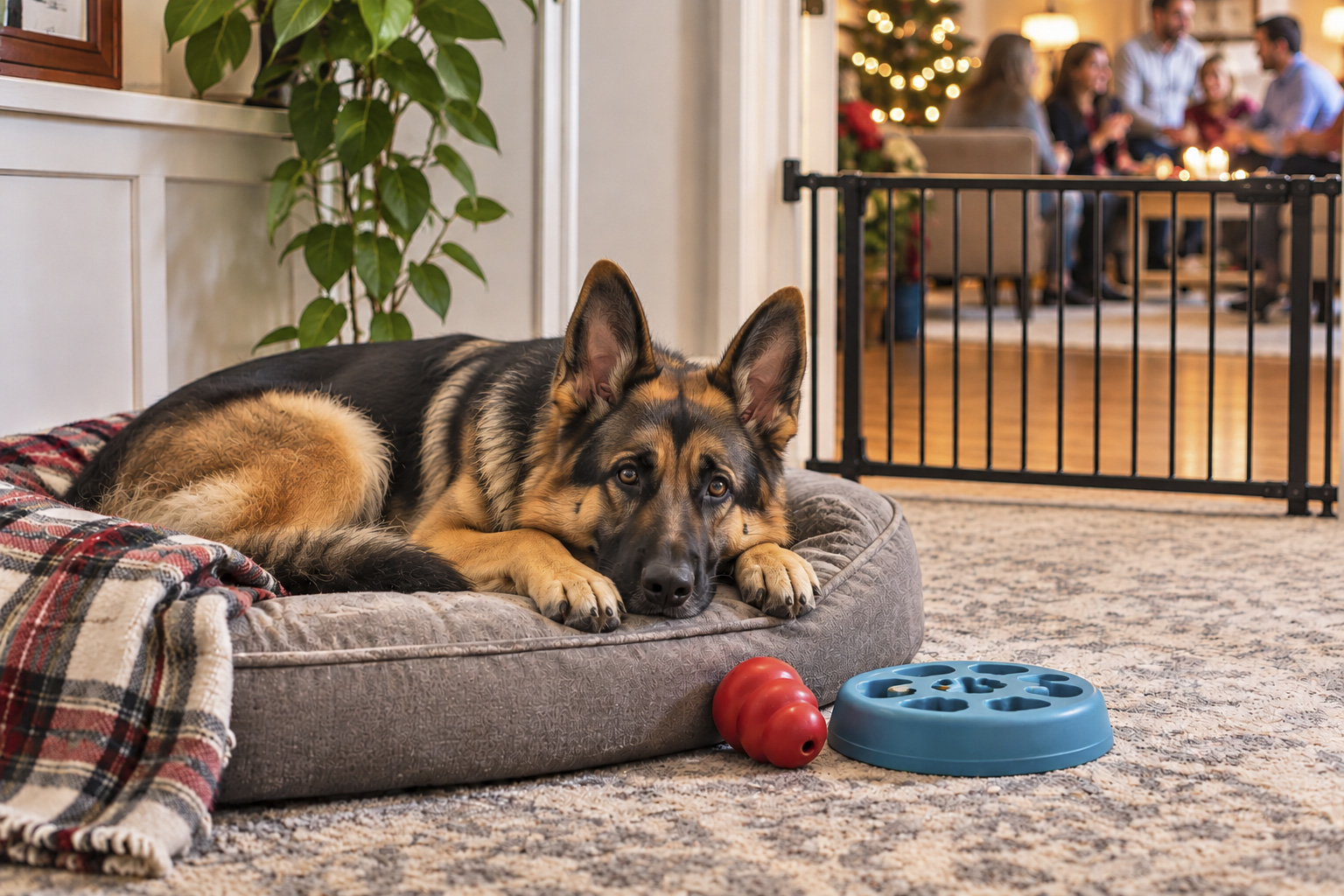
A quiet bedroom, crate, or gated area can provide a useful retreat. Add his usual bed and fresh water. A familiar chew or enrichment activity may help him settle.
The retreat should feel peaceful rather than punitive. Guests should leave him alone while he is resting. Planned breaks can prevent overstimulation before it becomes a behavior problem.
Protect Your Dog’s Normal Routine
Holiday schedules can easily replace normal dog routines. Walks become shorter, meals are delayed, and rest gets interrupted. Herding dogs may become more reactive when the predictability of their usual day disappears.
Keep normal meals and bathroom breaks as close to schedule as possible. Give your dog his usual exercise and quiet periods. Familiar routines can provide stability during an unusual day.
Even social dogs need sleep and recovery time. A tired dog may have less impulse control late in the day. Protecting rest can help prevent problems as the gathering continues.
Keep Holiday Food Out of the Training Plan
Guests often want to share food with a dog. That can quickly create begging, counter-surfing, and crowding around the table. Tell visitors not to feed your dog unless you approve it.
Keep serving dishes and unattended plates out of reach. Secure trash before food scraps become available. Holiday gatherings can make normal kitchen boundaries much harder to maintain.
If you use treats for training, choose your dog’s regular training rewards. Keep the rules consistent. Your dog should not learn that visiting relatives mean unlimited food.
Know When Your Dog Should Stay Separated
Some dogs are safer and more comfortable away from a crowded gathering. A dog who is fearful, reactive, highly aroused, or unable to settle down may need a quiet room rather than more exposure to guests.
Separation may also be appropriate when young children, frail adults, or guests who are uncomfortable around dogs are present. Even a friendly herding dog can accidentally knock someone over or become too focused on movement.
Choosing separation is not a failure. It is a practical management decision that protects both your dog and your guests.
Do Not Punish Herding Instincts
Your dog did not choose the instincts that come with his breed history. Punishing him for noticing movement does not teach him what to do instead. Harsh corrections may also add stress to an already stimulating environment.
Interrupt unwanted behavior and redirect it. Reward calmer choices. Give your dog more distance when he cannot succeed in the current situation.
Training should build self-control over time. Holiday management supports that training by preventing repeated mistakes while your dog is excited.
Pay Attention to the Individual Dog
Breed tendencies can help you anticipate problems, but they do not predict every dog. One Border Collie may enjoy visitors and settle easily. Another may become intensely focused on activity around the room.
Your dog’s history, temperament, health, and training are all important. Previous holiday behavior is useful information too. If last year’s gathering was difficult, plan differently this year.
For more on dependable behavior, see Stable Dog Temperament Signs: How to Recognize True Behavioral Stability. If visitors trigger fear rather than excitement, also read Common Fears and Phobias of Dogs.
Make a Holiday Plan for Your Herding Dog
Before guests arrive, decide who will be responsible for your dog. Choose where he will rest and how you will manage the front door. Prepare gates, leashes, beds, and enrichment items ahead of time.
Also decide what behavior means your dog needs a break. Do not make that decision in the middle of a stressful moment. Clear plans reduce confusion when the house becomes busy.
You may discover that your dog does best joining the gathering for short periods and resting between them. That balance often works better than expecting him to handle hours of continuous stimulation.
Final Thoughts
Managing herding dogs around holiday guests is mostly about preparation rather than correction. Your dog may notice every moving person because sensitivity to movement is part of his breed history. You can help him make better choices without expecting him to ignore those instincts completely.
Plan for arrivals, supervise interactions with children, protect familiar routines, and provide quiet breaks before your dog becomes overwhelmed. Give him something appropriate to do, and use separation when the environment becomes too difficult.
A successful holiday does not require your dog to greet everyone or remain in the middle of the celebration all day. Success means your dog stays safe, your guests feel comfortable, and the gathering is less stressful for everyone.
Sources
- American Kennel Club: Help Your Dog Deal With Visitors During the Holidays
- American Kennel Club: Prepare Your Dog for the Holidays
- ASPCA: Holiday Safety Tips
Amazon Affiliate Disclosure: As an Amazon Associate, Excellent Dogs Club may earn from qualifying purchases. This does not change the price you pay.
Photo Credit: All images © Sloan Digital Publishing and licensed stock sources. Used with permission.