Mentally stimulating a senior dog is not about making your old dog perform. It is about giving him small, satisfying reasons to stay interested in the day. He may move slower, sleep longer, and think before he acts. That does not mean he has stopped wanting to participate.
Your older dog may know your household better than anyone. He knows the sound of your chair, which cabinet hoards the treats, and the path to the warmest place to bask in the sun. He may also recognize when a day has become too empty. Keeping a dog mentally sharp as he ages starts by noticing what still makes him lift his head.
Mentally Stimulating a Senior Dog
There is no single senior-dog plan that fits every old friend. He may prefer taking a slow sniffing walk and then having a long nap. He may simply want to be included without being hurried.
Watch when your dog seems most awake and interested. He may be ready to begin his day after breakfast. He may need time for stiff joints to loosen before he wants to do much. The best enrichment fits his rhythm, not the schedule you wish he still had.
Do Not Confuse Slower With Finished
It is easy to stop inviting an older dog into things when he no longer moves quickly. That is where many good people accidentally shortchange the dog. He can be slower and still be curious. His face may be gray, but he can still enjoy having something to figure out.
The challenge simply needs to be an appropriate one. A young dog may enjoy speed, noise, and repetition. Your older dog may prefer scent, choice, and familiar routines with one small change. That is not less valuable; it is just a better fit for who he is now.
Sniffing May Be His Favorite Way to Check Things Out
Most dog people learn this eventually. A slow sniffing walk can satisfy an older dog better than a longer march. When he stops at the same clump of grass for the third time, he is not wasting your time. He is reading the neighborhood in the way dogs understand best.
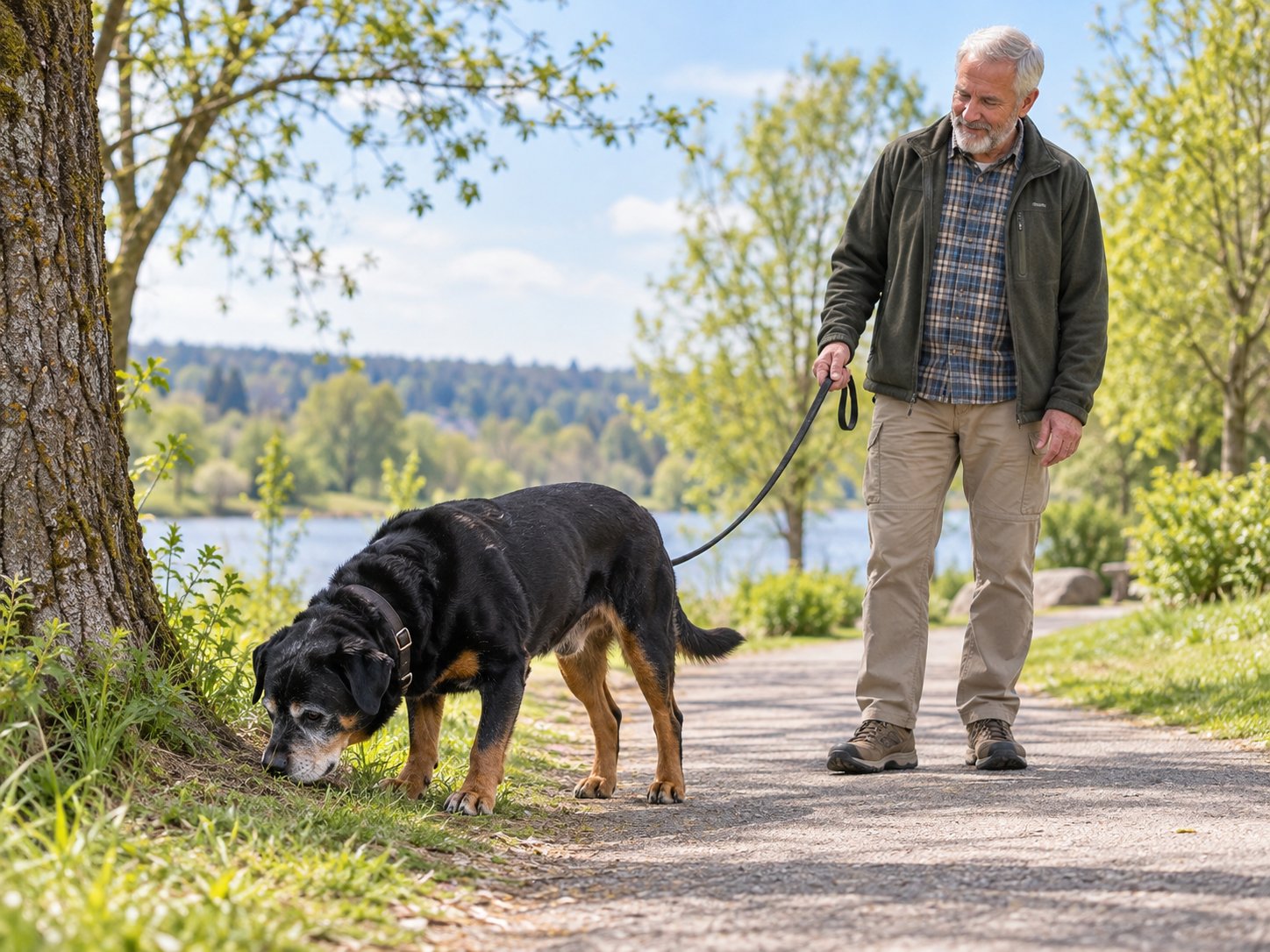
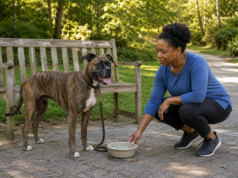
Let him sniff when it is safe to do so. Choose even ground when you can, especially if his balance is not what it used to be. If distance is limited, make the walk richer instead of longer. Your senior dog does not need mileage to have an interesting outing.
Bring the Nose Work Inside
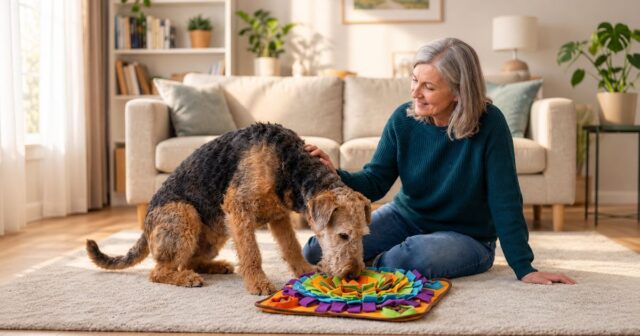
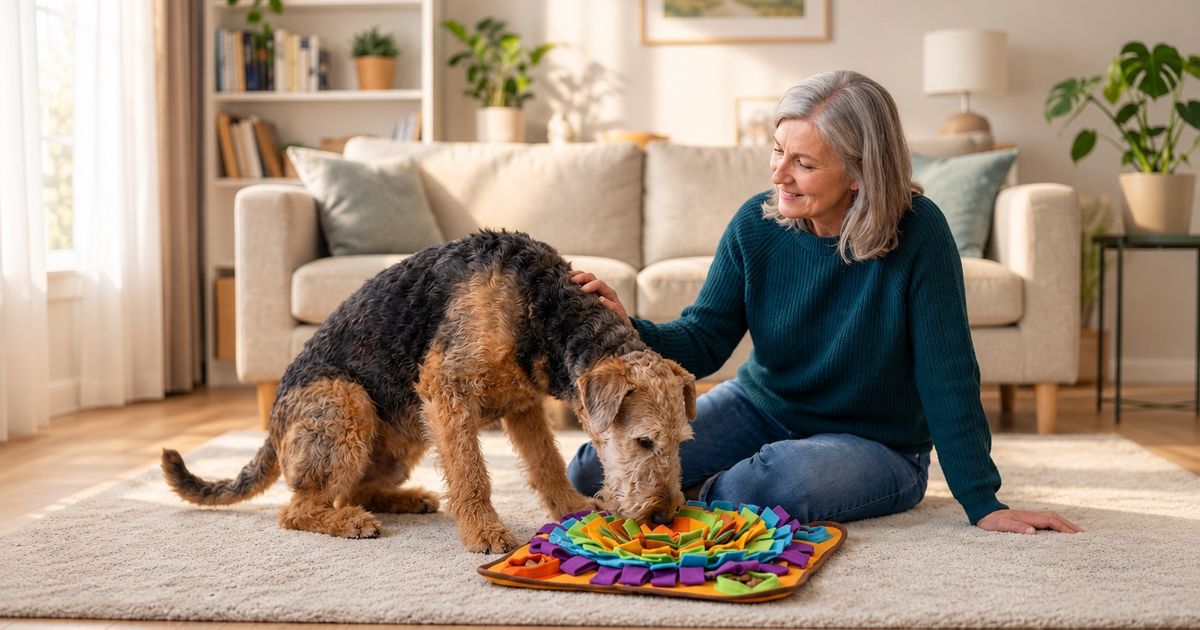
Indoor scent games are useful when weather, pain, or fatigue limits outdoor time. Hide a few treats in easy places and let him find them. Start so easily that he cannot fail. Then, if he seems to be pleased with himself, make the game a little harder.
Boxes, towels, snuffle mats, and simple treat trails can all work. Do not make the game so hard that he gives up and walks away. The goal is not to prove how smart he is. The goal is to let him enjoy using his nose and finishing successfully.
Food Puzzles Should Not Punish an Old Body
Food puzzles can be wonderful for older dogs, but some are too demanding. Hard pawing, twisting, and long standing can frustrate a stiff dog. Choose puzzles he can solve without straining his neck, back, or hips. Easy is the way to go when the dog is old.
A muffin tin with treats under a few balls may be enough. You can also roll a few pieces of kibble loosely inside a towel and let him nose it open. Scattered kibble in a safe room can turn dinner into a search. Our article on why dogs need a job explains why purposeful activity helps many dogs.
Old Dogs Can Still Learn
People repeat the old saying about old dogs and new tricks. Anyone who has loved an aging dog knows better. Many seniors still enjoy learning, especially when the lesson is short and pleasant. They simply do not need a long, repetitive training session.
Try a nose touch, a hand target, or a simple mat cue. Teach one small thing at a time. Reward generously and stop while he is still interested. Let him leave the lesson feeling as if he got it right.
Use Skills He Already Knows
You do not need to invent a whole new training program. Familiar cues can become quiet thinking games. Ask for a sit in different rooms. Ask for a hand touch before you set down his dinner.
Those little changes ask his brain to participate. They also protect his confidence because the skill itself is not brand new. Confidence helps an older dog stay willing. Too much novelty can start to feel like pressure instead of fun.
Cooperative Care Gives Him a Say
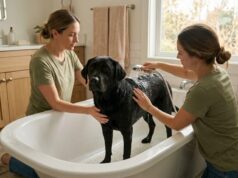
Aging dogs often need more handling than younger dogs. Nails, ears, medication, grooming, and vet visits may all become more frequent. Cooperative care gives your dog a role in those moments. That can preserve trust when his body needs more help than it once did.
A chin rest, paw lift, or stationing cue can become part of daily care. Start when the house is calm. Keep sessions short and reward honest effort. Our guide to cooperative care for dogs can help you build those skills.
Movement Still Feeds the Mind
Gentle movement gives an older dog more than exercise. It lets him smell the yard, feel the ground, watch the household, and take part in the day. Even a slow walk to the mailbox can be meaningful when he is included. The key is stopping before the outing costs him comfort later.
Ask your veterinarian about limits if your dog has pain, heart disease, breathing problems, or mobility loss. Keep the pace easy and let him pause when he needs to pause. If he is sore that evening or stiff the next morning, the outing was too much. A senior dog should not have to pay for enrichment later.
Watch for Changes That Are More Than Age
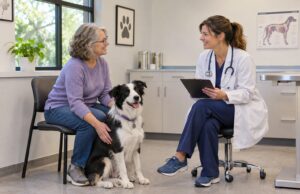
Some behavior changes need more than a new puzzle. Confusion, pacing, house-training changes, odd sleep patterns, or getting stuck can signal a real problem. A dog who seems lost in familiar places should be discussed with a veterinarian. Do not brush those signs away as “just old age.”
Cornell describes canine cognitive dysfunction as an age-related brain disease in dogs. AAHA also encourages early recognition of cognitive and behavior changes. Enrichment may be part of management, but it is not a diagnosis. Your veterinarian should help sort out what is happening.
Make the House Easier for Him
Your senior dog may cope better when the house still makes sense. Keep food, water, beds, and doors easy to find. Avoid rearranging furniture if his vision or memory has declined. Use rugs or runners if slick floors make him hesitate.
That does not make life boring. It gives him a dependable map. Within that map, you can still offer choices. Let him choose between two toys, two resting spots, or two walking directions.
Let Him Be Part of Ordinary Life
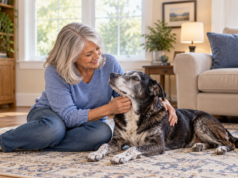
Many older dogs do not need a big production. They just want to be included. Sitting near you while you fold laundry may be enough. Watching the household may still feel make him feel useful.
Talk to him as you move through the day. Invite him to supervise from a comfortable bed. Give him small chances to participate without asking too much. Some old dogs seem to thrive on that kind of quiet importance.
Adjust When Hearing or Vision Changes
A dog who misses a cue may not be stubborn. He may not hear you. A dog who hesitates may not be defiant. He may not see the step, doorway, or toy clearly.
Use hand signals, gentle touch cues, brighter contrast, or familiar paths. Scent games may become easier than visual games. Do not correct a senior dog for missing information he no longer receives. Help him succeed with the senses he can still trust.
Impulse Control Can Still Help
Some older dogs remain quick reactors. Your dog may still bark at motion, rush toward food, or crowd the door. Age does not erase personality. It may only make recovery slower after excitement.
Short impulse-control games can help if they are suitable for his age and capacity. Ask for one calm pause before opening a door. Reward quickly and release before frustration builds. Our article on dog impulse control explains why some dogs react so quickly.
Build a Simple Rotation
Your senior dog does not need a complicated enrichment calendar. He needs a few good choices used wisely. Mentally stimulating a senior dog can be as simple as scent work one day and a food puzzle the next. Add a short training session when he seems bright and willing.
Keep simple notes if your dog is changing. Write down what he enjoyed, what confused him, and what tired him. Those details can help you adjust the next day. They can also help your veterinarian see patterns over time.
Know When to Do Less
Some days, your old dog may not want a game. Pain, poor sleep, medication changes, heat, or weather can change his interest. Respect that answer instead of coaxing harder. Rest can be the right choice.
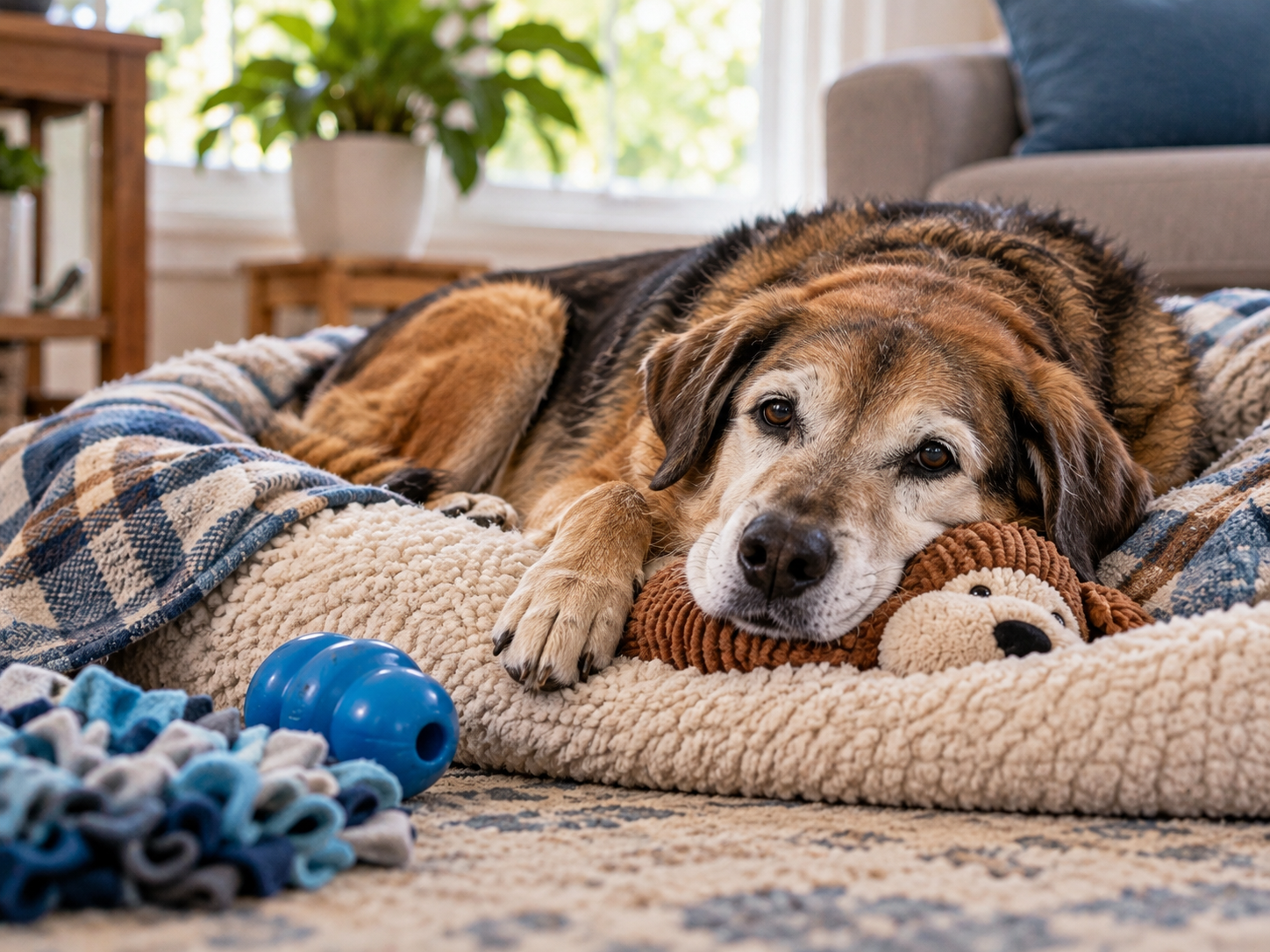
On those days, offer something lighter. Open a safe window so he can smell the air. Sit with him if he wants company. Let being included be enough.
The Real Goal Is Connection
Keeping a dog mentally sharp as he ages is not about proving what he can still do. It is about helping him stay connected to his people and his world. His games may become slower. His wins may become smaller.
Those smaller wins are still important. The old dog who finds one hidden treat has used his nose and memory. The senior who learns a hand target has shared another conversation with you. The dog who chooses to participate is still very much present.
Age changes the way a dog joins life. It should not remove his chances to think, sniff, choose, and belong. Meet your dog where he is now. Then give him something meaningful he can still enjoy.
Sources
- AAHA: Managing Cognitive Dysfunction and Behavioral Anxiety
- Cornell University: Cognitive Dysfunction Syndrome
- American Kennel Club: Toys and Games for Senior Dogs
Health & Safety Note: This article is for general educational purposes only. Sudden behavior changes, confusion, pain signs, mobility changes, or house-training changes in a senior dog should be discussed with a veterinarian.
Amazon Affiliate Disclosure: As an Amazon Associate, we may earn from qualifying purchases without any additional cost to you.
Photo Credit: All images © Sloan Digital Publishing and licensed stock sources. Used with permission.