 Puppy fear periods can make a confident young dog seem surprisingly uncertain almost overnight. A puppy may suddenly bark at a trash can, avoid a stranger, or freeze at an unfamiliar sound. That abrupt change can worry owners who thought socialization was going well.
Development is not perfectly smooth, and growing puppies can become more cautious as they mature. These changes do not automatically mean a puppy has poor temperament or lasting anxiety. However, the owner’s response can influence what the puppy learns from a frightening experience.
What Are Puppy Fear Periods?
The phrase puppy fear periods describes developmental stages when puppies may respond more cautiously to unfamiliar or startling experiences. Veterinary behavior sources describe sensitive developmental periods rather than one rigid schedule for every dog. Genetics, environment, previous experience, and individual development can all influence timing.
Fear itself is not abnormal. It helps an animal notice possible danger and choose an appropriate response. Problems can develop when fear becomes intense, persistent, generalized, or repeatedly reinforced by frightening experiences.
When Do Puppy Fear Periods Happen?
Many puppy resources describe an early fear period around eight to eleven weeks. Owners also commonly hear about another cautious stage during adolescence. Those age ranges are useful guides, but they should not be treated like appointments on a calendar.
The Merck Veterinary Manual places the major socialization period from about three through twelve weeks. During that time, positive exposure helps puppies learn what belongs in their normal world. Merck also notes that genetics and environment influence developmental timing.
After about twelve weeks, puppies enter the juvenile period and may show stronger avoidance toward unfamiliar things. Adolescence begins around sexual maturity, often between six and nine months. Giant breeds may reach that stage later.
Therefore, a puppy can become more cautious without entering a precisely defined second fear period. The useful question is not whether today’s date fits a chart. Owners should focus on what the puppy communicates and how quickly confidence returns.
What a Fear Period Can Look Like
Fear does not always look like a puppy hiding behind someone’s legs. A worried puppy may freeze, retreat, refuse food, lower the body, tuck the tail, or hesitate. Some puppies become unusually watchful or suddenly reluctant to approach something they previously ignored.
Others move forward instead of backward. Barking, growling, lunging, or frantic pulling can create distance from something the puppy finds threatening. These behaviors should not automatically be interpreted as stubbornness, dominance, or deliberate disobedience.
Context is important. A brief startle followed by quick recovery is different from prolonged distress. Recovery helps owners understand how well the puppy can process an unexpected experience.
The Strange Things Puppies Can Suddenly Find Scary
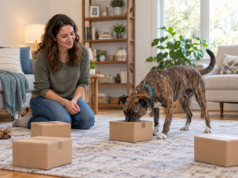
The frightening object may seem ridiculous to a human. A garbage bag moving in the wind can look very different from yesterday’s motionless bag. A person wearing a wide hat may create a silhouette the puppy has never encountered.
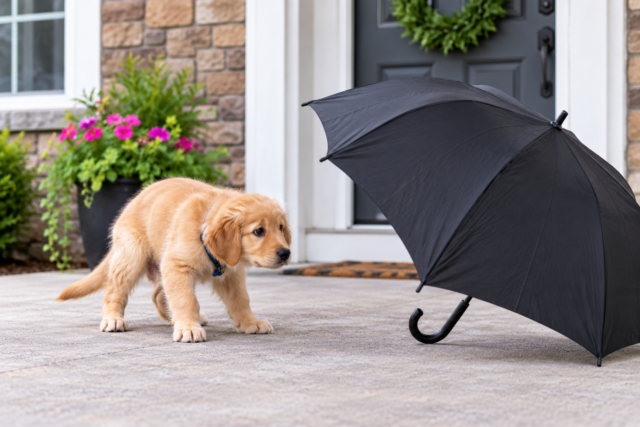
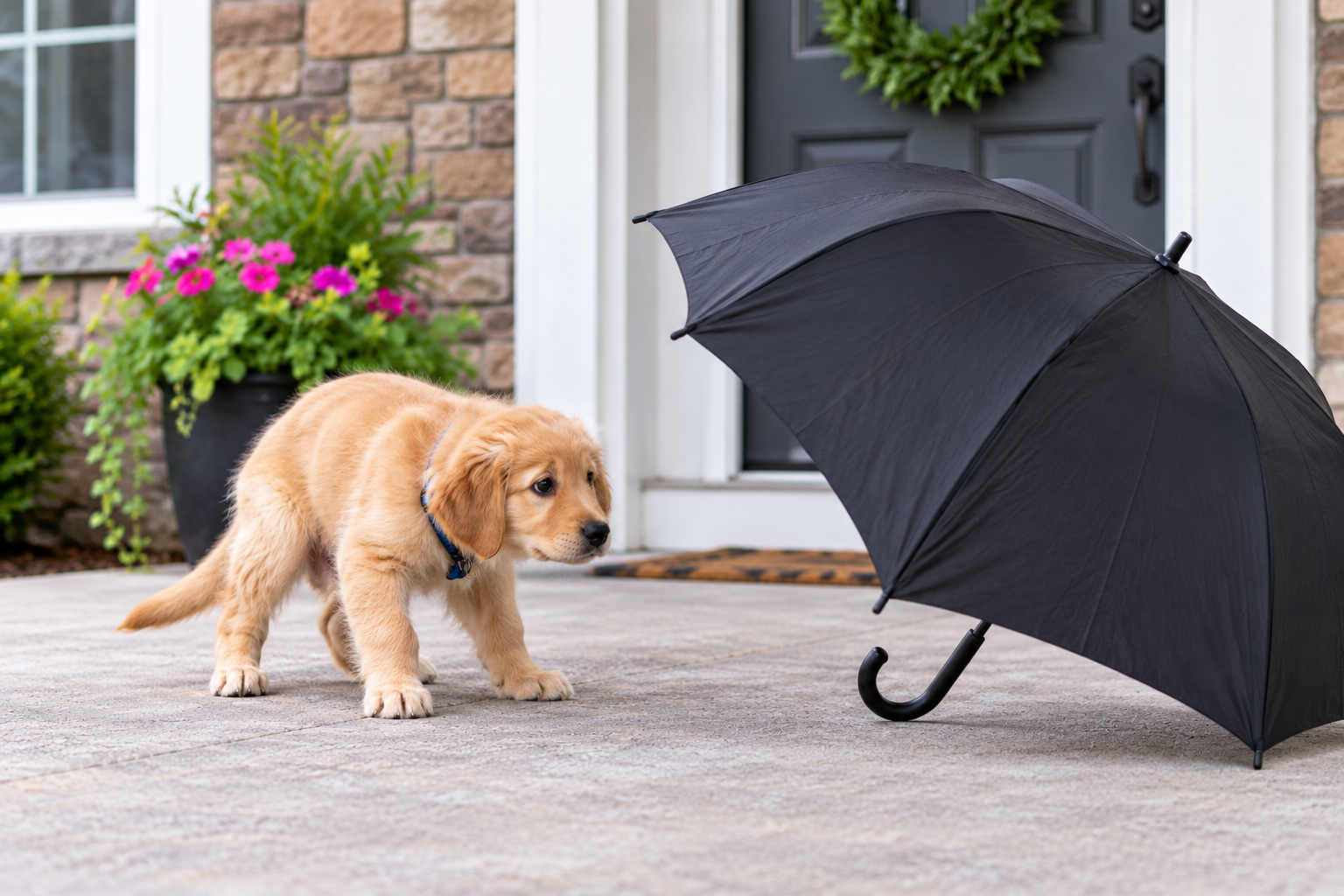
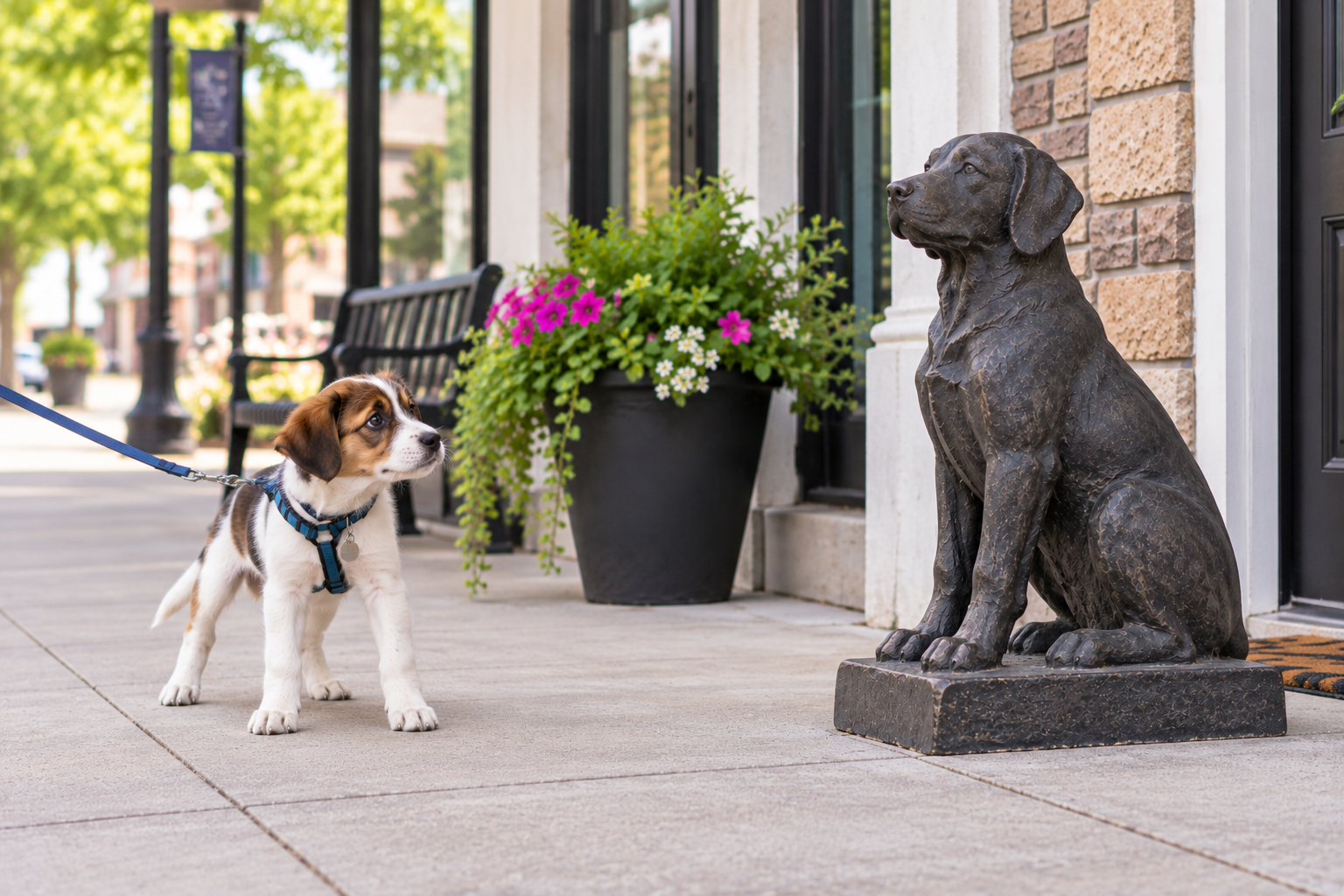
Puppies may also react to umbrellas, statues, rolling carts, stairs, reflective floors, traffic sounds, or unfamiliar voices. Even a familiar object moved elsewhere can cause hesitation. Young dogs are still learning which changes are harmless.
Avoid laughing at, scolding, or dragging a frightened puppy toward the object. The puppy is responding to what it perceives, not trying to be difficult. A calm response gives the puppy room to gather better information.

Do Not Force a Puppy to Get Over It
Forcing contact is one of the most important mistakes to avoid during puppy fear periods. A frightened puppy does not necessarily become braver because escape is prevented. Too much exposure can instead make the fear stronger.
The American Animal Hospital Association warns that forced social exposure can aggravate fear during sensitive developmental periods. Repeated exposure while the puppy remains frightened may cause sensitization instead of successful socialization. More exposure is not automatically better exposure.
That distinction changes the owner’s job. You do not need to make the puppy touch an object or greet a stranger. Instead, create conditions in which the puppy remains comfortable enough to learn.
Give the Puppy Distance and Choice
Distance is often the simplest useful tool. Move far enough away that the puppy notices the trigger without becoming overwhelmed. Then allow time to look, sniff, turn away, or approach voluntarily.
Choice can make a difficult situation feel safer. Avoid tightening the leash and pulling the puppy forward. If the puppy chooses to investigate, remain relaxed and allow an easy retreat.
Leaving is sometimes the correct training decision. Ending an overwhelming encounter does not mean you have failed. It can prevent a bad experience from becoming a stronger negative association.
Use Good Experiences Without Bribing the Puppy Closer
Food can be extremely useful when it changes how a puppy feels about something uncertain. Keep enough distance that the puppy can observe without panicking. Then pair that observation with something enjoyable.
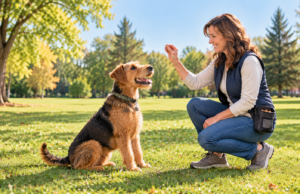
Tiny high-value training treats work well because owners can reward repeatedly without offering large portions. Give the treat while the puppy remains at a comfortable distance. Do not use food to pull a reluctant puppy toward something frightening.
Play can serve the same purpose for puppies that value toys or interaction more than food. Merck recommends pairing low-intensity exposure with enjoyable activities, including treats and play. The goal is a better emotional association, not forced proximity.
Socialization Does Not Mean Maximum Exposure
Good socialization is not a contest to accumulate the most people, dogs, surfaces, and places. Quality is more important than sheer quantity. Puppies need experiences they can process without excessive fear or withdrawal.
The American Veterinary Society of Animal Behavior emphasizes safe early exposure during the first three months. Its guidance also cautions against experiences producing excessive fear, avoidance, or withdrawal. Puppies should encounter novelty while still feeling capable of coping.
Observation can be valuable socialization. A puppy can watch bicycles from a comfortable distance without greeting a cyclist. It can hear traffic without standing beside the busiest road.
A Fearful Reaction Does Not Automatically Mean Poor Temperament
One startling episode cannot define an entire dog. Temperament reflects genetics, development, learning history, environment, health, and responses across many situations. Owners should look for patterns instead of assigning a permanent label after one bad afternoon.
Recovery is particularly informative. A puppy that startles and resumes exploring shows something different from a puppy that remains distressed. Repeated inability to recover deserves closer attention.
This distinction complements our discussion of stable dog temperament signs. True stability does not mean a dog never becomes startled or uncertain. How the dog responds and recovers provides important information.
When Sudden Fear Deserves More Attention
Development should not become an explanation for every behavior change. Sudden fear can sometimes accompany pain, illness, sensory problems, or another medical issue. A marked or unexplained change deserves veterinary attention, especially when other symptoms appear.
Professional help is also appropriate when fear becomes intense, persistent, or increasingly generalized. Seek guidance when a puppy cannot recover or begins showing dangerous defensive behavior. Early intervention can prevent a difficult pattern from becoming more established.
A veterinarian can first consider medical contributors. Our guide to knowing when to visit the veterinarian can help owners evaluate broader warning signs. Severe behavioral cases may warrant consultation with a board-certified veterinary behaviorist.
Confidence Is Built Through Recovery, Not Pressure
Owners naturally want a frightened puppy to become confident again quickly. Confidence, however, is not the absence of every startled reaction. It includes recovering, investigating safely, and learning that unfamiliar things can be manageable.
During puppy fear periods, calm handling can protect that learning process. Give the puppy distance, preserve choice, and pair manageable exposure with good experiences. Avoid turning one uncertain moment into a confrontation.
A puppy that suddenly hesitates has not necessarily lost the confident personality he had yesterday. Development can temporarily change how the world looks to him. Your response can help the puppy discover that the world is still safe enough to explore.
Sources
- Merck Veterinary Manual — Social Behavior of Dogs
- American Veterinary Society of Animal Behavior — Puppy Socialization Position Statement
- American Animal Hospital Association — Age and Behavior
Amazon Affiliate Disclosure: As an Amazon Associate, Excellent Dogs Club may earn from qualifying purchases. This does not change the price you pay.
Photo Credit: All images © Sloan Digital Publishing and licensed stock sources. Used with permission.