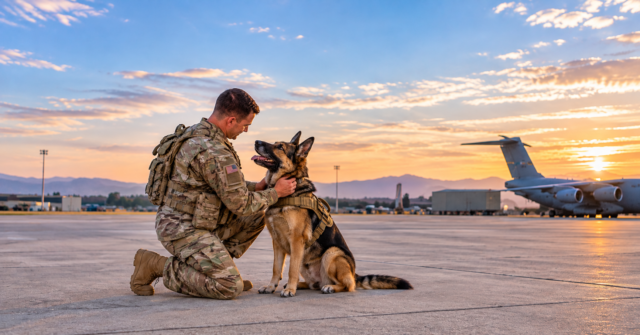
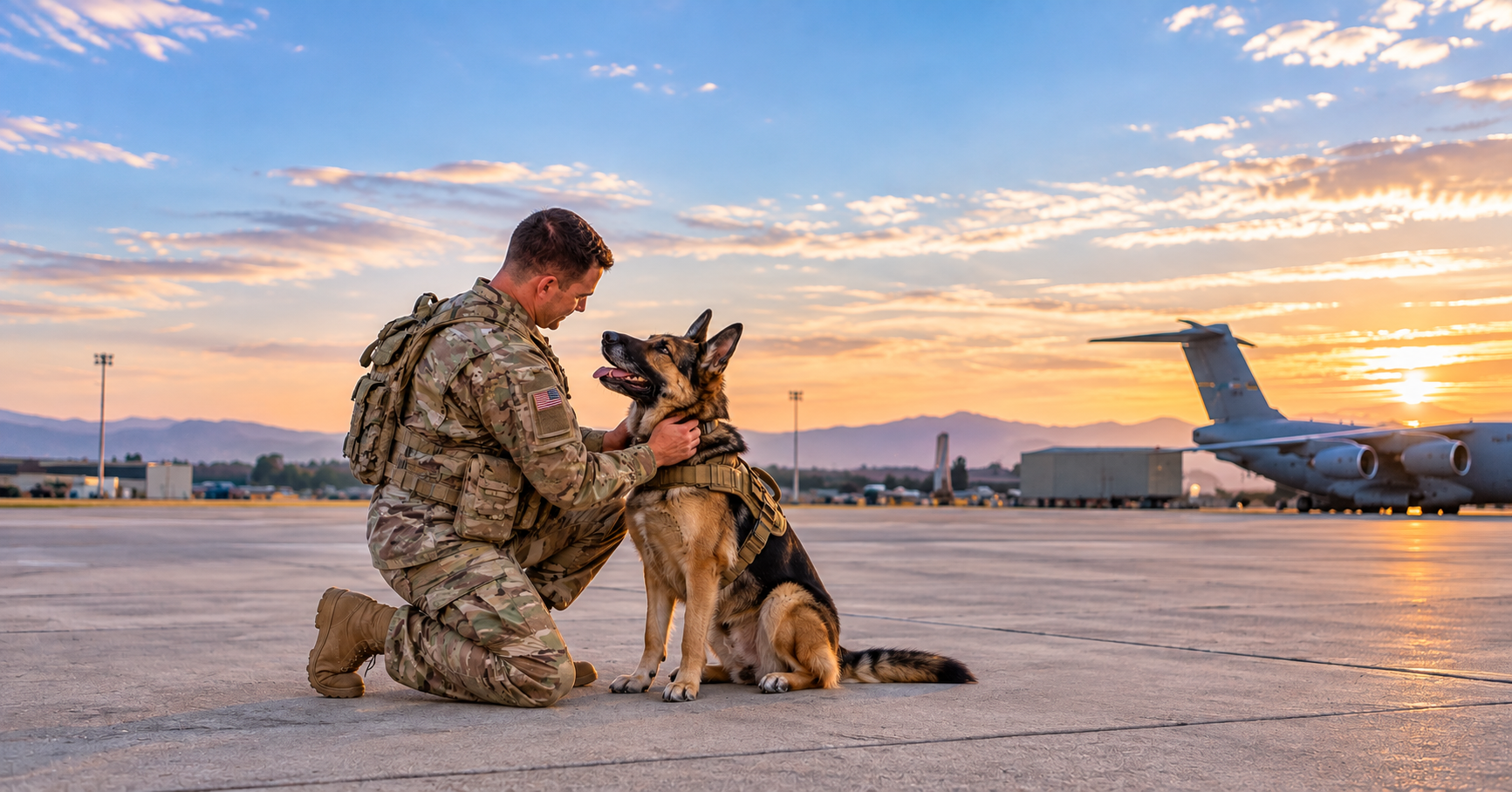
Retiring military dogs can leave a highly structured working life almost overnight. Their routines, commands, environments, and daily expectations may all change. For many dogs, a former handler can provide valuable continuity during that transition.
So, should the handler always get the dog? Usually, the handler should receive the first opportunity when the home is suitable. However, the dog’s welfare must remain the deciding factor.
What Federal Law Actually Requires
Federal law gives former handlers a clear preference in many military working dog adoptions. Under 10 U.S.C. § 2583, former handlers rank first among recommended adoption recipients. Other qualified people or organizations follow, with law enforcement agencies listed after them.
The law requires a suitability decision before a military animal can be transferred or adopted. The dog’s last unit commander makes that decision after considering the unit veterinarian’s recommendations. That requirement keeps health and behavior in the placement decision.
A separate provision addresses retired military working dogs specifically. It directs the military to prefer a former handler unless that placement would not serve the dog’s best interests. If several former handlers apply, the military must decide which placement best serves everyone involved.
Which Dogs Are We Talking About?
The phrase military dog can describe several very different situations. This article focuses on retiring military dogs covered by the federal military-animal adoption law. It does not address civilian police dogs or privately owned working dogs.
The Department of Defense adoption program also places some younger dogs that never completed military certification. Those dogs may enter civilian homes without ever serving operationally. Their needs can differ from dogs leaving years of military work.
That distinction is important because retirement brings a unique transition. A working dog will lose familiar schedules, tasks, kennels, and work environments simultaneously. They may also lose the handler with whom they have significantly bonded. The goal is not simply adoption, but a stable home for the remainder of their lives.
Why a Former Handler Often Has an Advantage
A handler already knows how the dog communicates during work and ordinary routines. That includes responses to voice, movement, stress, rewards, and correction. A new adopter may need months to learn those patterns.
The dog also knows the handler. Familiar cues and expectations can make a new household feel less unfamiliar. That continuity may reduce the number of changes the dog must process at once.
The handler may also notice subtle changes that others could miss. A change in movement, appetite, sleep, or focus may already have meaning to that person. That knowledge can become useful as an older dog develops new needs.
When the Handler May Not Be the Best Home
A strong bond does not automatically create a suitable retirement home. Housing restrictions, frequent travel, deployments, finances, or family circumstances may make adoption difficult. Other pets or young children can also affect the decision.
The handler must be able to meet the dog’s needs after the working relationship ends. That includes daily care, safe management, veterinary expenses, and appropriate exercise. Loyalty to the dog should include an honest assessment of those responsibilities.
A realistic decision protects the dog from unnecessary instability after service. The right home must provide reliable care over time. Sometimes that home will belong to the former handler, and sometimes it will not.
Health Needs Can Change the Retirement Plan
Some military working dogs leave service with medical or mobility concerns. The Department of Defense adoption program notes hip, back, and other conditions among available dogs. Some dogs may also need long-term prescription medication.
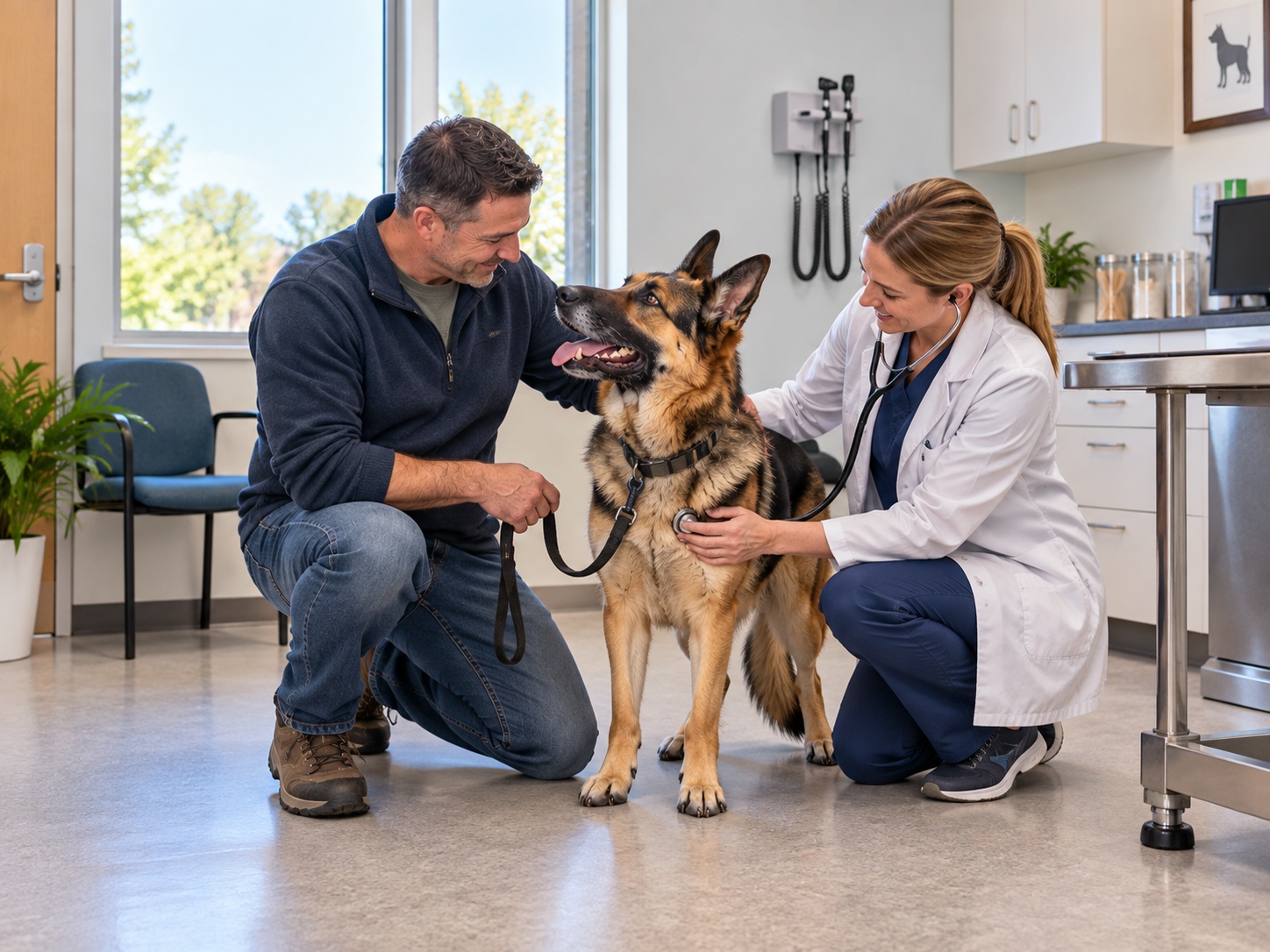
Government research has documented medical needs among adopted military working dogs. A GAO review found skin, dental, and musculoskeletal conditions among common problems in earlier adoption records. Adopters are generally responsible for veterinary costs after adoption.
A former handler should consider those expenses before committing. Home layout imust also be considered when stairs, slick floors, or vehicle access become difficult. Our guide to cooperative care for dogs explains ways to make routine handling easier.
Life After Work Still Needs Structure
Retirement does not erase years of training or learned expectations. Some dogs may still respond strongly to familiar cues and working routines. Owners should respect that history while building a calmer daily pattern.
Mental activity still has a place after formal work ends. Scent games, short training sessions, and predictable routines can provide useful engagement. Our article on why dogs need a job explains why structured activity benefits many working dogs.
However, retirement should not become an attempt to recreate military duty at home. The dog’s age, health, and temperament should guide activity choices. Some dogs may want substantial engagement, while others may need a quieter pace.
If Another Home Is Chosen
When a former handler cannot adopt, another home may still provide an excellent retirement. Federal law allows adoption by other people or organizations capable of humane care. The dog must still be suitable for transfer or adoption.
The Department of Defense uses screening requirements for public adopters through the 341st Training Squadron. The program considers the home, family, lifestyle, veterinary planning, and ability to manage the dog. It also warns that many available dogs need significant exercise, attention, and continued training.
Public adoption should never depend on admiration alone. Military service does not make every dog suitable for every household. The adopter must match the individual dog rather than the idea of owning a military dog.
What a Former Handler Should Decide Before Applying
The first question is whether the home can support the dog for the rest of its life. That includes housing, medical care, transportation, daily supervision, and backup care. Future moves or work obligations should be considered before adoption.
The second question concerns household compatibility. Family members should understand the dog’s history, routines, and management needs. Introductions to other animals, and to children, should be handled carefully and even professionally when needed.
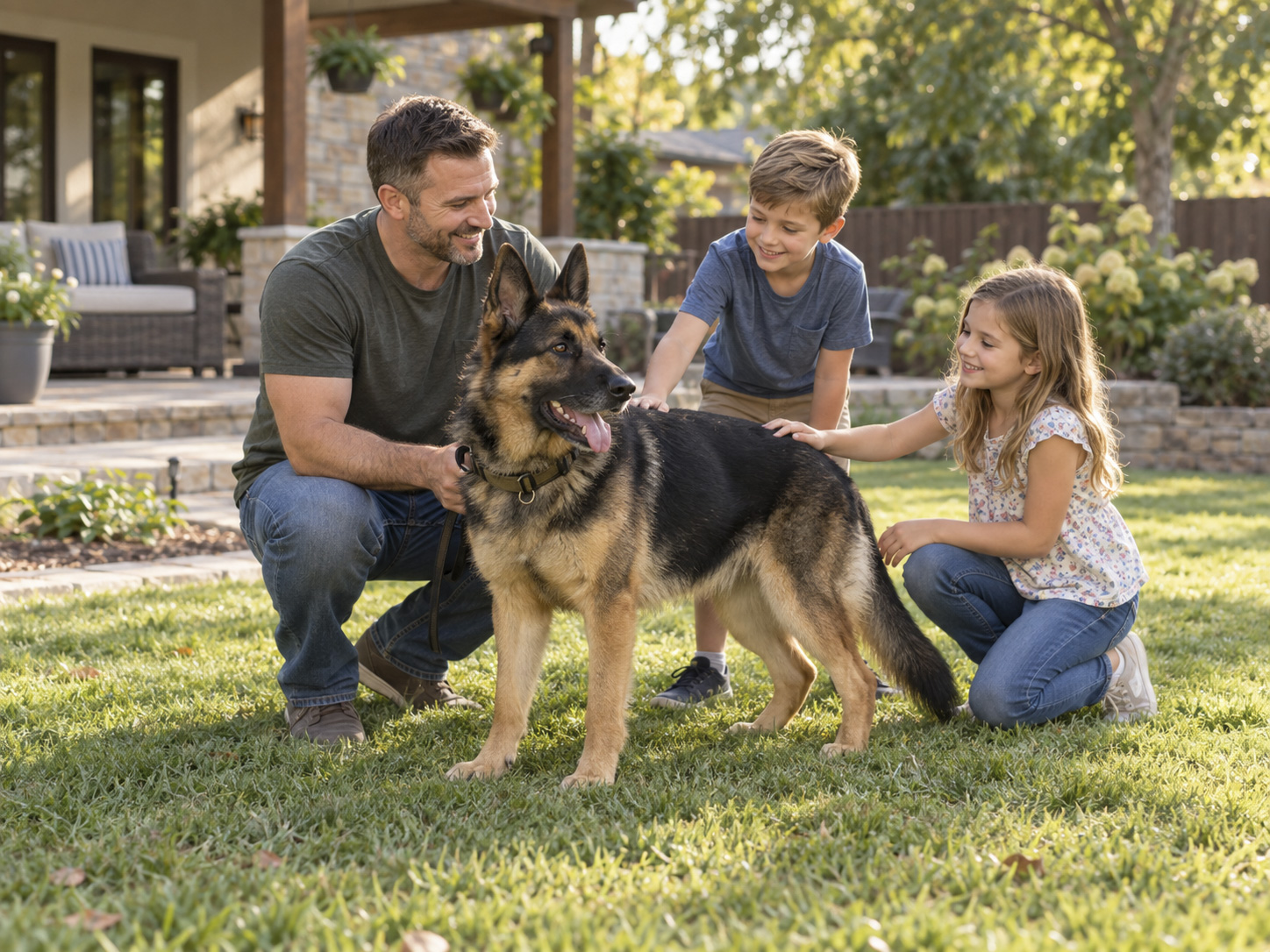
The third question is whether the handler can accept retirement as a new phase. The dog may not need the same demands, pace, or intensity anymore. A good retirement home adapts to the dog that exists now.
Do Retired Military Dogs Receive Veteran Benefits?
Retired military working dogs are sometimes called canine veterans, but they do not receive VA benefits like human veterans. Federal veterans law defines a veteran as a person who served in active military service. Military dogs instead receive certain protections through Department of Defense law.
Before retirement, the military must provide veterinary screening and necessary care. Federal law also authorizes a veterinary-care system for retired military working dogs. However, that law specifically prohibits federal funds from paying for the system.
After adoption, the government does not assume ordinary lifelong veterinary costs. Private organizations sometimes help fill that gap. American Humane provides lifelong veterinary care for dogs reunited with former handlers through its program.
Practical Help With Reunification
Cost and transportation can complicate an otherwise suitable reunion. American Humane Society operates a program that reunites retired military working dogs with former handlers. The organization says it covers transportation and lifelong veterinary care for dogs reunited through the program.
That support does not decide whether a particular placement is appropriate. It can, however, remove practical barriers after a suitable match has been identified. Handlers should verify current program requirements directly before relying on assistance.
Should Retiring Military Dogs Stay With Their Handlers?
In many cases, yes. Federal law already reflects that preference while protecting the dog through suitability and best-interests requirements. That balance is more responsible than an automatic rule.
Retiring military dogs deserve a placement based on the individual animal, not symbolism. A former handler may offer the best combination of familiarity, knowledge, and commitment. When another home offers better long-term care, choosing it can also honor the dog’s service.
Amazon Affiliate Disclosure: As an Amazon Associate, we may earn from qualifying purchases without any additional cost to you.
Photo Credit: All images © Sloan Digital Publishing and licensed stock sources. Used with permission.