
Many exhibitors find show ring judging difficult to understand when results do not match expectations. A sound, well-bred dog may fail to place one day and win under another judge the next. Understanding those results begins with recognizing what the judge is actually being asked to evaluate.
A conformation judge evaluates each dog in relation to the written breed standard, considering its virtues and faults as a whole. The judge must then make comparative decisions among the dogs entered and determine which most closely represent the ideal described by that standard. A placement is therefore an informed evaluation of the dogs present, not a permanent verdict on any dog’s quality.
The Breed Standard Is the Foundation of Show Ring Judging
The breed standard provides the foundation for conformation judging. It describes the characteristics considered correct for the breed, including structure, proportions, movement, temperament, coat, and other breed-specific features. Judges use that knowledge to form a mental picture of the ideal and evaluate how closely each entry approaches it.
The ideal dog described by a standard does not actually walk into the ring. Every real dog has strengths and weaknesses, so judges must determine the significance of individual virtues and faults while evaluating the complete animal. Our guide to understanding breed standards explains why standards are central to preserving the characteristics that distinguish one breed from another.
First Impressions Begin the Evaluation
Judging begins before the hands-on examination. As the dogs enter the ring and stand together, a judge can observe outline, proportions, balance, carriage, condition, and general breed character. Those first impressions provide useful information, but they are only the beginning of the evaluation.
A beautiful outline must be supported by what the judge finds during the examination and sees when the dog moves. The reverse can also occur, as a less immediately striking dog may reveal excellent structure, correct breed characteristics, and efficient movement. Experienced exhibitors therefore learn not to assume that the first dog to catch the judge’s eye will necessarily win.
The Hands-On Examination Reveals What the Eye Cannot
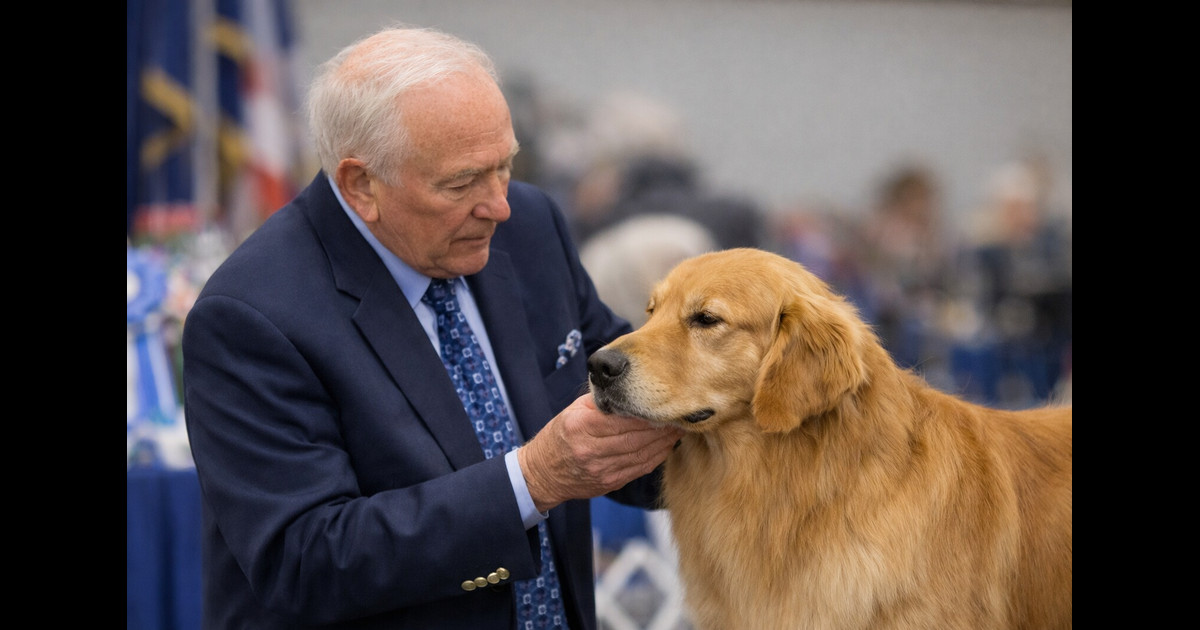
The physical examination allows the judge to evaluate characteristics that may be difficult to assess by sight alone. This is particularly important in heavily coated breeds, where grooming and coat can obscure the underlying structure. Depending on the breed, the judge may evaluate the head, bite or dentition, bone, body proportions, shoulder assembly, ribbing, topline, coat texture, tail set, and other characteristics described in the standard.

The examination is not simply a search for faults. Judges are also identifying virtues and determining how individual characteristics contribute to the complete dog. What the judge finds through touch helps confirm or clarify what was observed visually.
Movement Shows Structure in Action
A dog can look impressive while standing still, but movement provides another part of the structural picture. Judges watch the dog gait to see how its construction functions in motion. Depending on the breed standard, they may consider reach, drive, foot timing, balance, topline, efficiency, and the characteristic gait expected for that breed.
Faster or more dramatic movement is not automatically better. The important question is whether the dog’s movement is correct and appropriate for its breed. Because conformation is tied to function, movement helps demonstrate whether the dog’s structure works as it should.
Why Show Ring Judging Can Differ Between Judges
Different results under different judges do not necessarily mean that one judge made a mistake. Breed standards describe an ideal, but judges must apply those written words to living dogs. Two knowledgeable judges can recognize many of the same virtues and faults yet give them somewhat different weight when evaluating the complete animal.
One entry might possess exceptional breed type but have a structural weakness, while another may be exceptionally sound but less impressive in an important breed characteristic. Each judge must decide which combination most closely approaches the standard. This element of informed interpretation helps explain why the same group of good dogs may not finish in the same order under every judge.
A Specialty Show Does Not Use a Different Breed Standard
Specialty shows sometimes create confusion because exhibitors may speak informally about “specialty judges.” A specialty show is a conformation event devoted to a single breed or, in some cases, the varieties of one breed. The written breed standard does not change because the event is a specialty.
A judge selected for a specialty may have extensive history or experience with that breed, and exhibitors may be particularly interested in that judge’s interpretation. However, this does not create a separate set of judging rules or a different breed standard. The concentrated entry also gives breeders, owners, and exhibitors an opportunity to study many representatives of the breed and consider its overall direction.

Why a Well-Bred Dog Does Not Always Win
Being well bred does not guarantee a ribbon, nor do previous wins, professional handling, or an impressive appearance outside the ring. Show ring judging can evaluate only what the dog demonstrates during that competition. A dog may be out of condition, distracted, reluctant to move, uncomfortable with the examination, or simply less competitive within that particular entry.
Age and development can also affect what the judge sees. A young dog may still lack physical maturity or confidence, while a mature competitor may be at its peak. There may also be several excellent dogs in the same class, requiring the judge to make fine distinctions among animals that all possess considerable quality.
The Role of Presentation in the Show Ring
Good presentation has a legitimate role in conformation competition because it allows the judge to evaluate the dog efficiently and without unnecessary distraction. A skilled handler moves at an appropriate speed, stacks the dog effectively, follows instructions, and maintains enough control for a proper examination. Appropriate grooming also helps the judge see the dog’s coat and outline as intended for the breed.
Presentation can highlight genuine virtues, but it cannot change the dog’s underlying structure or breed characteristics. The purpose of good handling is not to manufacture correctness. At its best, presentation simply allows the judge to see the dog clearly.
Temperament Is Part of the Picture
Temperament is not separate from breed type. Breed standards may describe expected temperament because behavior historically relates to the work and purpose for which breeds were developed. Judges therefore observe how a dog responds to examination and the show environment within the expectations established for that breed.
A dog that is unusually stressed, distracted, or shut down may not demonstrate its qualities as effectively. Ring readiness can improve through appropriate experience, maturity, conditioning, and thoughtful training. A disappointing performance should therefore be considered in context rather than treated as a complete assessment of the dog’s overall quality.
Dogs Develop Beyond a Single Show
Physical maturity, coat, conditioning, confidence, and mental development do not necessarily arrive at the same time. A promising young dog may need additional time to develop, while a mature dog may present a much more complete picture than it did a year earlier. Judges cannot award future potential; they must evaluate what is presented in the ring.
For breeders and exhibitors, this is one reason long-term observation is more informative than reacting strongly to an isolated result. Patterns across different judges, conditions, and stages of maturity can provide useful information about a dog’s strengths. They can also identify areas that deserve closer, more objective evaluation.
Learning to Interpret Show Ring Results
Understanding show ring judging can help exhibitors respond to results more productively. Instead of asking only, “Why didn’t my dog win?” consider what the judge may have valued in the dogs that placed. Watching the entire class can reveal information that is easily missed when attention remains fixed only on your own dog.
Study the breed standard and observe movement, proportions, breed characteristics, and qualitiDeveloping that skill takes time, and our article on developing an eye for evaluating show dogs explores how experienced dog people learn to recognize quality beyond an individual win or losses that appear consistently in successful dogs. Experienced breeders and mentors can also provide valuable perspective. Over time, careful observation helps develop an eye for the breed that no collection of ribbons can replace.
For additional background, the American Kennel Club’s introduction to conformation explains the purpose and basic process of dog shows.
Keeping Show Ring Judging in Perspective
Conformation judging combines a written breed standard with the informed judgment required to apply it to real dogs. That necessarily allows some differences in interpretation, particularly when several high-quality entries present different combinations of virtues and faults. Understanding that process can make both wins and losses more useful to exhibitors.
A ribbon can be gratifying, and repeated success can provide valuable information. However, placements should complement rather than replace a breeder’s knowledge of the breed and an objective evaluation of health, temperament, structure, and function. Approached this way, the show ring becomes not only a place of competition, but also an opportunity to observe, learn, and preserve the qualities that define the breed.
Sources and Further Reading
- American Kennel Club – Conformation
- American Kennel Club – Conformation Frequently Asked Questions
- American Kennel Club – Explanation of All-Breed and Specialty Shows
Editor’s Note: This article was substantially reviewed and updated in October 2026 for accuracy, clarity, and current conformation judging practices.
Amazon Affiliate Disclosure: As an Amazon Associate, we may earn from qualifying purchases without any additional cost to you.
Photo Credit: All images © Sloan Digital Publishing and licensed stock sources. Used with permission.