


What dogs understand when we talk to them is more complicated than a list of commands. Your dog may know words, but he also watches your face, posture, hands, routines, and tone. Sometimes he seems to understand a whole sentence, even when you never deliberately taught it.
That can make living with a dog feel almost uncanny. You mention a walk, and he appears at the door. You ask whether he wants dinner, and he heads for the kitchen. You whisper the veterinarian’s name, and he suddenly looks suspicious.
Dogs are not processing language exactly as people do. Still, many learn far more from us than we realize. They build meaning from repeated words, familiar situations, emotional tone, and thousands of small daily patterns.
What Dogs Understand Starts With Association
Most dogs first learn words through association. A sound repeatedly predicts an action, object, place, or outcome. “Walk” may predict the leash, while “dinner” predicts food arriving soon.
That does not make the learning meaningless. Association is one of the basic ways animals learn about their environment. Over time, a familiar word can become a reliable signal with a very specific meaning.
Researchers have also found evidence that some dogs form mental expectations when they hear familiar object names. In other words, a known word may call up an idea of the object rather than simply trigger a trained action.
Your Dog Is Listening to More Than the Word
If you say the same phrase in several different tones, your dog may respond differently. A cheerful “come here” does not sound like the same words spoken sharply. Dogs are highly sensitive to vocal emotion.
They also watch your body while you speak. A hand moving toward the leash, a glance toward the door, or a shift toward the kitchen can supply extra information. Your words often arrive with several other clues.
This helps explain why dogs sometimes seem to understand long sentences. They may recognize one or two important words while reading everything else around them. The full message comes from the combination.
Routines Teache Your Dog an Enormous Vocabulary
You teach your dog all day, even when you are not trying to train him. Picking up keys, putting on certain shoes, opening a cabinet, or turning off a lamp can become meaningful. Your dog notices patterns that you barely notice yourself.
A dog may learn that one pair of shoes predicts a walk. A specific coat might mean you are leaving without him. A particular kitchen sound may mean medication, treats, or dinner.
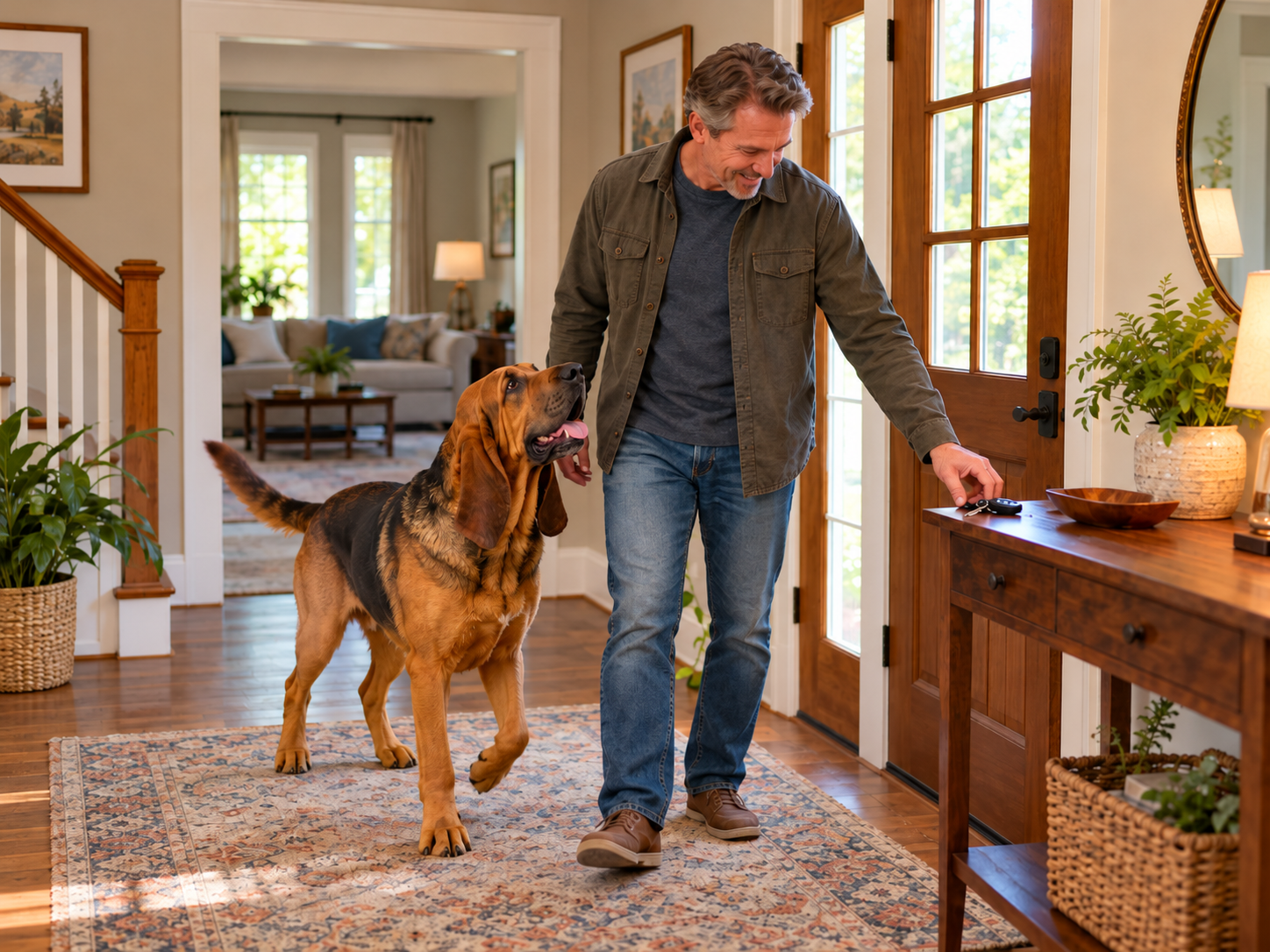
This is one reason dogs can appear almost psychic. Usually, they are simply excellent observers. They have spent years studying your habits.
Some Dogs Learn Far More Words Than Others
Dogs vary greatly in how easily they learn spoken labels. Most understand a practical collection of cues, names, and household phrases. A smaller number show an unusual ability to learn names for many objects.
Researchers studying highly gifted dogs have documented individuals that learn large vocabularies. These dogs are unusual rather than typical, but their abilities do show what canine learning can sometimes accomplish.
Breed tendencies may influence attention, persistence, and learning style. Individual personality also plays a large role. A dog who watches people closely may learn household language faster than one focused mostly on scent or movement.
Your Dog May Know Words You Never Taught
Dogs often learn words simply by hearing them repeatedly. You may never formally teach “grandma,” “car,” “bath,” or “bedtime.” Yet your dog may react consistently whenever one appears in conversation.
That does not mean he understands every grammatical detail. He may have learned that one familiar sound predicts something important. The result can still look remarkably sophisticated.
This accidental learning is common in homes where people talk to their dogs frequently. Repetition gives the dog many chances to connect sounds with outcomes.
Tone Can Change the Meaning of Familiar Words
Dogs pay close attention to how you sound. Praise spoken warmly can carry a different emotional value than the same word spoken flatly. Your dog is not only hearing vocabulary.
This is especially important during training. A clear cue works best when the dog can separate the word from confusing movement or emotional pressure. Consistency makes the message easier to interpret.
The American Veterinary Society of Animal Behavior explains that dogs can learn verbal cues alongside gestures and body language. Clear signals help prevent the dog from guessing what you intended.
Body Language Often Fills in the Missing Pieces
Your dog studies far more than your voice. He watches where you look, how you stand, whether your body is tense, and where your hands move. These details can change how he interprets what you say.
For example, “come here” may work differently if you lean toward your dog with a stern expression. The words invite approach, while the body may suggest pressure. Dogs notice those contradictions.
This is one reason understanding your dog’s body language helps communication in both directions. The better you read him, the easier it becomes to notice what he is reading in you.
Dogs Learn Emotional Meaning, Too
Some phrases become emotional signals rather than simple instructions. “Good boy” may predict approval. “It’s okay” may become associated with reassurance during uncertain moments.
Your dog can also learn which voices belong to particular moods. He may recognize excitement before a game, tension during an argument, or sadness when you are upset. That does not require human-style reasoning.
Dogs are social animals living inside human households. Paying attention to emotional changes helps them predict what will happen next. That ability can make them seem remarkably sensitive.
What Dogs Understand Is Not the Same as Human Language
It is easy to go too far and assume a dog understands every sentence exactly as spoken. Dogs cannot process grammar and abstract language as people do. Their strength lies somewhere else.
They combine sound, repetition, context, body language, and experience. This produces an impressive practical understanding of everyday life. It is less like conversation and more like highly skilled pattern recognition.
That distinction does not make the connection less meaningful. Your dog does not understand your sentence the way a person would. But, he may still understand what you are trying to communicate.
Why Dogs Sometimes Ignore Words They Clearly Know
Knowing a cue does not guarantee that a dog will respond every time. Distraction, fear, excitement, fatigue, or competing motivation can interfere. A dog chasing a squirrel may genuinely know “come” and still fail to respond.
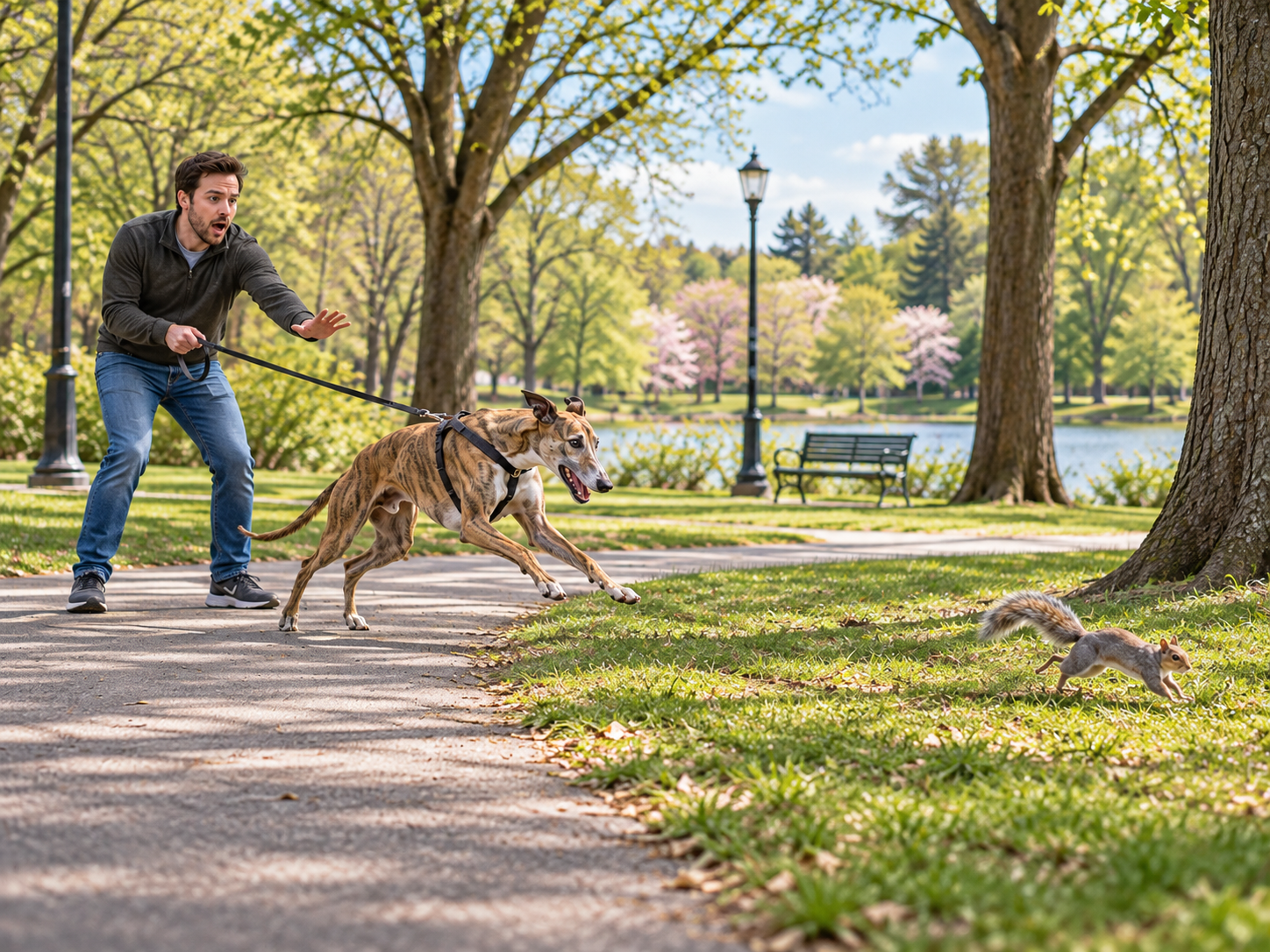
People sometimes interpret this as stubbornness. In reality, the environment may be stronger than the cue at that moment. Training must gradually teach the dog to respond under increasing distraction.
This is also why common dog behavior problems cannot always be solved by repeating familiar words louder. The dog may need clearer training, better management, or a lower level of difficulty.
Should You Talk to Your Dog?
Yes. Talking to your dog gives him information about routines, emotions, and expectations. Familiar speech also becomes part of the social connection between you.
You do not need to restrict yourself to short commands. Ordinary conversation can provide useful repetition and context. Just remember that your dog may be extracting different information from the sentence than you intended.
Clear training cues should remain consistent. Everyday conversation can be much more natural. Dogs are remarkably good at sorting through the difference.
How to Make Your Words Easier for Your Dog to Understand
Use the same word for important cues whenever possible. Avoid giving several different phrases for one behavior during early training. Consistency reduces guessing.
Pair new words with clear actions and predictable outcomes. Give the dog enough repetition to form the connection. Once he understands, practice in different rooms and situations.
Watch your own body language as carefully as you watch his. If your words and posture disagree, your dog may trust the physical signal first. Clear communication depends on both sides of the conversation.
The Remarkable Part Is How Closely Your Dog Watches You
The most interesting question may not be how many words your dog knows. It may be how much of you he has learned. He notices routines, moods, gestures, sounds, and tiny habits that other people overlook.
That knowledge develops through daily life together. Your dog does not need a human vocabulary to understand that you are leaving, returning, inviting play, offering comfort, or asking him to wait.
So the next time your dog reacts to something you swear you never taught him, give him some credit. He has probably been studying you far longer than you realized.
Sources
- Current Biology: Dogs Build Semantic Expectations Between Spoken Words and Objects
- American Kennel Club: How Much Language Do Dogs Really Understand?
- American Veterinary Society of Animal Behavior: Teaching Verbal Cues
Amazon Affiliate Disclosure: As an Amazon Associate, we may earn from qualifying purchases without any additional cost to you.
Photo Credit: All images © Sloan Digital Publishing and licensed stock sources. Used with permission.