A great guide dog needs much more than intelligence and excellent obedience. The work demands confidence, judgment, emotional stability, physical soundness, and a genuine willingness to work. Many wonderful dogs possess some of these qualities without having the complete combination.
That distinction makes guide dogs especially interesting from a behavior and working-dog perspective. Training can develop skills, but training cannot manufacture every trait the work requires. Successful programs therefore evaluate the dog beneath the finished behavior.
What Makes a Great Guide Dog?
A great guide dog must function reliably in an unpredictable world. Crowds, traffic, unusual surfaces, other animals, construction, and sudden noises can appear without warning. The dog must notice those things without becoming consumed by them.
Guide Dogs for the Blind specifically looks for excellent health, intelligence, temperament, and willingness to work. Its program also values dogs that respond well to praise. Those characteristics provide a foundation that specialized training can build upon.
However, no single trait makes a dog suitable for guide work. High intelligence alone is not enough. Confidence without cooperation can also create problems in a job built around partnership.
Temperament Comes Before Impressive Training
A polished training performance can sometimes hide weaknesses in temperament. Guide work does not allow that weakness to remain hidden for long. The dog eventually encounters situations that cannot be rehearsed exactly in advance.
Stable temperament allows the dog to remain functional when circumstances change. The dog can notice something unexpected without losing emotional control. Just as importantly, the dog can recover and return attention to the job.
That recovery is one of the traits we regularly discuss at Excellent Dogs Club. Our article on stable dog temperament signs explains why recovery often tells us more than the initial reaction.
Confidence Must Be Balanced With Manageability
Guide work requires considerable confidence. A dog must move through unfamiliar places without constant reassurance. Hesitation or persistent environmental worry could interfere with safe, efficient travel.
However, confidence cannot become independence from the handler. The dog still needs to accept direction and remain responsive. Guide Dogs for the Blind lists both high confidence and high manageability among desirable guide-dog traits.
This balance is easy to overlook. A bold dog may appear impressive but still be difficult to direct. The better candidate combines confidence with cooperation.
Low Distraction Is a Working Trait, Not Just Good Manners
Many pet dogs learn to walk politely despite ordinary distractions. A working guide faces a considerably higher standard. Passing dogs, food, strangers, wildlife, traffic, and interesting smells cannot continually pull attention away.
Guide Dogs for the Blind identifies low distractibility as another important characteristic. That does not mean the dog notices nothing around it. In fact, guide work requires the opposite.
The dog must notice relevant environmental information while ignoring what does not deserve attention. That ability combines awareness with self-control. It is very different from simply teaching a dog not to pull toward another dog.
A Great Guide Dog Needs Strong Recovery
Even exceptionally stable dogs can startle. A truck may release its brakes nearby, or an object may suddenly fall. Absolute lack of reaction would not be a realistic standard.
What happens next is more informative. A suitable dog can assess the event, recover, and return to work. A dog that remains worried may carry that tension into the next situation.
Recovery therefore supports reliability across an entire working day. One unexpected event should not undermine the dog’s ability to handle the next one. This is one reason temperament is evaluated across environments rather than through a single test.
Adaptability Allows the Dog to Work Beyond Familiar Routines
A guide dog cannot depend entirely on familiar surroundings. Handlers travel, schedules change, construction alters routes, and normal environments become unpredictable. The dog needs enough adaptability to remain useful through those changes.
Guide Dogs for the Blind includes adaptability among the traits that have made its primary breeds successful. The Seeing Eye likewise considers differences in temperament, energy, stride, strength, and size when developing dogs for future partnerships.
Adaptability does not mean every dog responds identically. Successful guide dogs can have different personalities and working styles. The important question is whether the individual remains functional when circumstances change.
Intelligence Is Useful, but Judgment Is More Important
People naturally describe guide dogs as intelligent, and they certainly need learning ability. However, guide work demonstrates why intelligence alone is difficult to define. The dog must sometimes apply training rather than merely repeat it.
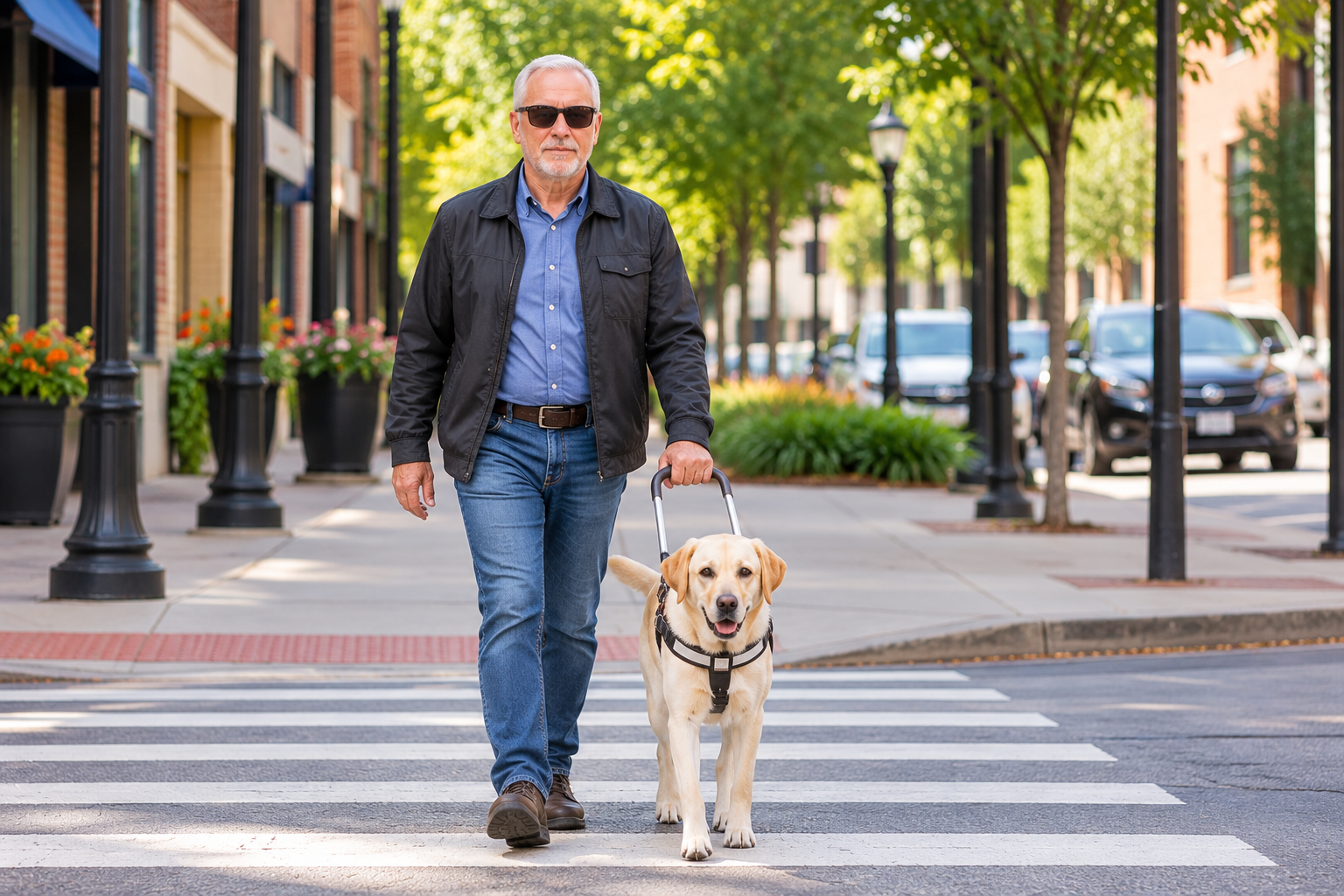
One famous example is intelligent disobedience. A guide may refuse a direction when following it would place the team in danger. The correct response can therefore be deliberate refusal rather than automatic obedience.
This requires something more sophisticated than memorizing commands. The dog must recognize a conflict between the requested action and safe movement. Training provides the framework, but the dog’s response must work in real time.
Willingness to Work Cannot Be Taken for Granted
A physically capable dog may still lack enthusiasm for demanding guide work. Programs therefore consider willingness as well as ability. Guide Dogs for the Blind specifically identifies willingness to work among its desired traits.
This point deserves attention because capable and suitable are not identical. A dog may technically perform an exercise while finding the work stressful or unrewarding. Long-term success requires more than simply completing tasks.
The ideal dog engages willingly with the work and handler. That willingness contributes to consistency. It can also help explain why two similarly trained dogs progress differently.
Physical Soundness Is Part of Working Ability
Temperament receives much attention, but guide work is also physically demanding. Dogs walk considerable distances and repeatedly navigate stairs, curbs, transportation, buildings, and varied surfaces. Chronic orthopedic or other health problems can compromise that work.
Guide-dog breeding programs therefore screen health alongside behavior. Guide Dogs for the Blind evaluates breeding candidates using health testing, behavioral assessment, pedigree information, and temperament history. The organization’s standards for breeding dogs can exceed those required for guide training.
Physical suitability also includes practical characteristics. Size, weight, coat, and general adaptability can affect how comfortably a dog works and travels. A successful working dog needs both behavioral and physical fitness for the job.
Good Breeding Improves the Odds but Guarantees Nothing
Major guide-dog organizations have developed specialized breeding programs for a reason. Predictability becomes extremely valuable when dogs are being prepared for demanding work. Health and behavior records can help programs make increasingly informed breeding decisions.
Guide Dogs for the Blind began its specialized breeding program after discovering how difficult suitable candidates were to find consistently. The Seeing Eye also uses genetics, behavioral information, health information, and extensive historical records. Both programs are trying to improve predictability.
Yet breeding cannot guarantee that every puppy will become a guide. Individual development still counts. Health, behavior, confidence, and response to training continue to be evaluated as the dog matures.
Why Labradors Appear So Often in Guide Work
Labrador Retrievers dominate many guide-dog programs for practical reasons rather than popularity alone. Guide Dogs for the Blind reports that Labradors have had particularly strong worldwide success as guides. It also uses Golden Retrievers and Labrador-Golden crosses.
The traits programs value include appropriate size, manageable coats, adaptability, confidence, friendliness, and willingness to cooperate. Those characteristics occur in individuals, not automatically in every member of a breed. Breed alone never guarantees suitability.
The Seeing Eye also emphasizes variation within its dogs. Differences in size, temperament, strength, stride, and energy can help create better individual matches. Uniformity is therefore not the ultimate goal.
Evaluation Has to Follow the Dog Into the Real World
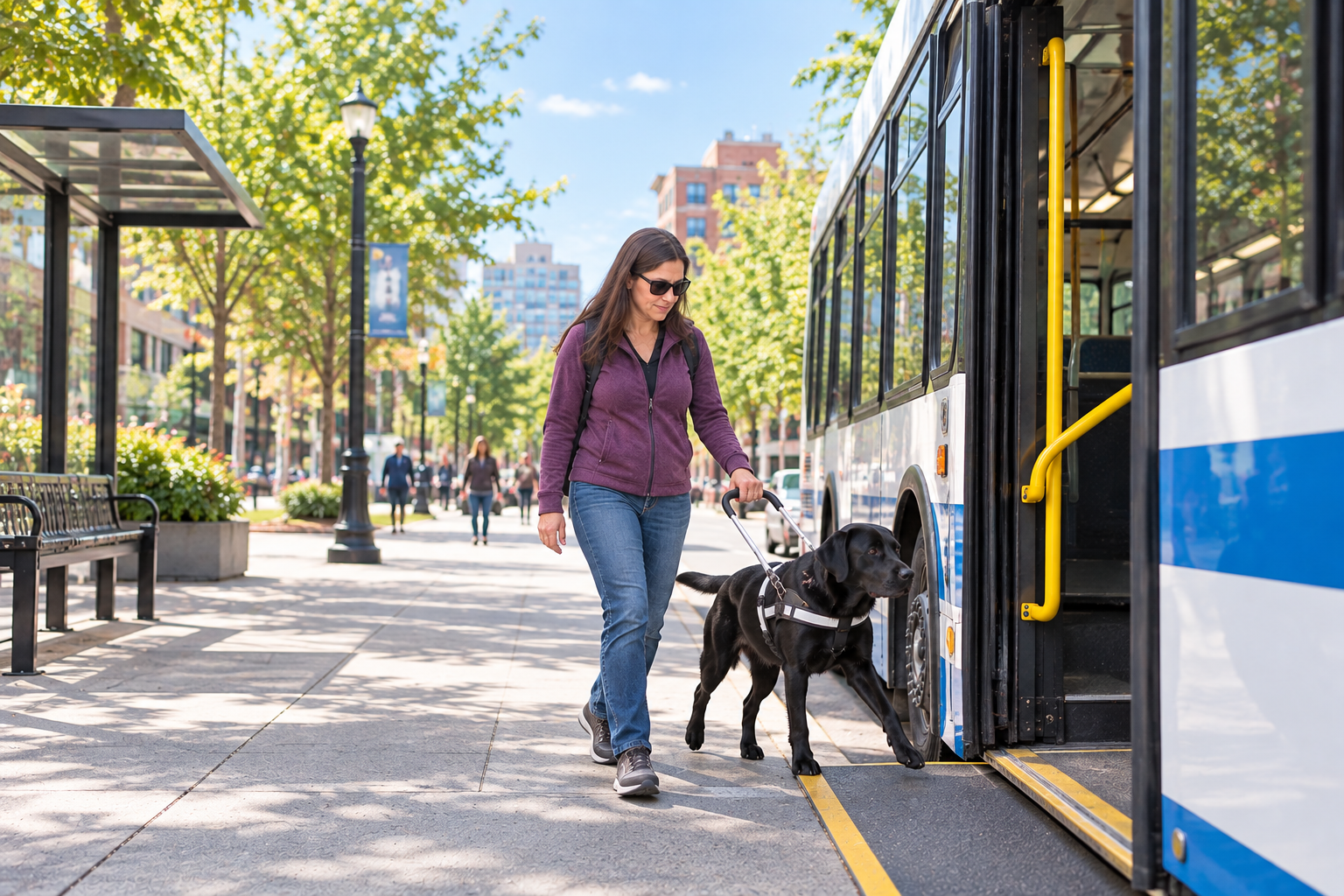
Evaluating a potential working dog only in a quiet room would reveal very little. Real guide work happens amid movement, noise, novel situations, and competing distractions. Assessment must therefore extend beyond simple obedience exercises.
Guide Dogs for the Blind uses behavior assessments and temperament evaluation during its breeding selection process. Its staff also conducts assessment walks in town. They consider manageability, confidence, temperament, willingness, and adjustment.
This supports a principle familiar to experienced dog people. Behavior should be evaluated across situations and over time. One excellent performance cannot establish an entire temperament.
Our guide to evaluating dog temperament explores that broader principle. Consistent patterns tell us far more than isolated moments.
Not Becoming a Guide Dog Does Not Mean Failure
Some highly trained, intelligent dogs eventually prove unsuitable for guide work. A medical issue may appear, or behavior may not meet the required standard. Another dog may simply be better suited to a different life.
The Seeing Eye notes that dogs leaving guide training may return to puppy raisers. Some may enter another kind of working role. Others can become carefully placed companion dogs.
That outcome reflects responsible selection rather than failure. Guide work places extraordinary demands on a dog. Removing an unsuitable dog protects the future handler and respects the individual dog.
The Best Dog Is Not Necessarily the Best Guide Dog
This may be the most important distinction of all. A terrific family dog can be completely wrong for guide work. An outstanding obedience dog may also lack the environmental stability the job requires.
Likewise, a dog with enormous drive may excel elsewhere but struggle with guide work’s demands. Working roles ask for different combinations of temperament and instinct. Suitability always depends on the job.
Our article on working dog instincts explores that principle more broadly. Successful working dogs are not interchangeable simply because they are intelligent or trainable.
What Guide Dogs Teach Us About Working-Dog Selection
A great guide dog illustrates why serious dog evaluation goes beyond appearance and obedience. The finished dog represents genetics, health, upbringing, temperament, training, evaluation, and careful matching. Each piece contributes something different.
Perhaps most importantly, guide dogs show the value of selecting for balance. Confidence must coexist with manageability. Awareness must coexist with low distraction, while intelligence must coexist with cooperation and judgment.
That combination is uncommon enough to explain why every promising puppy does not graduate. The dogs that succeed are not simply exceptionally trained. They are dogs whose underlying traits fit an exceptionally demanding job.
Sources and Further Reading
Guide Dogs for the Blind: Breeding
Guide Dogs for the Blind: Frequently Asked Questions
Guide Dogs for the Blind: Breeding Evaluation
The Seeing Eye: Seeing Eye Dogs
Amazon Affiliate Disclosure: As an Amazon Associate, Excellent Dogs Club may earn from qualifying purchases. This does not change the price you pay.
Photo Credit: All images © Sloan Digital Publishing. Used with permission.