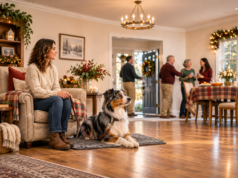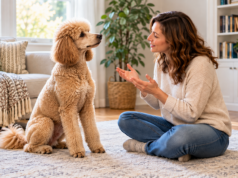
Why dogs shake after stress is easier to understand when you watch what happens before and after the movement. You have probably seen your dog do it hundreds of times. The head starts moving, the ears flap, and suddenly the whole body joins in. Within a second or two, the dog has shaken from nose to tail.
Sometimes the reason is obvious. A wet dog shakes to get water out of his coat. A perfectly dry dog may make the same movement after excitement, restraint, uncertainty, or stress. The physical action can look almost identical in both situations.
Sassy Knew Exactly When She Was Allowed to Shake
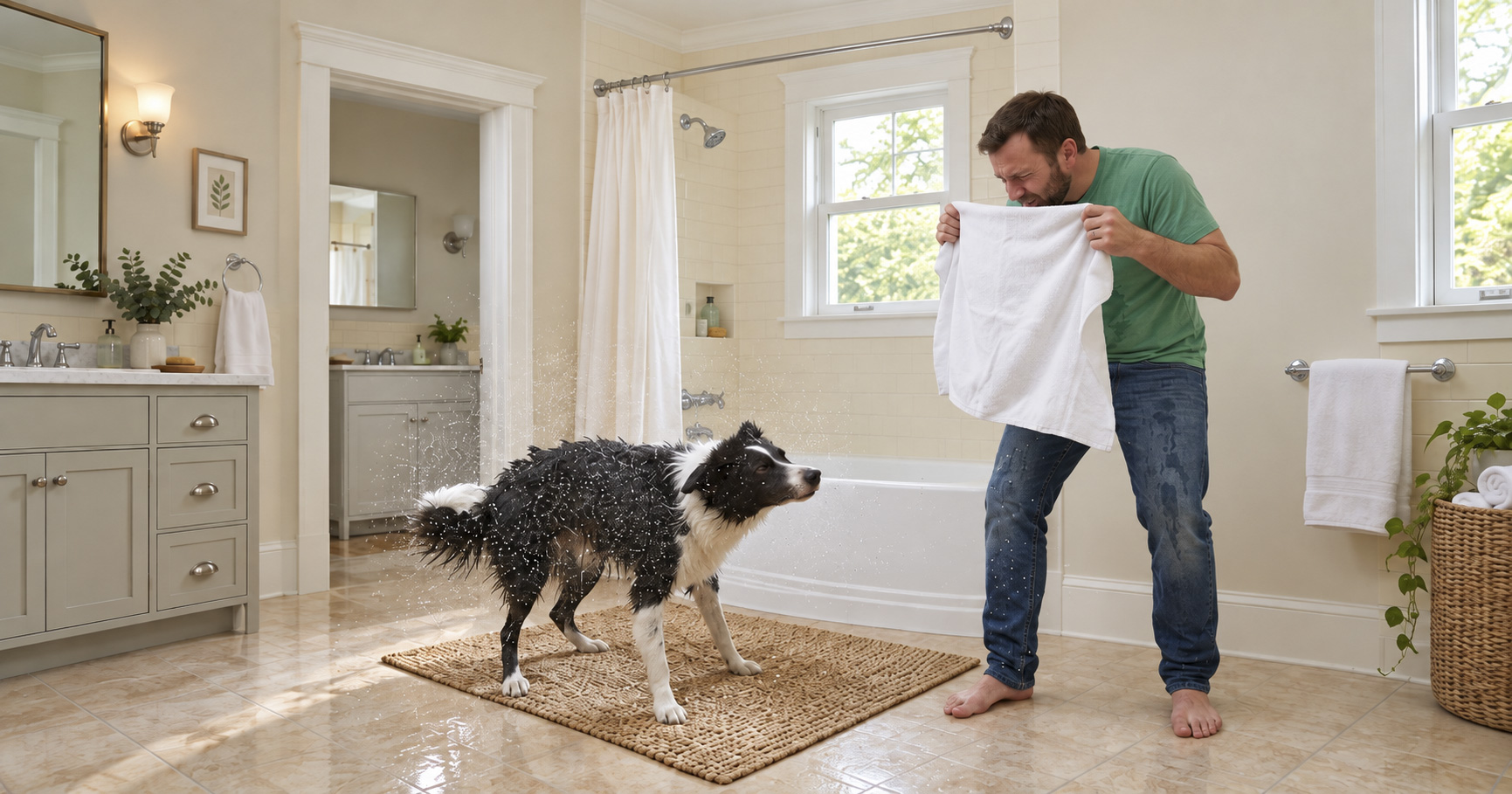
I learned long ago that a full-body shake does not automatically mean stress. Our Sassy loved her baths, and she was wonderfully well-behaved afterward. She would stand there soaking wet and clearly eager to shake. Still, she waited until we gave her permission.
The expression on her face told us exactly what she wanted to do. Once she heard the okay, that enormous nose-to-tail shake began. There was nothing anxious about the moment. Sassy was simply doing what wet dogs naturally do.
Her story is a good reminder that the same movement can appear for very different reasons. A dog’s behavior makes the most sense when we consider what is happening around it. The shake itself gives us information, but not the entire answer. That becomes especially important when the dog is completely dry.
Why Dogs Shake After Stress or Excitement
You may notice a similar shake after a nail trim, veterinary examination, unfamiliar greeting, or uncomfortable interaction. Some dogs shake after being restrained, startled, or crowded by another dog. Veterinary behavior experts recognize this as one possible stress-related signal. It often appears as the dog moves away from an intense moment.
That does not mean every dry-dog shake signals anxiety. A dog may also shake after waking, stretching, playing, or feeling something unusual against the coat. Instead of asking what shaking always means, ask what happened immediately beforehand. That simple question often provides a much better clue.
People Sometimes Do Something Similar
People can have a surprisingly similar physical reaction. After a frightening event, an argument, a near accident, or another intense experience, someone may say, “I’m shaking.” The hands may tremble or the knees may feel shaky. The person may not be cold at all.

Stress and strong emotion can produce very physical reactions in the human body. Dogs and people do not experience stress in exactly the same way, so we should not push the comparison too far. Still, the comparison helps explain why dogs shake after stress without making the behavior seem mysterious. Sometimes the body is still reacting even after the most intense part of an experience has passed.
Watch the Whole Sequence
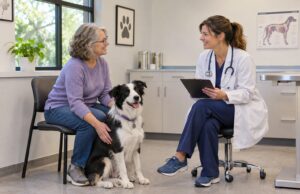
Imagine your dog standing on an examination table while the veterinarian checks his ears. He cooperates but looks uncomfortable during the examination. The moment his feet touch the floor, he gives one enormous shake. Then he sniffs the room, takes a treat, and relaxes.
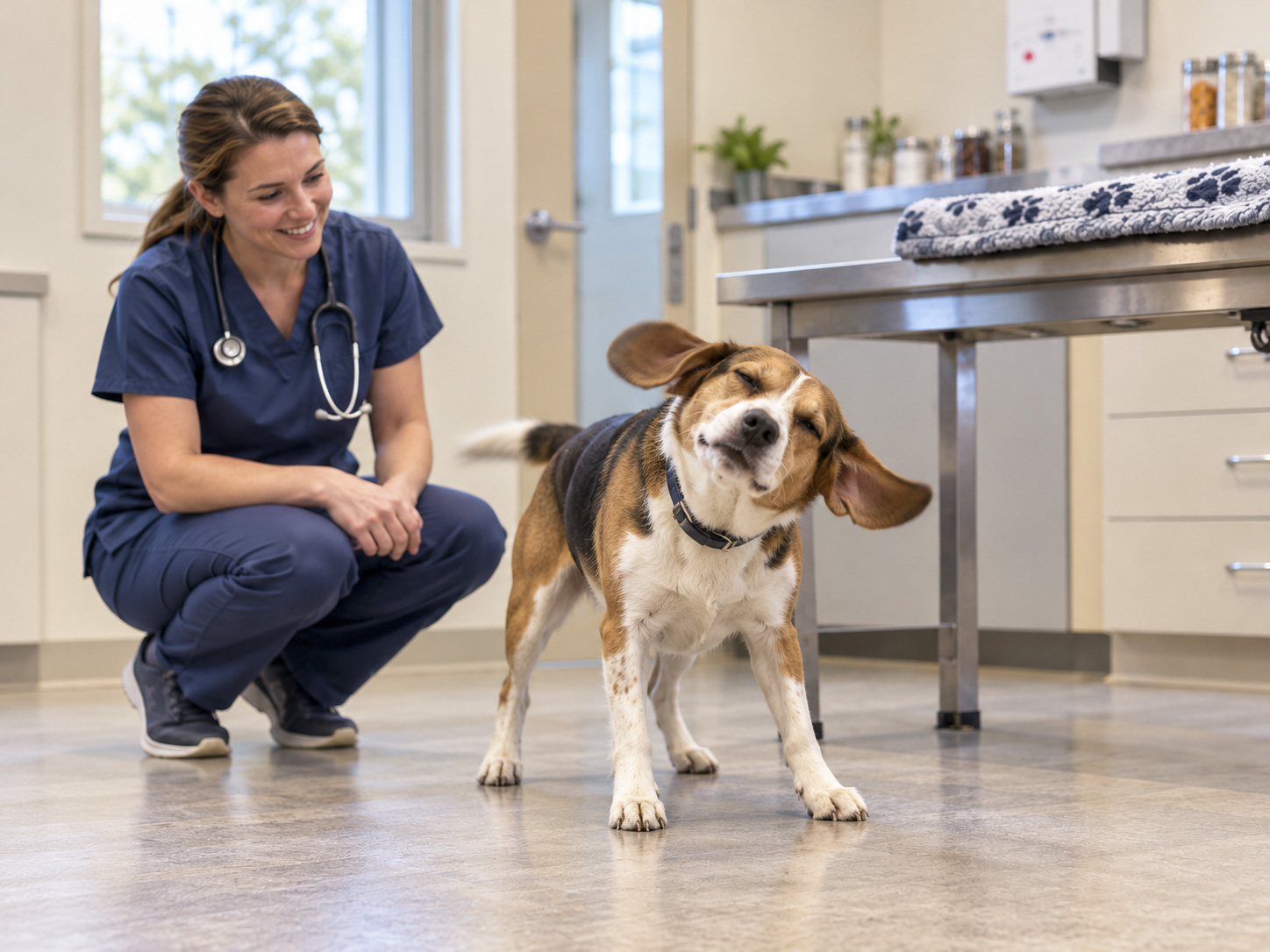
Understanding why dogs shake after stress becomes easier when you watch that entire sequence rather than the shake alone. Another dog might shake and then continue panting, pacing, hiding, or refusing food. Those behaviors suggest that the dog has not settled as easily. What comes next can therefore be just as useful as what happened before.
Recovery is an important part of canine behavior. A stable dog is not a dog who never feels stress, surprise, or uncertainty. He is a dog who can cope with ordinary challenges and return to normal behavior appropriately. Our guide to stable dog temperament signs looks more closely at recovery and behavioral steadiness.
Temperament testing can also offer useful information when it is interpreted carefully. No single reaction can predict everything about a dog, and one stressful moment should never define him. Our article on what a dog temperament test can and cannot tell you explains why patterns across situations matter more than one isolated response.
Other Small Signals Can Help Fill in the Picture
Dogs often communicate discomfort quietly before they do anything dramatic. You may see lip licking, yawning, turning the head away, pinned ears, or a tucked tail. Some dogs become very still or suddenly avoid eye contact. These small changes are easy to overlook if we only watch for barking or growling.
Other dogs may sniff the ground, scratch, or begin grooming at an unusual moment. Trainers and behavior professionals sometimes call these displacement behaviors. The term sounds technical, but the idea is fairly simple. An ordinary behavior appears during uncertainty, conflict, frustration, or excitement.
Suppose your dog turns away from a stranger, licks his lips, shakes off, and then moves behind you. That pattern gives you several pieces of information at once. You do not need to assign a dramatic meaning to every movement. You simply need to notice that your dog may be asking for more space.
Dogs May Shake During a Pause in Play
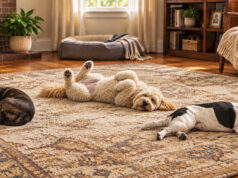
Watch two dogs during lively play and you may see one suddenly stop and shake. A moment later, the game may begin again. Short pauses are often a normal part of comfortable play. The dogs may be taking a brief break before deciding whether to continue.
Look at both dogs rather than focusing only on the shake. Their bodies should remain loose, and both dogs should have opportunities to chase, wrestle, pause, and move away. One dog should not spend the entire interaction trying to escape. Healthy play includes choices rather than relentless pressure.
If one dog repeatedly hides, freezes, tries to leave, or becomes increasingly tense, interrupt the interaction calmly. Give both dogs enough space to settle. They can return to play if both choose to do so. A shake during play is most useful when viewed as one part of the entire interaction.
Why a Dog May Shake After Grooming or Handling
Bathing, brushing, nail trimming, ear cleaning, and harness fitting all require dogs to accept handling. Some dogs truly enjoy the attention. Others cooperate because they have learned what is expected. A shake immediately afterward may tell you that the experience required a little effort.
That does not mean the grooming session was harmful or frightening. It may simply show where your dog could use more comfort, practice, or control. Shorter sessions, treats, good footing, gentle handling, and planned breaks can help. The goal is not to stop the shake but to make the entire experience easier.
Do Not Turn Dog Body Language Into a Dictionary
It is tempting to memorize simple rules about canine behavior. Tail wag equals happy. Yawn equals stress. Shake equals anxiety. Unfortunately, dogs are much more complicated than a list of fixed translations.
A wagging tail can appear with friendliness, excitement, uncertainty, or tension. A tired dog may yawn because he is simply tired. Even lip licking can have an obvious explanation when food is nearby. The surrounding situation changes how we interpret each signal.
The best approach is to watch the whole dog. Notice the eyes, ears, mouth, tail, posture, movement, and choices. Lili Chin’s Doggie Language: A Dog Lover’s Guide to Understanding Your Best Friend is a useful visual guide for owners who want to become better observers. It encourages readers to consider combinations of behaviors rather than isolated gestures.
A Shake-Off Is Not the Same as Persistent Trembling
One quick nose-to-tail shake is different from ongoing trembling, shivering, twitching, or repeated unexplained shaking. Persistent shaking can occur with fear, pain, illness, cold exposure, toxin exposure, or neurologic problems. Those possibilities should not be dismissed as ordinary body language. When the shaking continues, the situation deserves a closer look.
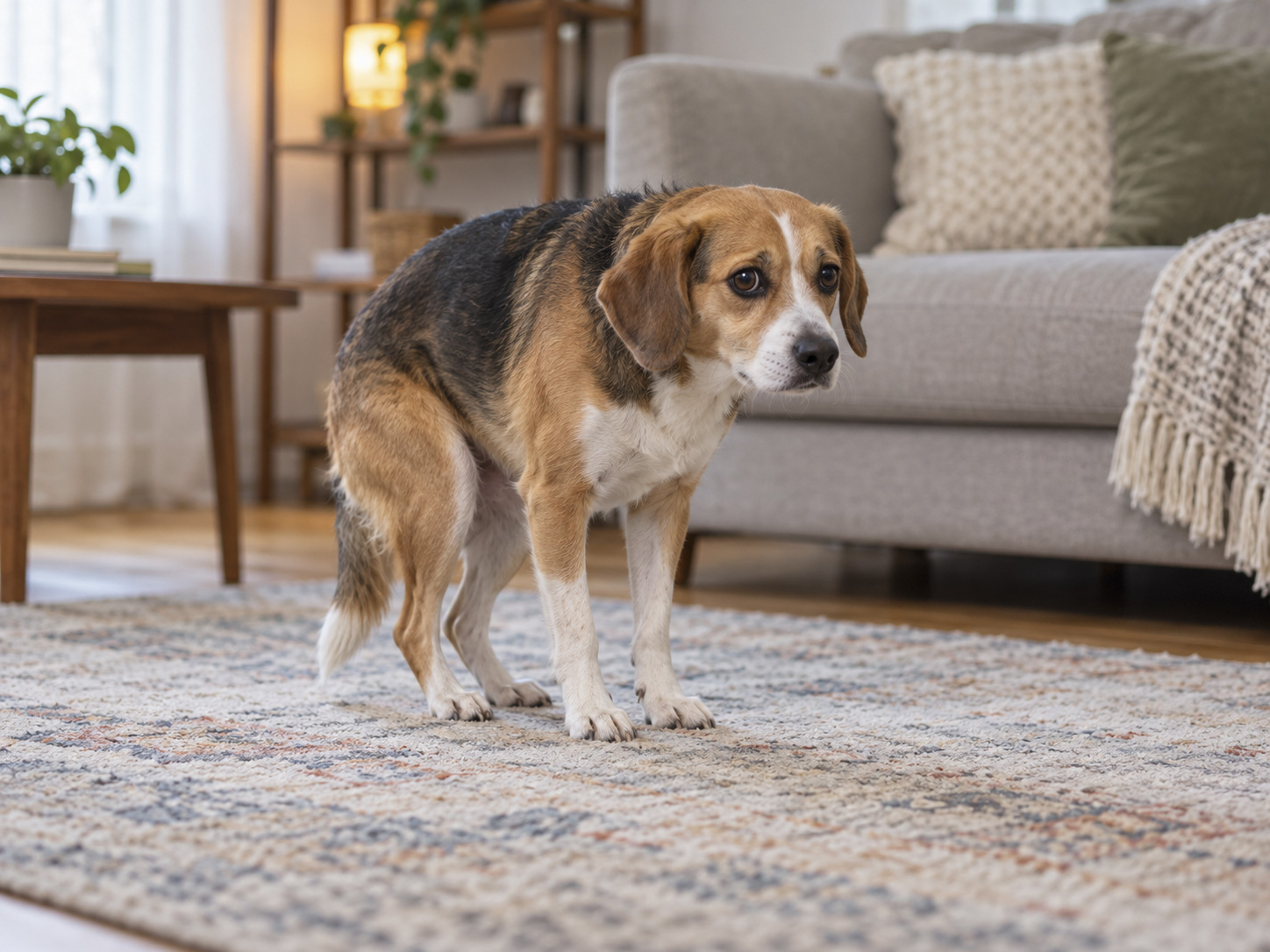
Repeated head shaking is different as well. Ear irritation or infection can make a dog shake the head again and again. Redness, odor, discharge, tenderness, or frequent scratching may also appear. Those signs belong in a veterinary discussion rather than a behavior interpretation.
Sudden changes deserve attention, especially when other symptoms appear. Weakness, staggering, seizures, breathing difficulty, severe pain, or significant changes in awareness require veterinary care. A familiar-looking movement should never keep us from noticing that a dog may be physically ill. Behavior and health often overlap.
There Is Usually No Reason to Stop the Shake
An ordinary full-body shake is not bad behavior. There is usually nothing to correct or interrupt. Instead, notice what was happening around your dog and how quickly he returns to normal. That information may help you handle the next similar situation more comfortably.
If your dog settles immediately, you may not need to do anything at all. If several signs of stress continue, give him more space or reduce the pressure. Small adjustments can prevent discomfort from building. Good handling often begins with noticing these quiet signals early.
The Shake Is Punctuation, Not the Whole Sentence
Sassy waiting patiently after her bath made the meaning of her shake wonderfully clear. She was wet, happy, and waiting for permission to send water everywhere. A dry dog shaking after an uncomfortable veterinary procedure presents a different picture. So does a dog who shakes during a pause in vigorous play.
The movement may look nearly identical while the circumstances are completely different. That is why I like to think of the shake as punctuation, not the whole sentence. Notice it, but keep reading your dog. What happened before and afterward will usually tell you far more.
Learning why dogs shake after stress is really part of learning to read the whole dog rather than memorizing isolated signals. We become less likely to dismiss quiet discomfort, but we also avoid labeling every ordinary movement as anxiety. The goal is not to analyze every shake. It is simply to become a little better at listening when our dogs communicate without words.
Sources
- VCA Animal Hospitals: Signs Your Dog Is Stressed and How to Relieve It
- VCA Animal Hospitals: Displacement Behavior in Dogs
- American Kennel Club: Signs of Stress in Dogs
- Merck Veterinary Manual: When to See a Veterinarian
Amazon Affiliate Disclosure: As an Amazon Associate, we may earn from qualifying purchases without any additional cost to you.
Photo Credit: All images © Sloan Digital Publishing and licensed stock sources. Used with permission.