
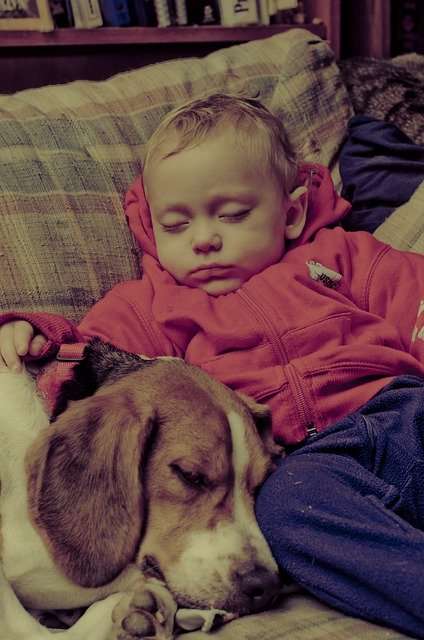
This cute little boy was terrified of dogs. That is, he was, until his heart was won over by a dog that loved him unconditionally.

His tiny heart pounded with anxiety the first few times the dog approached him. But, soon, his heart was full of joy.
This cute, little boy was terrified of dogs. Then, his parents very wisely introduced the small boy to this dog and they were a match made in heaven.
You will love the video of them so happily playing. These two are now inseparable! This would never have happened if the parents had not been so smart.
Not every little boy is so lucky and many people need advice on how to help them get over their fear of dogs. After this brief video clip is a guide on how to help kids go over their fear of dogs.
Little Boy Was Terrified Of Dogs Until He Met This Special Dog
Quite a few children are afraid of dogs. The fear of dogs is one of the more frequently seen phobias, especially in very small children. They usually do not have a reason for being afraid.
Even kids that do not have a true phobia of dogs will be uncomfortable around dogs they do not know. Most children are at least a little bit afraid of dogs for one reason or another.
Some Possible Reasons Why A Little Boy Was Terrified Of Dogs
Dogs can appear scary to a small child. Even a small dog is sometimes large, by comparison, to a young child. Just think about having a strange animal looking you in the eye.
It may have sharp claws and they certainly have sharp, canine teeth. Imagine an animal that was large enough to look you in the eye and that had sharp teeth and claws.
Do you think that you might be a little bit apprehensive yourself? An animal that is larger than you and who is scary looking night scare an adult as well. It is nothing to be ashamed of.

Besides being big and scary, dogs can be very loud as well as unpredictable. They may bounce around or jump up on people.
Not everyone likes to have a dog lick on them or to nibble on their fingers when given a treat. If the child is a bit on the anxious side, all of these unpredictable traits can be even more frightening to them.
Don’t forget that an anxious adult can pass on their nervousness to the child as well. A child may have learned to be afraid of dogs from their parent. If dogs scares them, it is likely that the child will also fear dogs.
A Prior Bad Experience Could Be The Reason That The Child Is Afraid
Not all negative canine experiences are associated with being bitten by a dog. Many different situations can cause a child to be fearful of dogs.
A dog may have jumped up on the child and knocked them over, scraping their knees. Even barking ferociously at the child or running toward them aggressively without warning can terrify a child.
Negative experiences can leave children fearful of dogs for decades. They may even forget the incident that initially made them afraid years ago yet still experience the feeling of terror when a dog approaches.
On A Personal Note
I was attacked by a pack of wild dogs as a child and this caused me to be terrified of all dogs I did not know well. Even worse, my baby sister was attacked by a large, dog wandering through the neighborhood.
He grabbed her by the face and shook her like a rag doll with blood, flying everywhere. I beat the dog off of her until he dropped her on the ground. There was no one else around to rescue her so I had no choice.
She had to undergo a series of painful injections because the dog’s owner had not vaccinated their dog against rabies. We both had nightmares about this for years afterward.
The fear associated with this entire situation remains with me today in spite of my best efforts to get rid of it. I love dogs and have continued to bring them into our family but only as puppies to grow up with us.
What To Do When A Little Boy Is Afraid of Dogs
Take the opportunity when it arises to help a child overcome his fear. If you run into a small dog while walking in the park with a fearful child, pick up the dog.
This one little thing can give a sense of security to the fearful child. Sometimes, this act gives the child enough courage to touch the dog
A terrified child should never be made to touch a dog. Exposing frightened kids to dogs plays an important role in helping them get over their fear.
However, doing so while the child is terrified is not the best way to do so; and, it reinforces the circuitry of fear in their brain. Gentle persistence is the key but timing is crucial.
Important steps to take before encouraging a child to touch a dog, even a friendly one.
Begin exposing the frightened child to dogs by using the various forms of media available to you. Movies and children’s books about dogs can be a great starting place.
Should your child have had a negative experience with a specific breed of dog, try to find media featuring that kind of dog.
A few of those movies include Beethoven, Lassie, Rin-Tin-Tin, 101 Dalmations, The Lady and the Tramp and All Dog’s Go To Heaven.
Step Two
Pretending to play with, and care for, a stuffed dog can be helpful as well. You can use a large, stuffed dog to teach a child how to pet or to brush a dog.
They can also learn how to put on a collar and leash on this toy dog. Sometimes, playing with this stuffed dog is more than just temporary fun.
The use of a stuffed dog to serve as a security item often carries over into real-life courage. Be creative and find ways to let the child find comfort with a canine first as a toy and then with the real thing.
Moving Into Real Life Situations
Distance
Allowing children to look at dogs from a distance or separated by a fence or glass barrier is very helpful. The more often kids observe dogs in a kennel or pet store through a window, the less fearful they remain.
Familiarity with dogs minimizes fear, so allow them to interact from whatever distance feels safe to them. Don’t get into too big of a hurry to introduce them up close and personal.
When it is finally time for the child to interact with a dog face to face, introduce them first to a friendly and small puppy. You may then allow them to work their way up to larger dogs.
Sound
Adults understand that dogs communicate by barking. Little kids, especially those frightened by dogs, are often scared by barking dogs. Explaining to the child that the dog is talking to them is often helpful.
You might try playing a guessing game with the child. When you hear a dog bark, come up with silly comments that his bark might be intended to convey. The funnier, the better.
Any time you can allow the child to have more control and understanding of a fearful situation, you make it less fearful.
Taking time to introduce the child to calm and loving dogs for short periods of time will go a long way to help them become friends.
What better gift can you give a child than a canine companion that will love and protect him as he grows up?
Video is Thanks to DoDo
Other photos courtesy of friends, family, and Pixabay.


