A family dog decision can change a household in wonderful ways, but it can also expose problems nobody expected. That was the lesson in one memorable It’s Me or the Dog case involving three enormous Mastiffs. Dog trainer Victoria Stilwell arrived to help with the dogs. She quickly discovered that Roman was not the only one needing guidance.
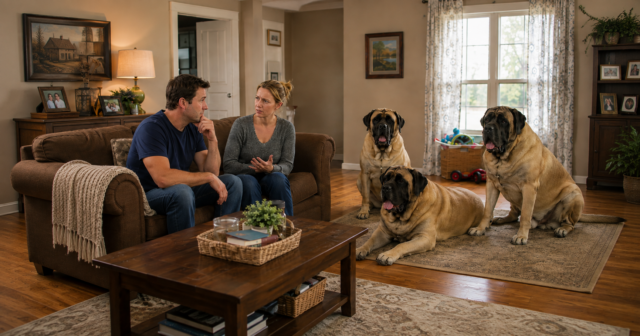
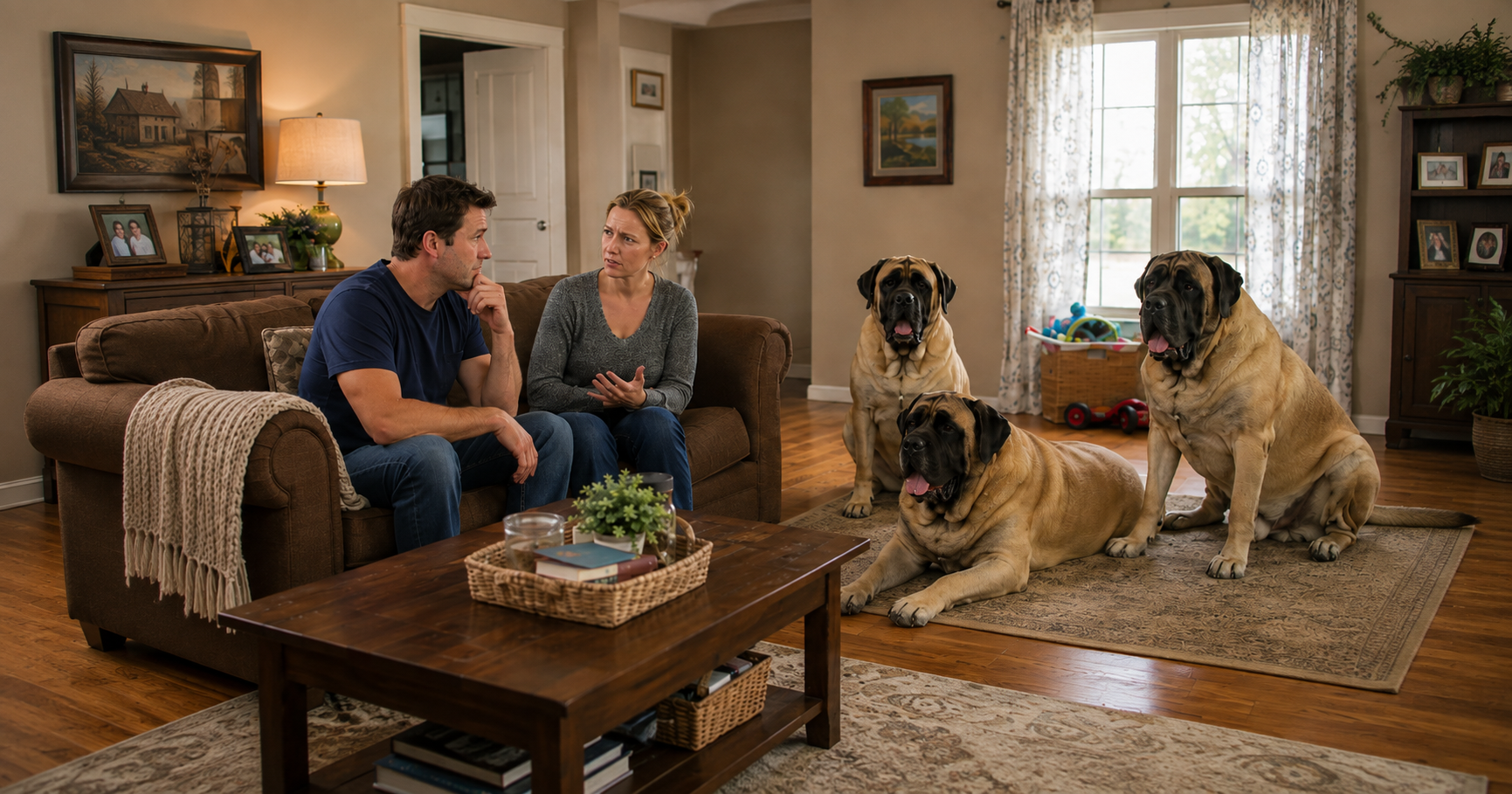
Chad and Melissa were raising a very young child while sharing their home with three Mastiffs. The dogs were impressive, affectionate, and very much part of daily family life. The problem was that bringing them home had largely been Chad’s decision. Melissa sometimes returned home to discover that another dog had joined the household.
By the time Victoria visited, Chad was even talking about adding a fourth Mastiff. Melissa clearly was not enthusiastic about that possibility. One dog can change a family’s schedule, expenses, cleaning, travel, and living space. Three giant dogs magnify every one of those responsibilities.
When a Family Dog Decision Is Not Really a Family Decision
There was no question that Chad loved his dogs. Loving dogs, however, was not the issue Victoria confronted. She saw a household where one person’s enthusiasm had become another person’s workload. That imbalance became especially obvious whenever visitors came to the door.
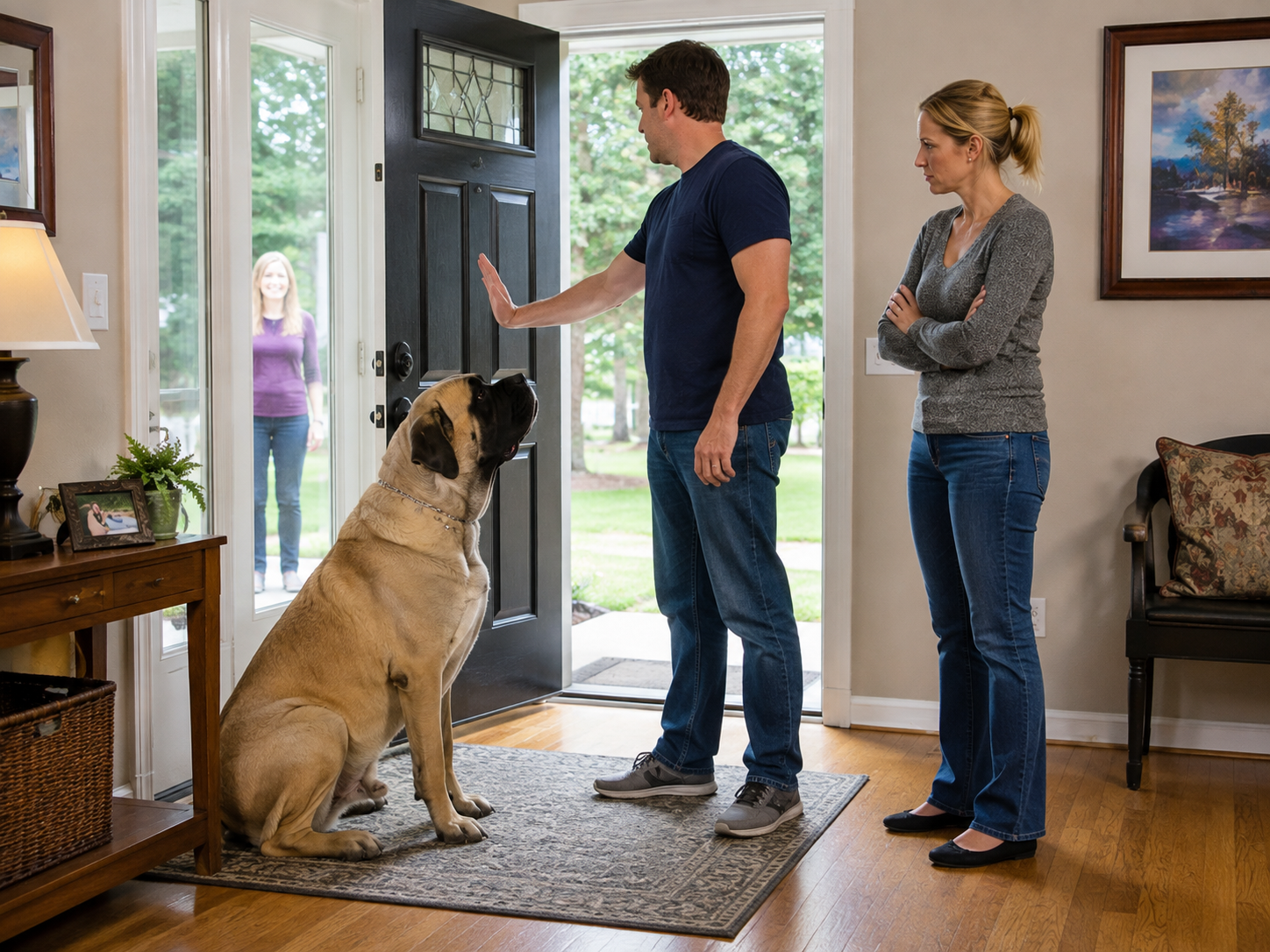
Roman, one of the Mastiffs, became highly aroused when someone arrived. He rushed toward the entrance, barked loudly, and slobbered around visitors. When the interaction became too stressful or exciting, he sometimes urinated on the floor. Melissa was then expected to clean up the mess.
That detail changed the tone of the entire visit. Victoria was not amused by Chad leaving the cleanup to his wife. She gave him a stern lecture about accepting responsibility for dogs he had wanted. She also challenged the way he had dismissed Melissa’s feelings about adding dogs.
Victoria’s reaction was memorable because she did not hide her frustration. She told Chad that, if he were her husband, he would be out. The remark was sharp, funny, and serious at the same time. It also made the larger problem impossible to ignore.
Roman Was Not Misbehaving on Purpose
Roman’s urination deserves a modern clarification because it is easy to misunderstand this behavior. Dogs can urinate involuntarily during greetings when they become frightened, submissive, conflicted, or intensely excited. This is different from a dog deliberately choosing an inappropriate place to eliminate. Punishing the dog can increase the anxiety and make matters worse.
Victoria Stilwell’s current guidance describes both excitable and submissive urination as involuntary responses. Veterinary behavior guidance gives similar advice and recommends managing the emotion surrounding the greeting. That makes Roman’s behavior easier to understand. He was struggling with arousal and uncertainty, not plotting to embarrass the family.
Our guide to fears and phobias in dogs explains how fear can appear in everyday behavior. Persistent or newly developing urinary accidents should also be discussed with a veterinarian. Medical causes always deserve consideration when a dog’s elimination habits change.
The Lesson This Man Had to Learn
Victoria did not stop after confronting Chad. She turned her attention to Roman and began working on the doorway problem. Her goal was to give the big dog a calmer, clearer routine when people arrived. That meant Chad also had to change the way he communicated.
Victoria demonstrated a body-positioning technique that helped create space around the front door. She then asked Roman to remain in place while the door opened. A guest rang the bell so they could practice under more realistic conditions. The exercise became a lesson for Chad almost immediately.
Chad kept talking to Roman while trying to hold his attention. He used too many words and gave the dog more information than he could process. Victoria told him to simplify his cues and pay attention to his own movement. Clear communication gave Roman a much better chance of succeeding.
This remains a useful lesson for dog owners today. Dogs learn patterns, cues, consequences, and body movement more readily than long human explanations. We may feel as though extra words provide clarity. To an already excited dog, they can become background noise.
Helping Roman Face His Fear of Water
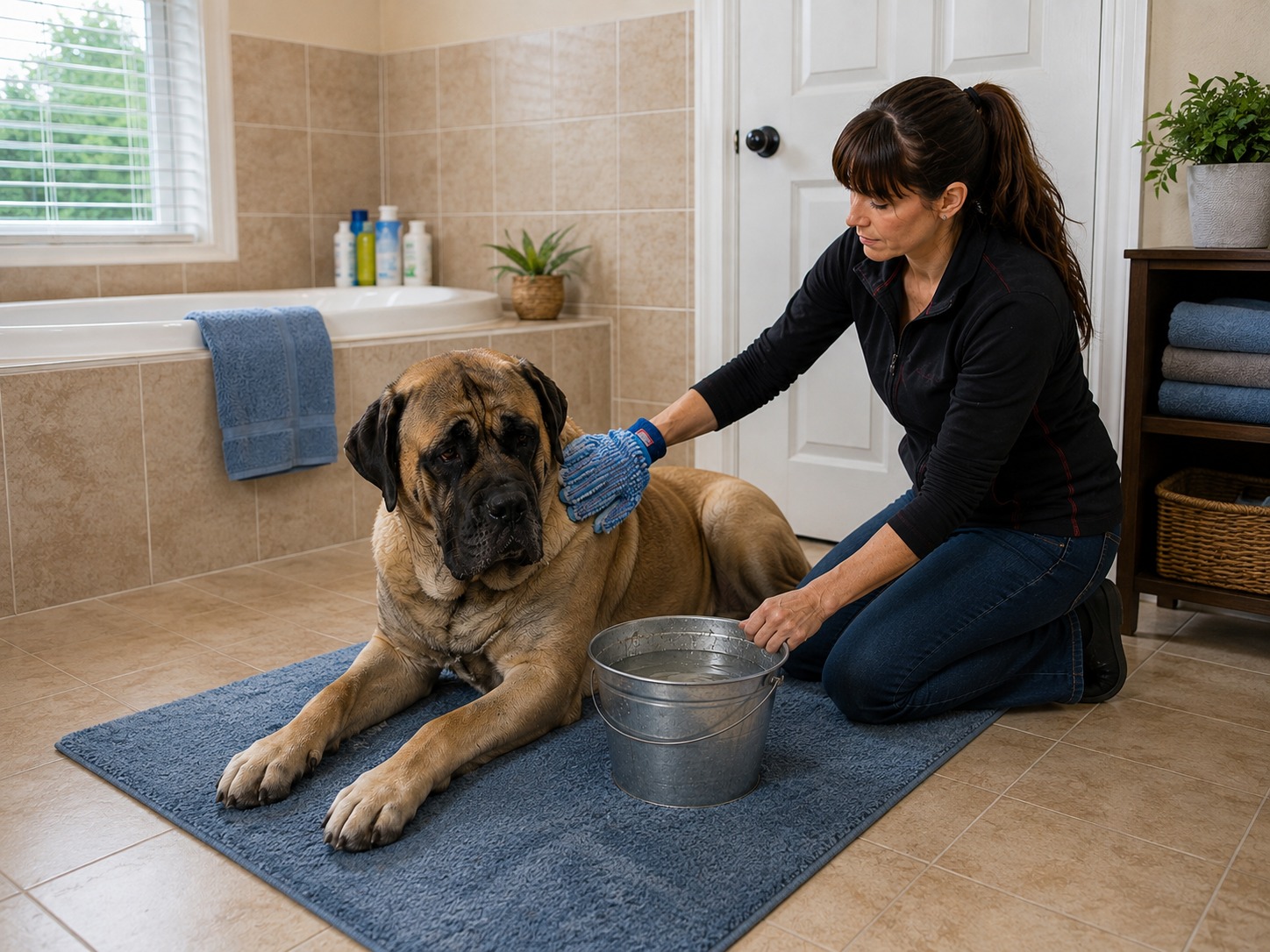
The doorway was not Roman’s only challenge. He was also frightened of water, which made bathing difficult. Victoria approached that fear in small steps rather than forcing him into a stressful bath. Her method was simple enough for Chad to continue afterward.
She first stroked Roman with grooming gloves while he was comfortable. Then she dipped the gloves into warm water and stroked him again. The sensation of moisture appeared gradually instead of arriving as a frightening splash. Roman began relaxing as he learned that the wet feeling was safe.
Chad then repeated what Victoria had demonstrated. Before long, Roman tolerated the nearby bucket without trying to escape. The change was not dramatic because someone overpowered a frightened dog. It happened because the frightening experience was broken into manageable pieces.
That principle also appears in modern fear-based training. Gradual exposure should remain mild enough that the dog can cope and recover. Forcing a frightened dog through an overwhelming experience can increase the fear. Progress is usually steadier when the dog remains able to learn.
The Bigger Lesson Was Never Just About Training Roman
The dog-training portions of the visit went well, but Victoria still had a concern. Roman could learn a doorway routine and become more comfortable with water. The harder question was whether Chad had absorbed what she said about responsibility. That question gave the episode its real emotional weight.
A family dog decision involves much more than choosing a breed or falling in love with a puppy. Every adult who shares the home will live with that choice. They may share feeding, exercise, training, veterinary visits, cleaning, boarding costs, and disrupted schedules. Even adults who do not handle the dog daily are affected.
This becomes especially important with giant breeds. Mastiffs take up considerable physical space and can create equally large expenses. Their size also makes manners around doors, children, visitors, and narrow spaces particularly important. None of that makes them poor family dogs, but it makes preparation essential.
Families considering another dog should discuss responsibilities before anyone brings one home. Our article on bringing home a new puppy or dog covers practical preparation. Those questions are much easier before the new dog is standing in the living room. A little planning can prevent a great deal of resentment later.
Did Chad Actually Learn His Lesson?
Watch Victoria Work With Chad, Melissa, and Roman
The original It’s Me or the Dog segment is still one of the best parts of this story. Watching Victoria interact with Chad and Roman shows the humor, frustration, and progress that words alone cannot fully capture.
That was the question hanging over the episode when Victoria left. Training Roman during a professional visit was one thing. Changing the household routine after the trainer disappeared was another. Chad had to show that he could carry his share without Victoria standing beside him.
A few weeks later, Victoria checked on the family by telephone. The news was encouraging. Chad was doing more of the work involved in caring for the dogs. Roman’s behavior had also shown meaningful improvement.
That follow-up is important because it keeps the story from becoming a simple scolding session. Chad had made poor choices, but he was capable of changing them. Victoria’s blunt conversation apparently reached him. Roman was not the only member of the household who learned something.
There is something satisfying about that ending. Victoria arrived as a dog trainer, not a marriage counselor. Yet the most important lesson involved listening, responsibility, and respect inside the home. Better dog ownership sometimes begins with better human communication.
What Families Can Take From Chad, Melissa, and Roman
The episode remains entertaining because the personalities are so memorable. It also survives as useful dog-owner education because the underlying problem is common. People sometimes fall in love with a dog before considering everyone who must live with the decision. Good intentions do not erase practical consequences.
Before adopting another dog, adults should agree about who will handle the ordinary work. That includes feeding, walking, cleanup, training, veterinary care, grooming, and expenses. They should also discuss what happens during illness, travel, schedule changes, or financial strain. A clear plan prevents one person’s dream from quietly becoming another person’s burden.
The same principle applies after the dog arrives. Behavior problems are household problems when everyone shares the same space. Consistent cues and routines help the dog understand what is expected. Shared responsibility also makes it more likely that training will continue after the first burst of enthusiasm fades.
Chad wanted dogs, and there was nothing wrong with that love. The mistake was assuming that wanting them gave him the right to decide for everyone. His family dog decision needed Melissa’s voice as much as his own. Fortunately, both the owner and the Mastiff proved capable of learning.
Sources
- Victoria Stilwell Positively: Excitable Urination
- VCA Animal Hospitals: Submissive, Excitement, and Conflict Urination
- It’s Me or the Dog: Victoria Confronts Owner Responsible for Filling Home with Huge Dogs
Editor’s Note: This reader-favorite article was updated and substantially expanded in August 2026. The original story, humor, and outcome were preserved while behavioral guidance and family-dog context were refreshed.
Amazon Affiliate Disclosure: As an Amazon Associate, Excellent Dogs Club may earn from qualifying purchases. This does not change the price you pay.
Photo Credit: Original article images were credited to Pixabay. New or replacement images used with this update should be owned, licensed, or generated for Sloan Digital Publishing.